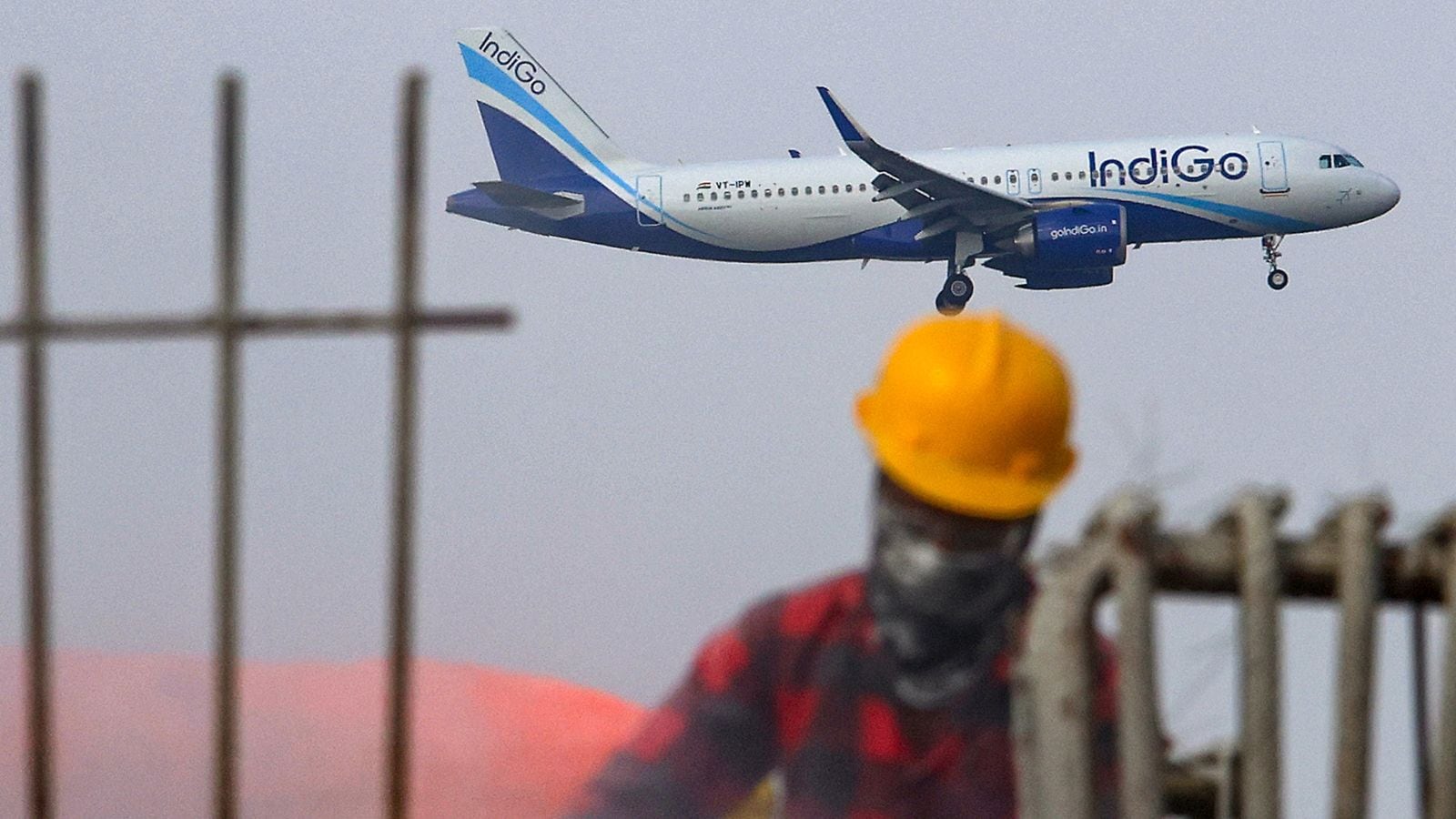
An IndiGo aircraft prepares to land at Kempegowda International Airport as construction work in progress on the Namma Metro bridge, in Bengaluru, Karnataka. (PTI Photo/File)
IndiGo has the permission to use wet-leased aircraft from Turkey-based airlines only till March, and no further extension will be provided, India’s aviation regulator Directorate General of Civil Aviation (DGCA) said late Monday. Moreover, the lease on two wide-body Boeing 777 aircraft that are among the planes IndiGo has on lease from Turkish carriers is valid only till the end of February, and has not been extended. The clarification came amid speculation in a section of the media that IndiGo had received the DGCA’s nod for a six-month lease extension on the two Boeing 777s.
IndiGo has a total of seven aircraft on wet lease—taking the aircraft on lease along with the operating crew—from Turkish carriers—five Boeing 737 planes from Corendon Airlines till March-end, apart from the two Boeing 777 jets from Turkish Airlines till February-end. IndiGo also has the regulator’s permission to lease five Airbus A320 planes from another Turkish carrier Freebird Airways, but these are yet to be inducted by the Indian airline.
“M/s IndiGo has been permitted to operate aircraft on wet lease from Turkey with a last extension valid till March 2026 with a sunset clause that no further extension will be given. This is based on the undertaking submitted by IndiGo airlines in the instant case wherein they have sought last time extension, since their long-range aircraft (A321-XLR) are to be delivered by February 2026,” the DGCA said. A senior official said that while the lease validity for the narrow-body planes from Turkish carriers is there till March, the Turkish Airlines’ Boeing 777s will have to go back after February.
IndiGo uses the two wet-leased Boeing 777s for its flights to Istanbul from Delhi and Mumbai. Amid backlash against Turkey in India due to the former’s public backing of Pakistan during Operation Sindoor, the DGCA had informed IndiGo that it would not allow lease extensions for the two aircraft beyond August. However, in August, the regulator allowed a one-time final lease extension till February-end upon IndiGo’s request, but stated that no further extensions will be given. DGCA approvals are mandatory for Indian airlines to wet-lease aircraft.
“Wet leasing of aircraft is a normal practice in the global aviation industry and recently due to grounding of aircraft because of engine related issues and the delays in delivery of aircraft against orders from the OEMs (original equipment manufacturers), many Indian carriers as a stop gap arrangement are resorting to wet lease from foreign companies in order to serve Indian passengers and also to utilize the rights provided to the Indian carriers under the bilateral service agreements with other countries,” the DGCA said, adding that wet lease arrangements have been allowed, including with Turkish carriers, keeping “passenger interest in mind”.
According to data shared by the regulator, IndiGo has a total of 15 wet-leased aircraft in operation, with eight yet to be inducted. Apart from Turkey-based airlines, IndiGo has taken aircraft on wet lease from the likes of Norway-based Norse Atlantic Airways, Qatar Airways, and Latvia’s SmartLynx Airlines. The only other Indian airline operating wet-leased aircraft is SpiceJet, with 17 such planes in operation, all from operators in Europe.
In a typical wet lease arrangement, the lessor provides the aircraft with crew, maintenance, and insurance, and retains operational control. Such arrangements are best suited for short-term capacity increases or to test new routes. Dry lease, on the other hand, includes just the aircraft, which means that the lessee airline is required to provide crew, look after the plane’s maintenance and insurance, and has full operational control. Dry leases are better for long-term use by lessee airlines.