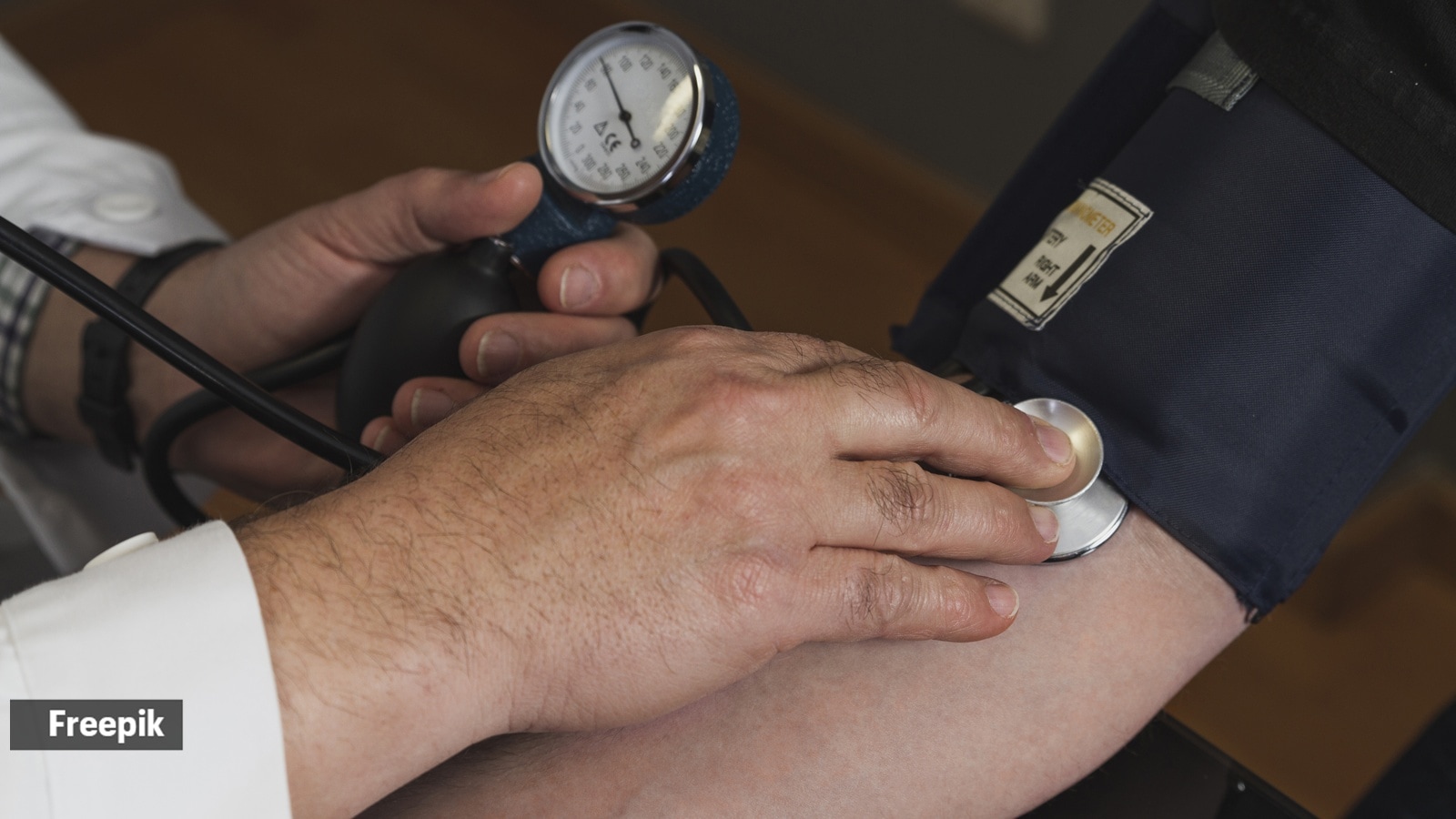
Like every other important marker, blood pressure also needs to be controlled for a healthy heart. As such, when we came across a Quora query: ‘Is a blood pressure of 150/80 mmHg dangerous for those who are 65 years old and older?’, we decided to ask a cardiologist.
Dr Parin Sangoi, consultant, interventional cardiologist, Wockhardt Hospitals, Mumbai Central, said that a reading of 150/80 mmHg indicates that the systolic pressure (the upper number) is elevated. “While the diastolic pressure (80) is within a normal range, the systolic value still matters, especially in older adults. Persistently high systolic blood pressure raises the risk of heart disease, stroke, and kidney issues,” he told indianexpress.com.
Dr Sangoi said that a single reading of 150/80 mmHg is usually not an emergency. However, if such a reading happens often or lasts for a long time, it should be taken seriously. “Over time, uncontrolled systolic hypertension can quietly harm blood vessels and vital organs, even if the person feels fine,” said Dr Sangoi.
As we age, our arteries naturally become stiffer and less flexible. Dr Sangoi noted that this makes it harder for blood to flow smoothly, leading to higher systolic pressure. “That’s why isolated systolic hypertension, where only the upper number is high, is quite common in people over 65,” said Dr Sangoi.
Targets may be personalised. For many healthy seniors, doctors aim for a systolic blood pressure below 140 mmHg, if it can be done safely. “In some older patients, especially those who feel dizzy or unsteady with lower readings, slightly higher targets might be acceptable. The key is finding a balance, lowering the risk of heart problems without increasing the risk of falls or fainting,” said Dr Sangoi.
High blood pressure often has no symptoms. “However, warning signs like frequent headaches, dizziness, chest discomfort, shortness of breath, or vision changes should prompt immediate medical advice,” said Dr Sangoi.
Absolutely, affirmed Dr Sangoi. “Regular walking, cutting back on salt, maintaining a healthy weight, managing stress, and taking medications as prescribed can make a meaningful difference even after 65. It’s never too late to gain from controlling blood pressure,” said Dr Sangoi.
Here’s a snapshot of the question asked (Photo: Quora)
While a blood pressure of 150/80 mmHg isn’t an immediate danger, it is a “clear signal to pay attention”. Regular monitoring, medical advice, and timely lifestyle or treatment changes can significantly reduce long-term health risks.
DISCLAIMER: This article is based on information from the public domain and/or the experts we spoke to. Always consult your health practitioner before starting any routine.