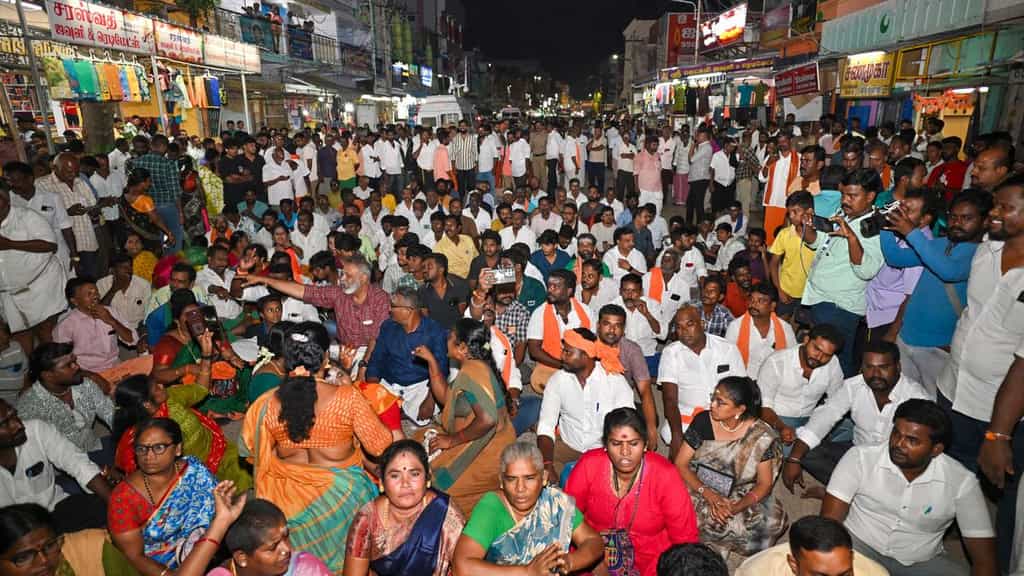
Rama Ravikumar, one of the petitioners in the Thirupparankundram deepathoon case, asserted that the petitioners’ legal demands were strictly based on documented evidence and historical records.
“If our plea had been based solely on faith, it would not have stood the scrutiny of one of the nation’s highest courts, nor would we have secured a favorable order,” he stated.
Identifying the State government’s stand on the issue as the primary source of conflict, he said: “Had we been allowed to simply light the lamp, it would not have cost the State the crores of rupees spent on hiring advocates to contest the case.”
Meanwhile, the State’s Archaeology department which studied the stone pillar atop the hill and related archival documents, opined that it was of Jain origin, and not Hindu origin.
However, the issue clearly relates to more than just lighting a lamp. Arif Khan, secretary of the Hajrat Sultan Sikkandar Basha Pallivasal, stated that if the petitioners’ only objective was to light a lamp atop the deepathoon, they would have limited their demands to that single act.
“However, over the years, they have revealed their true intentions by opposing animal sacrifice, organising our festivals, and even the hoisting of our flag,” he said.
Mr. Khan also dismissed the petitioners as belonging to a fringe group and claimed: “If all Hindus were against us, as these fringe elements claim, why would our Hindu neighbours and other religious leaders stand in solidarity with us?”
As for residents of the Thirupparankundram area, they seem to have retained the syncretic spirit they have long lived by. “Even if the area surrounding the hillock is primarily based on the Subramania Swamy Temple, people of all faiths – Hindus, Muslims, and Christians – have their commercial establishments in and around the area,” some residents noted.
They said in one voice that they would continue to support and thrive in the cordial relationship that has prevailed in the temple town, as far as they were concerned.
Editorial Context & Insight
Original analysis & verification
Methodology
This article includes original analysis and synthesis from our editorial team, cross-referenced with primary sources to ensure depth and accuracy.