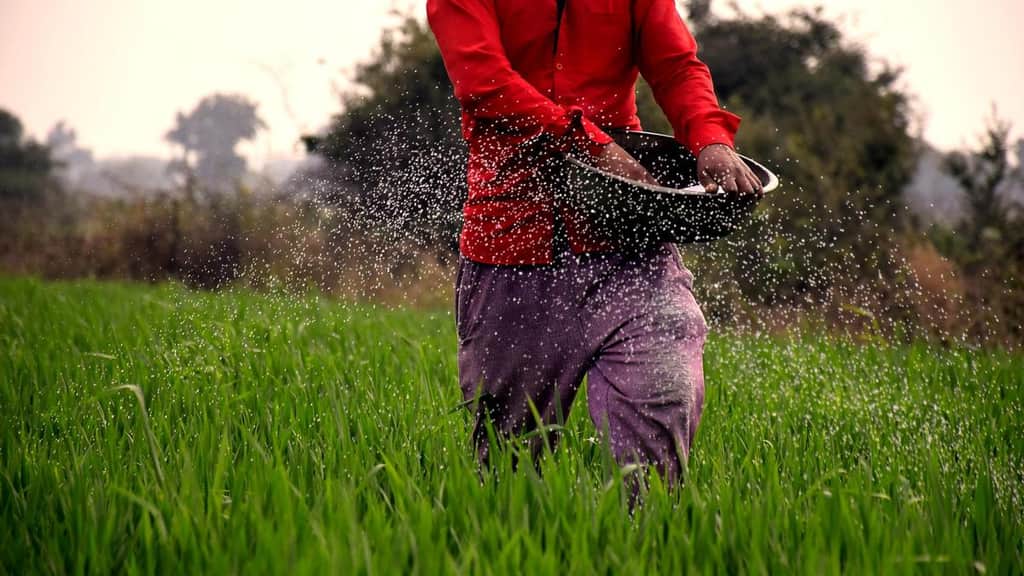
While green manuring is gaining traction as a sustainable agricultural practice, its wider adoption remains limited by two key bottlenecks: the availability of quality seeds and their timely distribution to farmers, according to a study released by the State Planning Commission.
The report titled ‘Impact analysis of Green Manuring under the Chief Minister’s Mannuyir Kaathu Mannuyir Kaappom Scheme’ was prepared by the M.S. Swaminathan Research Foundation (MSSRF).
A majority of farmers said that they have benefited out of the scheme, and around 98% of farmers who were surveyed expressed willingness to recommend green manuring to their peers. The survey was conducted with proportionate sampling covering 5% of the total farmers who received green manure seeds across 34 districts, thus targeting 5,168 farmers.
Among the surveyed farmers, 5,149 out of 5,165 (99.7%) sowed the seeds, while only 16 farmers (0.3%) did not sow due to failure of monsoon, poor seed quality, and late distribution. Around five farmers did not raise green manure crop due to lack of rainfall, while a couple of farmers did not do so because of poor seed quality. While six farmers reported delayed supply, only one farmer reported that he has already started the main crop.
Several other challenges were also identified. For instance, climatic constraints, such as drought and erratic rainfall, particularly in the Cauvery delta and southern districts, delayed sowing and prevented the timely ploughing back of the biomass into the soil. Knowledge and training gaps persist, with only 48% of farmers attending training sessions; those conducting soil testing to monitor the change in soil nutrient profile remained low.
According to the analysis, economic dependency on subsidies was notable, especially in the south zone, where 49% of farmers were unwilling to adopt green manuring without government support. Operational barriers such as increased ploughing costs and longer cropping window were also reported.
Data shows that 97% of respondents observed improved soil water holding capacity, 93% noted enhanced soil fertility, 94% experienced increased crop yields, and 88% reported reduced chemical fertiliser use. Economic gains were also evident, with 85% of farmers reporting lower cultivation costs. Case studies highlighted an average yield increase of up to 15% per acre, as reflected in the Focused Group Discussions, and income gains of ₹17,500 per acre.
The study cited an example which said that after the use of green manure, paddy share rose to 91%, matching farmer narratives of improved soil condition and lower external inputs. Pre-adoption in the two preceding seasons of green manure show lower paddy shares (62-76%) and greater fallow and alternative crops, including a larger fallow extent in season 2 (596 acre).
The report suggested ideas to ensure large-scale adoption and long-term impact. It said that the scheme should focus on local decentralised seed production to promote village-level seed banks managed by local communities, supported by Farmer Producer Organizations (FPOs), and Self-Help Groups (SHGs) along with innovative seed production models within the farm.
It also suggested the strengthening of extension services through training, demonstration trials, digital advisory, and peer-led outreach programmes. Farmers’ capacity building through hands-on training, by linking with the Agriculture Department and the State Agriculture Universities, was also mentioned in the report.
It further said that soil health monitoring should be institutionalised via village-level testing units and integration with the National Soil Health Card Scheme, and convergence with existing programmes like Mahatma Gandhi National Rural Employment Guarantee Scheme (MGNREGS), Tamil Nadu Rural Transformation Project (TNRTP), and Paramparagat Krishi Vikas Yojana (PKVY).
Editorial Context & Insight
Original analysis & verification
Methodology
This article includes original analysis and synthesis from our editorial team, cross-referenced with primary sources to ensure depth and accuracy.