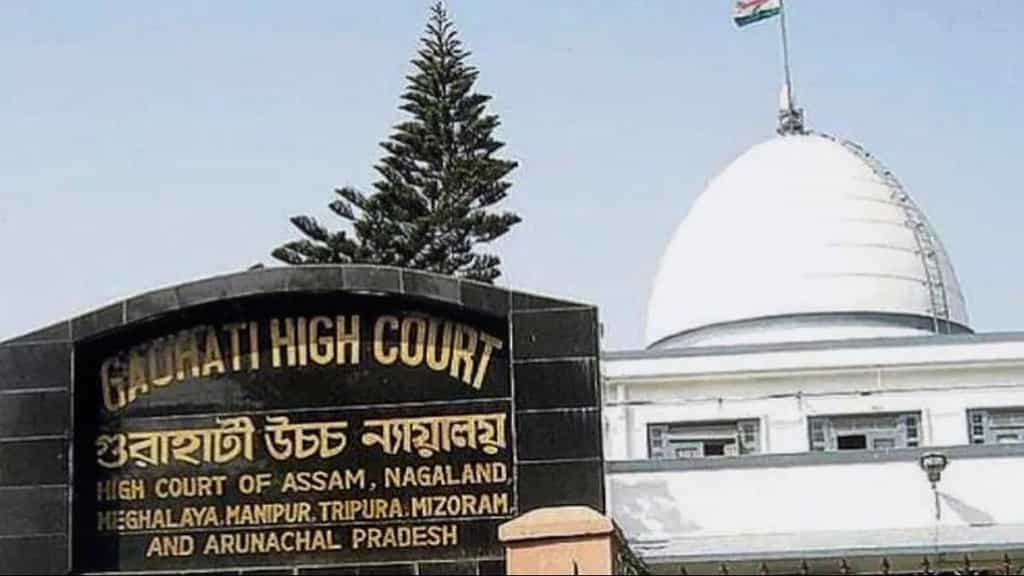
Most members of the Gauhati High Court Bar Association (GHCBA) began a three-day hunger strike on Thursday (January 8, 2026) to protest the Assam government’s decision to shift the Gauhati High Court complex from the Uzanbazar area of Guwahati to North Guwahati across the Brahmaputra River.
The fast followed a resolution adopted at the GHCBA’s emergent extraordinary general meeting held on January 6 to abstain from participating in the ceremony to lay the foundation stone of the proposed judicial township, including the new high court building, at Rangmahal in North Guwahati on January 11.
The Chief Justice of India, Justice Surya Kant, is scheduled to lay the foundation stone.
GHCBA president Kamal Nayan Choudhury and secretary general Girin Pegu are leading the hunger strike, a “peaceful and democratic expression” of the association’s opposition to the relocation, for six hours a day on January 8, 9, and 11.
Members of the bar association slammed the government for pursuing the plan to shift the high court despite a referendum against it. While 154 lawyers voted for the shifting, 1,164 members of the association voted against it.
The judicial township has been planned across approximately 43 acres. In November 2025, the Assam Cabinet ₹479 crore for the first phase of construction of the judicial township.
According to an official statement, the relocation is part of a broader plan to develop the Brahmaputra riverfront, which would require the high court land.
The Gauhati High Court currently functions from two buildings - one of them a multi-storey complex constructed a few years ago - diagonally opposite each other across the Mahatma Gandhi Road. The two buildings are connected by an underground tunnel equipped with escalators.
The GHCBA has called for an immediate halt to the Rangmahal project, insisting that shifting the court complex would inconvenience litigants and lawyers alike.
Assam’s Advocate General Devajit Saikia said the issue raised by the GHCBA was unnecessary.
“The present court complex does not have sufficient rooms for the judges and enough space for the advocates to sit. It has no room for video conferencing, no conference hall, and no canteen for senior advocates. There are parking issues, too,” he said.
Mr. Saikia said the State government pursed the judicial township project based on the decision of the high court. “The project, once completed, will solve the problems for 50 years,” he added.
Lawyers supporting the new project said the high court has two bar associations. While the GHCBA is opposing the project, the Gauhati High Court Advocates’ Association has decided to stand by the decision of the High Court.
Editorial Context & Insight
Original analysis & verification
Methodology
This article includes original analysis and synthesis from our editorial team, cross-referenced with primary sources to ensure depth and accuracy.