STARTING NEXT year, parliamentary proceedings and their related official paperwork will be available in 22 scheduled languages after being translated through Artificial Intelligence (AI), Lok Sabha Speaker Om Birla said Monday. This will be the first time that proceedings of both the Houses as well as their official documentation will be made publically accessible in their entirety, said the Speaker.
The announcement is in line with the Lok Sabha Secretariat’s initiative to use technology for speeding up legislative processes. These include directions to legislatures across the country to digitise their historical records, their budgets and arrangements to ensure faster delivery of official answers to questions asked by Members of Parliament on the eve of House proceedings, so they can prepare supplementary questions in time.
Amidst complaints from the Opposition that the Treasury Benches circulate key Bills at the last minute, Birla said he has asked the government to see that it’s done properly. “Will take more efforts to ensure that the Bills are circulated in time so that the MPs get ample time to study and prepare for debates,” Birla said.
The Speaker also agreed that a deputy speaker should be there in the Lok Sabha. “The process has to happen,” he said.
Speaking at a press conference on the announcement of the 28th Conference of Speakers and Presiding Officers of the Commonwealth (CSPOC), which will be inaugurated by Prime Minister Narendra Modi on Thursday, Birla said: “It is the responsibility of its members, and especially of the Parliament, to ensure that whatever proceedings take place are as accessible to the people as possible; people’s partnership is the real power of democracy. We have made many attempts in this direction and the results will be seen soon.”
“For the first time, real-time translation (of House proceedings) in 22 languages is taking place… We have added the diversity of language to the diversity of India…The Parliament of India is the only one in the world (where this happens)…I am hopeful that we will be able to accomplish this in all 22 languages,” he said.
While the Speaker said the initiative, which was subject to the learning pace of particular AI tools especially when it came to regional Indian languages, was likely to take off entirely in 2027, sources said its implementation could begin latest by the end of 2026. Currently, this is available only in 10 of the 22 scheduled languages.
According to sources, all those currently engaged in translation services in the Lok Sabha Secretariat are on contract-basis. The secretariat is considering appointing younger individuals for the translating proceedings of both Houses as well as various committee meetings.
The original versions of parliamentary debates as well as summarised translated versions are being prepared and brought out from the 1st Lok Sabha onwards. The summarised version comprised a summary translation of English speeches in Hindi and Hindi speeches in English.
Full Hindi versions of debates were prepared and brought out starting from the November-December session of the 6th Lok Sabha in 1978. Full English versions of debates were introduced from the 1st Session of 8th Lok Sabha in January 1985.
“The Question list is available in Indian languages from the 12th session of the 17th Lok Sabha, beginning July 20, 2023 onwards,” a source added.
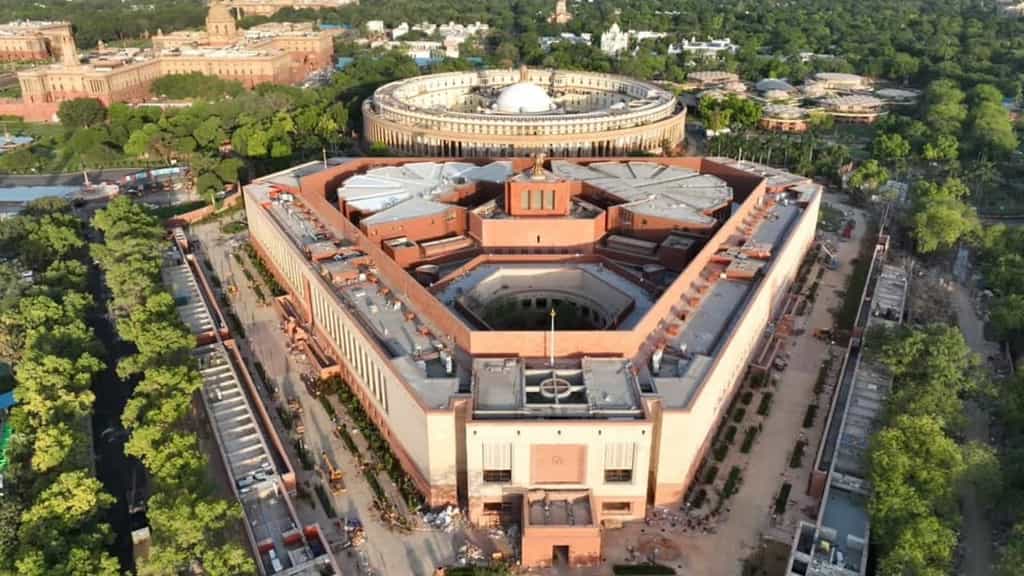
A total of 61 speakers and presiding officers are expected to attend CSPOC, which will be held at the Samvidhan Sadan from January 14 to 16.
Birla said there will be no representation from Bangladesh as that country’s Parliament is under suspension. Pakistan is also unlikely to send any representative, officials said.
The conference, which is returning to India after 16 years, will see the highest-ever participation by member nations. The conference seeks to “uphold and strengthen impartiality in Parliaments of Commonwealth nations, and empower parliamentary democracy and institutions”, said the Speaker.
India earlier hosted CSPOC in 1971, 1986, and 2010. In its 28th edition this year, the meet will focus on the use of AI and social media in parliamentary functioning, promoting innovation and citizen participation and security, health, and well-being of members of Parliament.
Editorial Context & Insight
Original analysis and synthesis with multi-source verification
Methodology
This article includes original analysis and synthesis from our editorial team, cross-referenced with multiple primary sources to ensure depth, accuracy, and balanced perspective. All claims are fact-checked and verified before publication.
Primary Source
Verified Source
The Indian Express
Editorial Team
Senior Editor
Shiv Shakti Mishra
Specializes in India coverage
Quality Assurance
Copy Chief
Fact-checking and editorial standards compliance