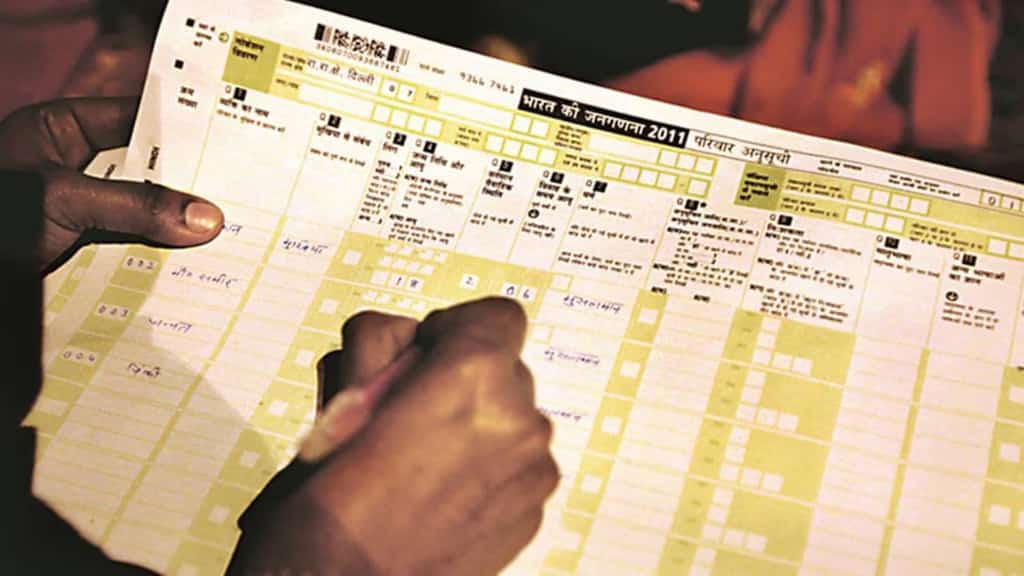
The Ministry of Home Affairs Wednesday notified the commencement of house-listing operations for the Census of India 2027, to be conducted between April 1 and September 30, 2026, across all States/UTs, kick-starting preparations for the 16th Census, the first in 16 years.
Each state and UT will carry out the exercise during a 30-day window within this period, according to the notification by the Office of the Registrar General of India (RGI).
In a significant departure from previous censuses, the notification also formally provides for self-enumeration, available for a 15-day period immediately preceding the house-to-house house-listing, allowing households to submit details digitally before an enumerator visits them.
The notification, issued under Sections 3 and 17A of the Census Act, 1948, supersedes an earlier January 2020 notification that had set the stage for the 2021 Census, which was deferred due to the pandemic.
As previously outlined by the government, the Census 2027 will be conducted in two phases — the House-listing and Housing Census in 2026, followed by Population Enumeration in early 2027. The reference date for population enumeration will be on March 1, 2027, for most of the country, and October 1, 2026, for snow-bound and remote regions such as Ladakh, J&K, Himachal Pradesh and Uttarakhand.
The census assumes added political and administrative significance as it will be the first nationwide caste enumeration since 1931, apart from Scheduled Castes and Scheduled Tribes, and will form the basis for future delimitation of electoral constituencies once the constitutional freeze is lifted.
The house-listing phase involves a door-to-door survey of every structure in the country to collect data on housing conditions and household amenities. Enumerators will record details such as the use of the building, construction material, number of rooms, ownership status, access to water, electricity and toilets, cooking fuel, and ownership of assets like phones, vehicles and televisions.
For Census 2027, the house-listing schedule will include 34 columns, with new questions reflecting changes in living standards and tech use. These include availability of internet, ownership of mobile phones and smartphones, access to drinking water within the dwelling, type of gas connection, vehicle ownership by category, and a mobile number for census follow-ups. A new question on the type of cereal consumed by the household has also been added.
Census 2027 will be India’s first digital census, with enumerators using mobile apps. While paper schedules are being kept as a backup, officials expect near-universal digital enumeration, aided by higher remuneration for digital data collection.
The self-enumeration option notified on Wednesday is a key part of this shift. Households that complete self-enumeration online will receive a unique ID, which can be shown to the enumerator during verification, reducing the time spent during house visits.
The RGI has already put in place the digital backbone for this transition, including mobile apps with built-in validation checks, GPS tagging of households, offline data capture for low-connectivity areas, and cloud-based uploads. A Census Management and Monitoring System will allow near-real-time supervision and error correction.
Following the house-listing phase in 2026, population enumeration — covering individual-level data such as age, education, occupation, religion, caste, migration and disability — is expected to be completed in 20-21 days in February 2027. Provisional population totals are expected within about 10 days of completion, with final data to follow in stages over the next six months.
Editorial Context & Insight
Original analysis & verification
Methodology
This article includes original analysis and synthesis from our editorial team, cross-referenced with primary sources to ensure depth and accuracy.
Primary Source
The Indian Express