



Key takeaways
- The central government has constituted an inter-ministerial group (IMG) to formulate a comprehensive cybersecurity strategy for India's…
- Replying to a question in the Rajya Sabha, finance minister Nirmala Sitharaman said that while the financial sector has benefited from…
- To assess these emerging threats and recommend mitigation measures, the government has tasked the IMG with preparing a comprehensive…
What happened
The central government has constituted an inter-ministerial group (IMG) to formulate a comprehensive cybersecurity strategy for India's financial sector The government's latest push comes amid growing AI-enabled cyber threats, including deepfake-enabled impersonation, sophisticated phishing campaigns and automated financial frauds Finance minister Nirmala Sitharaman said that frontier AI models could pose fresh challenges to the "growth, security and stability" of the financial sector Amid growing risks posed by AI models and rapid digitisation of banking and payments, the central government has constituted an inter-ministerial group (IMG) to formulate a comprehensive cybersecurity strategy for India’s financial sector.
The entity is jointly owned by public sector lenders SBI and Bank of Baroda. The finance minister also outlined the government’s existing cybersecurity architecture for the financial sector. In this, the Indian Computer Emergency Response Team (CERT-In) has set up a National Cyber Coordination Centre (NCCC) to monitor cyberspace at a metadata level for detection of potential cybersecurity threats.
Why it matters
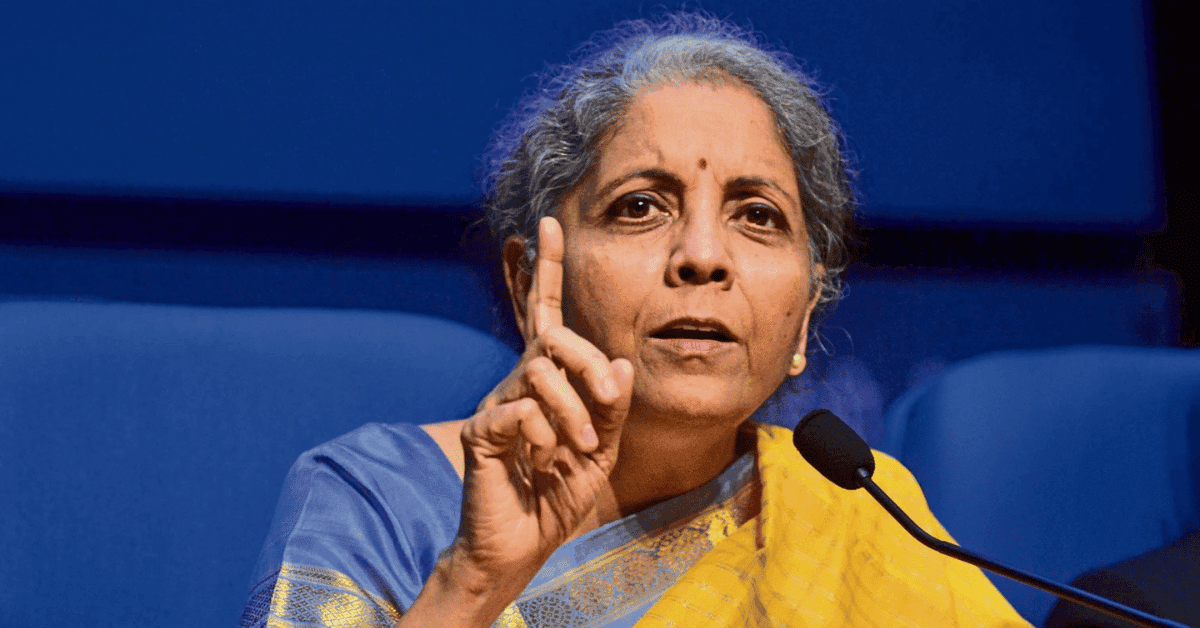
Replying to a question in the Rajya Sabha, finance minister Nirmala Sitharaman said that while the financial sector has benefited from digital public infrastructure, increasing incidences of phishing, ransomware attacks, data breaches, identity theft and cyber financial frauds necessitate stronger safeguards. She added that frontier AI models could pose fresh challenges to the “growth, security and stability” of the financial sector.
To assess these emerging threats and recommend mitigation measures, the government has tasked the IMG with preparing a comprehensive financial sector-specific cybersecurity strategy.
As part of the government’s broader efforts to tackle cyber fraud, Sitharaman also highlighted the role of the India Digital Payment Intelligence Corporation (IDPIC), which was set up in consultation with the Reserve Bank of India (RBI) to share real-time fraud intelligence and alerts with banks and financial institutions using artificial intelligence (AI), machine learning (ML) and big data analytics.
The IDPIC was incorporated as a Section 8 company in 2025. Its primary mandate is to detect, prevent and analyse fraud across India’s rapidly expanding digital payments ecosystem in real time using advanced technologies. Former Canara Bank CEO K Satyanarayana Raj serves as the company’s CEO, while Bank of Baroda chief general manager KV Sheetal and State Bank of India chief general manager Arun Pandey are on its board.
What to watch
The real-time information of these threats are further shared with concerned organisations, regulators and other stakeholders. Further, an Inter-Regulatory Technical Group (IRTG) under the Financial Stability and Development Council (FSDC) has been constituted to facilitate coordinated action among financial regulators, while the Indian Banking Association (IBA) has set up a working group comprising banks, regulators and government agencies to address cybersecurity risks arising from emerging technologies.
Earlier this year, concerns also emerged around Anthropic’s Mythos, an AI system capable of autonomously identifying high-severity software vulnerabilities, prompting policymakers and financial institutions to reassess the cybersecurity implications of frontier AI models.