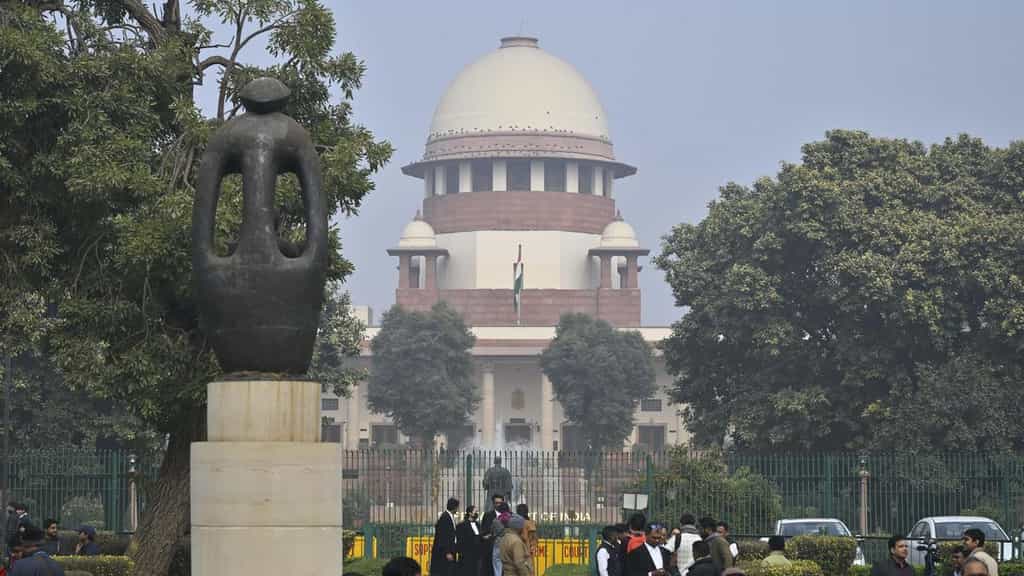
The Supreme Court on Tuesday (January 13, 2026) delivered a split verdict on the legality of a provision in an anti-corruption law which mandates prior sanction before prosecuting public servants.
Justice B.V. Nagarathna concluded that Section 17A of the Prevention of Corruption Act 1988 was plainly unconstitutional while Justice K.V. Viswanathan, the puisne judge on the Division Bench, opined that sanction must be decided by an independent authority like the Lok Pal or the Lok Ayukta.
Justice Nagarathna found the provision, introduced in a 2018 amendment to the Act, was an attempt to subvert criminal prosecution of corrupt officials rather than protect the honest among them. Justice Nagarathna observed that persons with integrity did not require any protection through the requirement of prior sanction under Section 17A.
However, Justice Viswanathan said declaring the provision unconstitutional and striking it down would be akin to throwing the baby out with the bathwater.
Section 17A of the Prevention of Corruption Act, 1988, introduced in July 2018, bars any “enquiry or inquiry or investigation” against a public servant for recommendations made in discharge of official duties without prior approval from the competent authority.
The judgment was based on a petition filed by the NGO, Centre for Public Interest Litigation, represented by advocate Prashant Bhushan, challenging Section 17A. Mr. Bhushan had argued the provisions crippled the anti-corruption law as sanctions were not usually forthcoming from the government, who was the ‘competent authority’. The senior lawyer had said the section made the government a judge in its own cause, and must be struck down.
Mr. Bhushan had submitted that only about 40% of the cases, involving the Central Bureau of Investigation, got prior approval under Section 17A for investigation.
“There are officers who give their life and soul to the country. How do we ensure that they do not become prey to frivolous prosecution for their official actions or recommendations made in the line of duty,” Justice Viswanathan had observed on the final day of hearing of the case in August last year.
Appearing for the Union government, Solicitor General Tushar Mehta and Additional Solicitor General Aishwarya Bhati had said that without the shield of Section 17A, anybody with a grudge against a public servant could rope in an NGO to file cases against the official.
When Justice Viswanathan had said sanction may not be forthcoming from the government against its “blue-eyed boys and girls” in the officialdom, Mr. Mehta had responded that it was true in all three branches of governance.
Editorial Context & Insight
Original analysis and synthesis with multi-source verification
Methodology
This article includes original analysis and synthesis from our editorial team, cross-referenced with multiple primary sources to ensure depth, accuracy, and balanced perspective. All claims are fact-checked and verified before publication.
Editorial Team
Senior Editor
Aisha Patel
Specializes in India coverage
Quality Assurance
Fact-Check Editor
Fact-checking and editorial standards compliance