As Russia remains bogged down in Ukraine, Belarus – the Kremlin’s only ally in Europe – seeks to improve relations with the United States. Unwilling to remain completely dependent on its giant neighbour, Belarusian President Alexander Lukashenko seems to be attempting to revive his well-known “multi-vector” foreign policy, balancing between Moscow, the West and China. But will he succeed?
As the year nears its end, the 71-year-old Belarusian strongman has made several “humanitarian” gestures aimed at mending ties with the Trump administration. In early March, he openly praised US President Donald Trump and backed his approach to the war in Ukraine. A few months later, in June, he released a group of political prisoners, including Siarhei Tsikhanouski, the husband of exiled Belarusian opposition leader Sviatlana Tsikhanouskaya.
In August, Lukasheno spoke with Trump by phone, discussing bilateral ties, regional affairs and the war in Ukraine. A month later, he freed another group of political prisoners, including 14 foreign nationals and prominent opposition figure Mikola Statkevich. But unlike other detainees, Statkevich reportedly refused to be deported to Lithuania and was returned to prison. That, however, did not affect the warming of relations between the Belarusian leader and Washington.
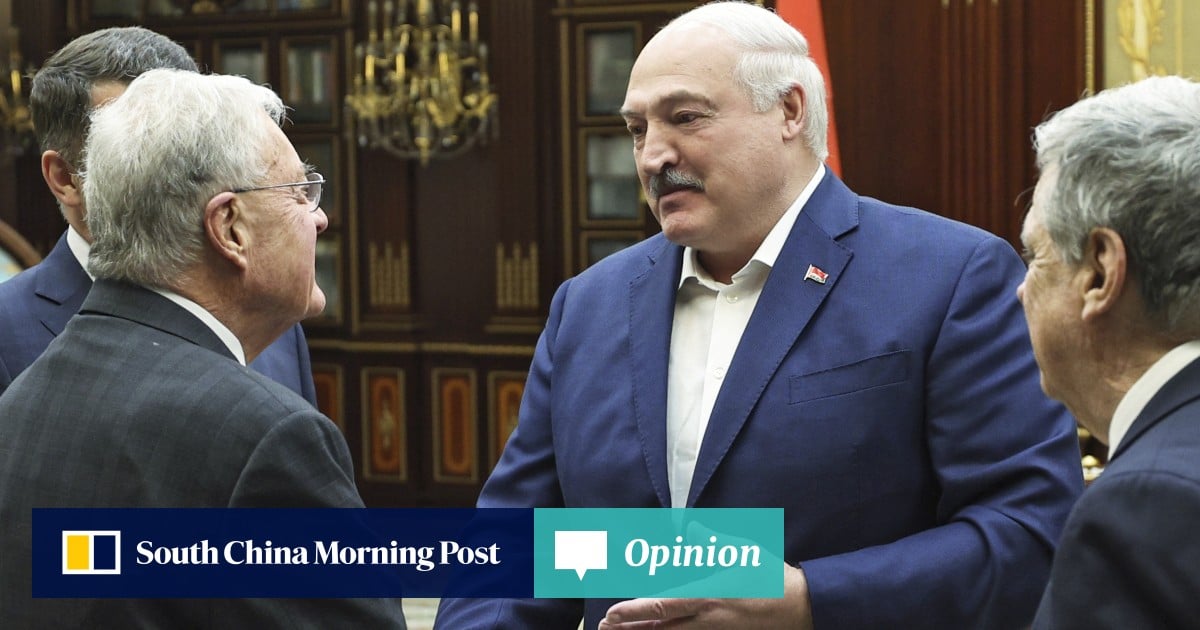
In September, following a meeting with Lukashenko, Trump representative John Coale announced that the US might soon open its embassy in Minsk, normalise ties with Belarus and revive the economic and trade relationship between the two nations.
His statement was a clear indication that Washington plans to ease the restrictions it imposed on the former Soviet republic following controversial presidential elections in 2020 and Minsk’s decision to indirectly participate in the Russian invasion of Ukraine in 2022.
This month, following another meeting with Lukashenko, Coale declared that the US would lift sanctions on Belarusian potassium, the country’s key export. In exchange, Belarusian authorities released 123 political prisoners, including Nobel Peace Prize laureate Ales Bialiatski and key opposition figure Maria Kolesnikova.