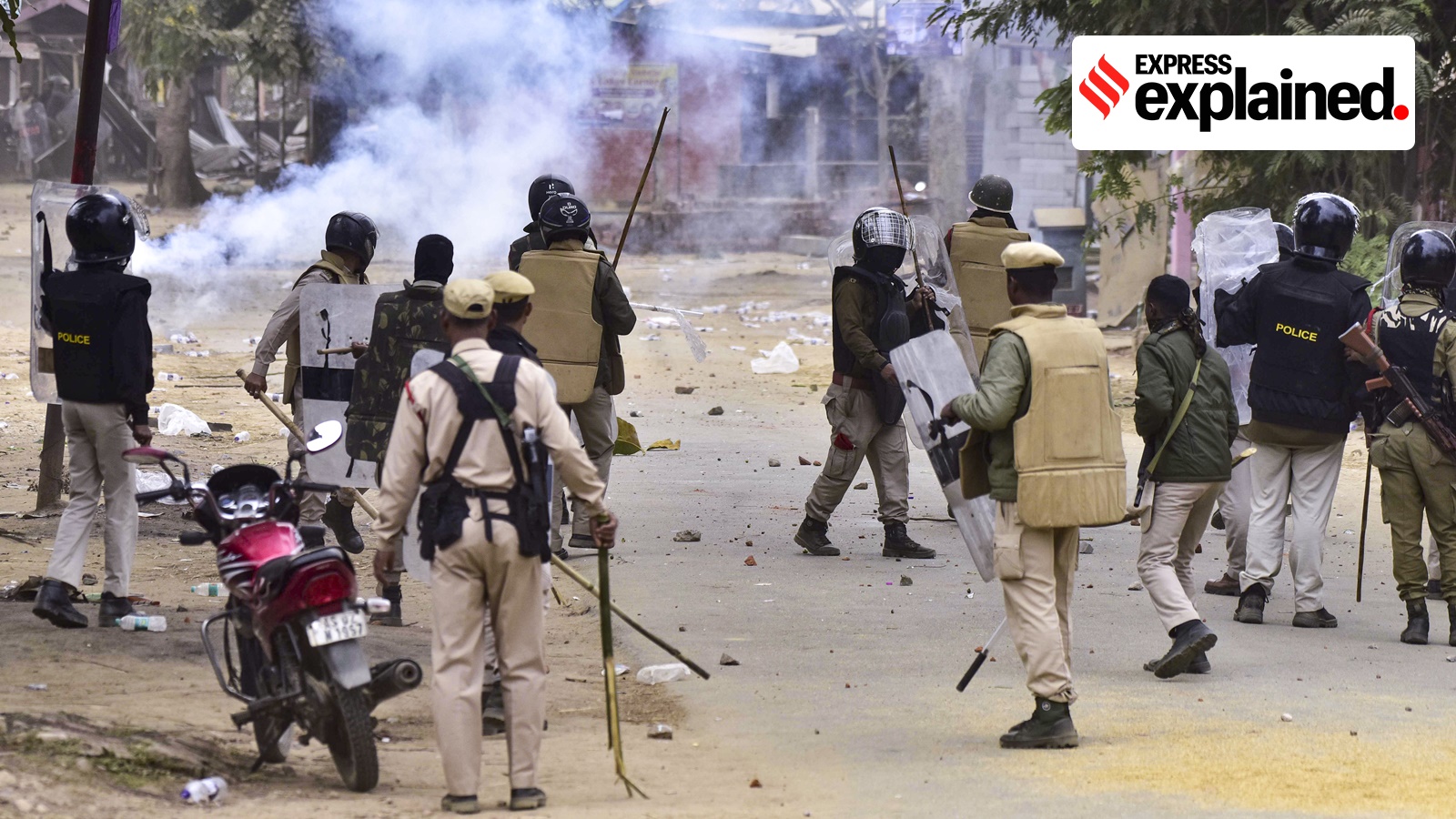
Shops and markets have been torched, mobile internet services suspended in the two districts of Karbi Anglong and West Karbi Anglong, and prohibitory orders imposed. The violence follows escalating tensions over land rights.
A day earlier, on Monday, protestors had set Karbi Anglong Autonomous Council Chief Executive Member and BJP leader Tuliram Ronghang’s ancestral home in Dongkamukam on fire.
West Karbi Anglong, a tribal majority hill district, comes under the jurisdiction of the Karbi Anglong Autonomous Council (KAAC), which governs it under the provisions of the Sixth Schedule of the Constitution. The area has a history of insurgency.
The immediate trigger for the current unrest stems from a hunger strike being observed for more than two weeks at Phelangpi in West Karbi Anglong. Nine people were on a fast unto death demanding eviction of “encroachers” from PGR (Professional Grazing Reserve) and VGR (Village Grazing Reserve) lands within the KAAC area.
PGR and VGR are tracts of lands set aside for livestock grazing, often from the time of the British rule. These land parcels are aimed at providing a fixed source of fodder for animals and help the communities dependent on them for livelihood.
Karbi tribal bodies have long demanded eviction of people settled on these lands. The settlers, often from Bihar, Uttar Pradesh, and Nepal, claim they have been living here for decades.
On Monday, the people on hunger strike were taken away from their protest site in Phelangpi. IGP (Law and Order) Akhilesh Singh said they were taken to Guwahati for “medical reasons as their condition could deteriorate after 15 days of being on hunger strike.”
However, many locals assumed the protesters had been arrested, and soon, anger spread, leading to stone-pelting and arson.
Under the Sixth Schedule of the Constitution, tribal majority areas like Karbi Anglong and West Karbi Anglong enjoy special protections for land and self-governance through autonomous councils like the KAAC.
Insurgency by Karbi — a major ethnic community of Assam — groups, dotted by several factions and splinters, has had a long history in Assam, marked by killings, ethnic violence, abductions and taxation since the late 1980s. These outfits originated from a core demand of forming a separate state. They later settled for greater autonomy under the KAAC.
The anger against ‘outsiders’ settled on grazing lands stems from this background and has led to several protests.
In February 2024, following days of agitation by Karbi tribal bodies, Ronghang — the leader whose house was set on fire — had announced evictions in reserved grazing lands in Karbi Anglong and West Karbi Anglong. He had said there were 1983 families of “illegal settlers” on PGR and VGR lands in just the Hawaipur mouza under the Donkamokam circle in West Karbi Anglong district, and that 103 families were encroaching on grazing lands in the Phuloni circle.
The protests at that time had been sparked by a Bihari Nonia community outfit submitting a memorandum to President Droupadi Murmu, which included a demand for the legalisation of settlers on these lands in West Karbi Anglong.
However, the evictions were not carried out. Ronghang said this was because of an ongoing PIL in the Gauhati High Court.
“We have taken a decision with all parties and organisations to conduct evictions there in the PGR VGR lands. We gave eviction notice to the people settled there to leave within 15 days. But after giving the notice, the settlers there have given a PIL in the high court. That is ongoing. If we do evictions now, we will be in contempt of court,” he said.