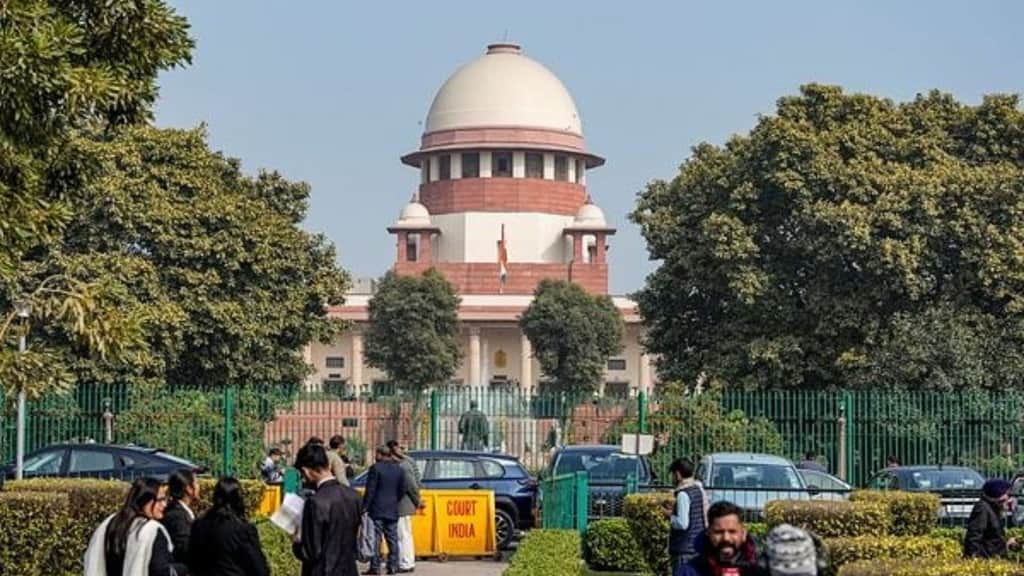
Holding that Umar Khalid and Sharjeel Imam stood on a “higher footing in the hierarchy of participation” in the alleged larger conspiracy behind the 2020 Northeast Delhi riots, the Supreme Court Monday denied them bail while granting the five other accused a conditional bail.
A bench comprising Justices Aravind Kumar and Prasanna B Varale stated that the allegations against all the accused are not on equal footing and that each bail application must be considered individually.
The bench granted bail to the accused Gulfisha Fatima, Meeran Haider, Shifa Ur Rehman, Mohammad Salim Khan, and Shadab Ahmad.
Khalid and other accused were booked under under Section 15 of the stringent Unlawful Activities Prevention Act (UAPA), which defines a terrorist act, criminalises any “with intent to threaten or likely to threaten the unity, integrity, security, economic security, or sovereignty of India or with intent to strike terror or likely to strike terror in the people or any section of the people in India.”
However, the provision qualifies that striking terror is by use of “bombs, dynamite or other explosive substances or inflammable substances or firearms…or any other means.”
The thrust of the prosecution’s case is that by conspiring and causing a “chakka jam” or a road blockade, the accused committed a “terrorist act.”
Umar Khalid’s bail case has been emblematic of the delays in the system. Arrested in September 2020, he first moved the Karkadooma court in July 2021. That application was withdrawn after objections were raised on maintainability. A fresh plea was filed the same year.
In March 2022, the trial court rejected his bail, relying on witness statements and electronic material which, it held, suggested Khalid’s role in directing an escalation from protest to violence. He appealed to the Delhi High Court in April 2022. In October that year, the court dismissed his appeal, holding that the bar under Section 43D(5) of the UAPA applied.
In 2022, the Supreme Court directed all courts to adjudicate bail applications within 2 weeks of their filing. However, a bench of Justices Siddharth Mridul and Rajnish Bhatnagar in the Delhi HC heard the pleas, reserved the verdict, but did not pass judgment.
After a seven-month delay, Justice Mridul was transferred, and the case was heard afresh by a new bench. The new bench, too, of Justices S K Kait and Girish Kathpalia, heard the case but did not pronounce the verdict, as Justice Kait had been transferred.
Khalid approached the Supreme Court of India in April 2023. After months of adjournments, he withdrew the petition in February 2024, citing “changed circumstances”. He then returned to the trial court. In May 2024, bail was rejected again, with the court holding that prolonged incarceration alone could not override the UAPA bar.
Khalid’s subsequent appeal before the Delhi High Court was dismissed on September 2, 2025, the court finding that the material on record continued to disclose a prima facie case of conspiracy.
Editorial Context & Insight
Original analysis & verification
Methodology
This article includes original analysis and synthesis from our editorial team, cross-referenced with primary sources to ensure depth and accuracy.
Primary Source
The Indian Express