I expected the EU to push back strongly against Donald Trump’s new national security strategy. Not only does it show contempt for the EU and its “weak” leaders, but it also targets European citizens and migrants with racist dog whistles and barely disguised Islamophobia. Yet instead of a rousing defence of the bloc’s commitment to human rights and equality, there have just been bland platitudes.
António Costa, the president of the European Council, denounced Trump’s plans to boost support for Europe’s far-right parties. But there was no public challenge to the racist logic underpinning his argument. Costa, who has spoken proudly of his mixed ancestry, could have made a convincing counterargument to the US president’s false premise that Europe was heading for “civilisational erasure” because of migrants and, by extension, millions of Europeans of colour.
Ursula von der Leyen, the European Commission president, insisted that the best response to the Trump administration’s insults was standing up for a united Europe, focusing on its strengths and taking pride in the EU. There was no reaffirmation of the compelling vision she outlined only two years ago of an inclusive EU “where it doesn’t matter what you look like, who you love, how you pray, and where you are born”.
The truth is that Trump’s alternative reality about a “woke” Europe is laughable. He would feel quite at home in today’s EU. Far-right parties are on the rise, and the rhetoric of “defending civilisation” – part of the “great replacement” conspiracy discourse – has seeped from the far-right fringes into the political mainstream. Von der Leyen’s own conservative bloc increasingly relies on far-right votes to move legislation through the European parliament. If Trump were to visit “Brussels so white”’s institutions, the US president would likely not run into many people of colour.
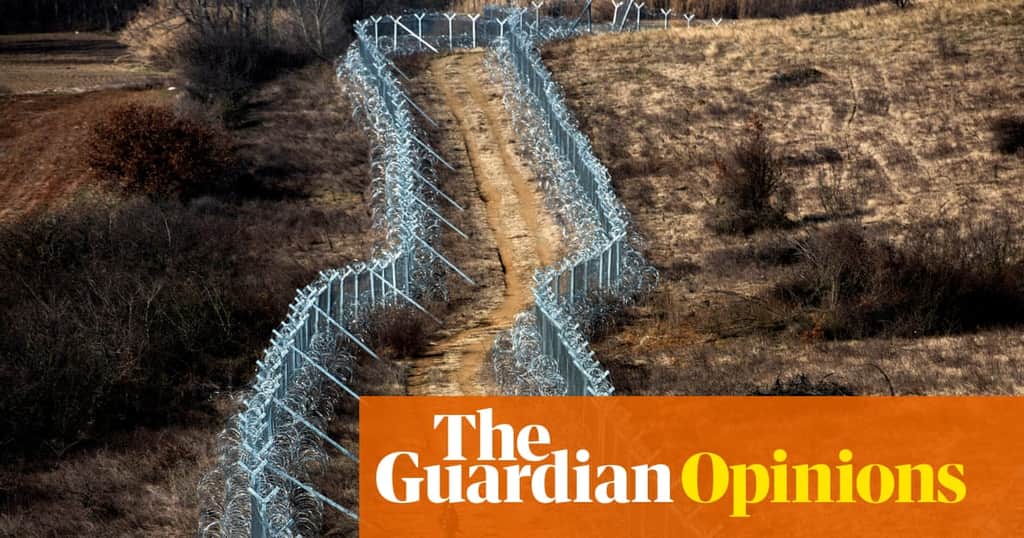
The US and EU’s methods for dealing with unwanted migrants are beginning to converge. The EU might not deploy the masked ICE-style paramilitaries who stalk American streets, but its new migration pact tightens asylum procedures, accelerates deportations and expands detention. Many EU countries want additional “innovative solutions”, which include increased powers for Frontex, the EU border control agency accused of systemic human rights failures, including being complicit in illegal pushbacks. Twenty-seven European states have asked for a revision of the European convention on human rights because, they argue, migrant rights must be balanced against Europeans’ “security” and “freedom”.
All of this is right up Trump’s street but is against Europe’s own interests. With ageing populations and labour shortages hollowing out entire sectors, the EU does in fact need migrants. The commission has identified shortages in 42 occupations, including jobs in construction, transport, agriculture, hospitality, health and social care, which are essential for Europe’s economic resilience and “strategic autonomy”. That is why, even as politicians compete to sound tougher on borders, no one is saying that many of their governments are, in fact, quietly signing labour partnerships with the global south.
The US president claims that nationalist parties are victims of censorship, but it is Europe’s progressives, especially those advocating for solidarity and justice for Palestinians, who face restrictions. UN experts have had to tell Germany to stop the persistent pattern of police violence against Palestinian solidarity activism. Meanwhile, in France a major international academic conference on Palestine was forced out of the Collège de France in November, as a minister publicly labelled the event as “activist”.
Those who cover European policies understand that in addition to politicians’ outbursts of moral panic, the EU has perfected a polished, technocratic form of exclusion that relies on directives and regulations, coded language about “European values” and a securitisation framework that normalises human rights exemptions. Sometimes, even the facts are denied: the lower house of the Dutch parliament refused to discuss a government-commissioned study that found that anti-Muslim discrimination was structurally embedded in society – and young Muslims increasingly feel they do not belong.
Europe’s political and media ecosystems have helped construct an “imaginary Muslim” who is a suspect and a security risk – and never a doctor, a nurse, a scientist or an elected representative, Dutch socialist MEP Mohammed Chahim told me. Nothing, not even evidence-based research, is allowed to go against the dominant narrative.
I wish Europeans of colour truly wielded the power that the US president attributes to us. We do not. Many remain marginalised and stigmatised, and face structural discrimination. Yet countless others – far from plotting the demise of European “civilisation” – are working to ensure that Europe survives and thrives through their contributions across politics, business, technology, culture, sport, media, medicine, design, transport, academia and more.
The question is whether Europe’s leaders – or at least those who are more responsible – will finally speak up. Trump’s fantasy of resurrecting a white, Christian Europe is certainly providing oxygen for his European acolytes who frame Europeans of colour through the tired lens of migration “crises”, identity threats and endless integration tests. Those who do not subscribe to this toxic fiction must have the courage to say so publicly and celebrate the diversity of Europe.
Editorial Context & Insight
Original analysis & verification
Methodology
This article includes original analysis and synthesis from our editorial team, cross-referenced with primary sources to ensure depth and accuracy.
Primary Source
Opinion | The Guardian