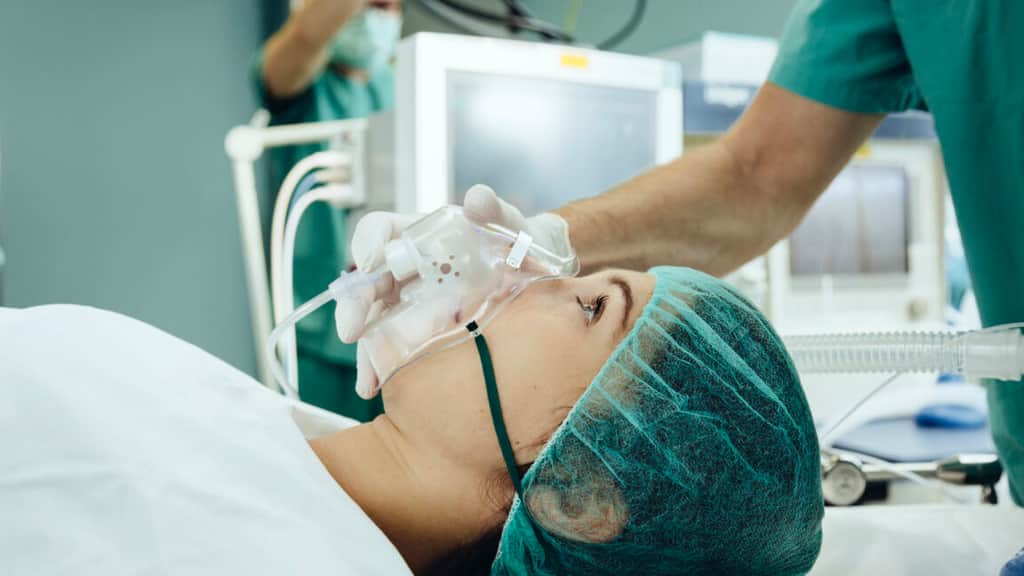
In 2013, the Yale New Haven Health System became the first health care provider in the US to stop using desflurane and the first to eliminate a drug based on its climate impact.
“At our flagship hospital, it was the equivalent of [taking] 360 cars off the road,” Sherman said. “There are 6,000 hospitals in the United States.”
Instead of desflurane, the Yale New Haven Health System now relies primarily on sevoflurane, an anesthetic that is 10 times less potent as a greenhouse gas and approximately half as expensive. The health care system saved $1.2 million annually on anesthesia medications after making the switch, Sherman said.
Other hospitals and health care providers have since followed suit. Those that have eliminated or reduced their use of desflurane include the University of California’s health care system, Providence health care system, OhioHealth, the University of Vermont Medical Center, and Kaiser Permanente, one of the largest managed-care organizations in the United States.
Richard Dutton, chief quality officer for US Anesthesia Partners, one of the nation’s largest anesthesia providers, estimates that changes made by his company since 2017 have reduced their greenhouse gas emissions from anesthesia by about 90 percent. A decade ago, USAP used desflurane in approximately half of all procedures. Now, the group’s doctors use the drug in less than 1 percent of all cases, Dutton said.
Anesthesiologists increasingly use low-flow anesthesia, limiting the flow of gas to only when the patient is inhaling it. This reduces the amount of medicine required and the amount of gas vented to the atmosphere.
“If we can deliver the same safe and effective anesthesia using less greenhouse gases, that’s just on the face of it, better, and something we should do,” Dutton said.
USAP physicians and others are also using less nitrous oxide or “laughing gas,” a mild anesthetic and potent greenhouse gas. Nitrous oxide is commonly distributed throughout hospitals via a centralized, leak-prone pipe network. Pipe networks in US hospitals can leak up to 99.8 percent of the gas before it reaches patients, according to a study published in 2024 in the British Journal of Anaesthesia. Using small, portable tanks can reduce losses by 98 percent.
Editorial Context & Insight
Original analysis & verification
Methodology
This article includes original analysis and synthesis from our editorial team, cross-referenced with primary sources to ensure depth and accuracy.
Primary Source
Ars Technica