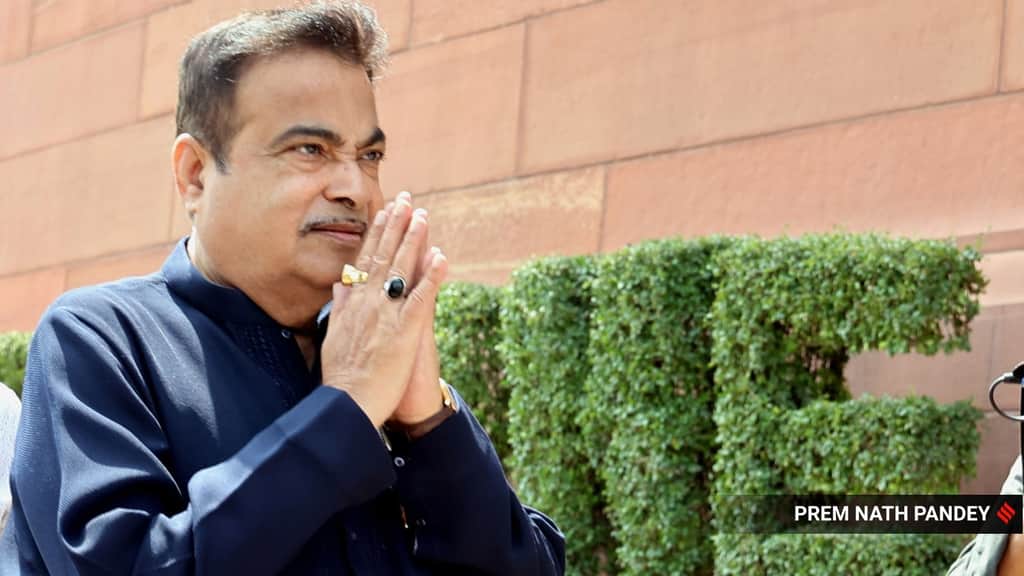
Union minister Nitin Gadkari at the parliament house in New Delhi (Source: Express photo by Prem Nath Pandey)
Weight loss narratives are often framed around quick fixes, strict diets, or dramatic before-and-after transformations. But Union minister Nitin Gadkari’s account of losing weight places the focus elsewhere: on routine and discipline. In a recent video on Farah Khan’s YouTube channel, where she and her cook Dilip visited his home, Gadkari spoke candidly about his demanding schedule and the role exercise now plays in his life.
“It’s 9:30 pm now, and after meeting with you, I have appointments till 1 am. Then I will wake up at 7 am and do exercise for two and a half hours,” he said. Reflecting on the physical changes he has seen, he added, “I used to be 135 kg at one point, and now I weigh 89 kg. You can see the positive effects of this routine on my face.”
This transformation was also discussed in an earlier podcast with ANI, where Gadkari revealed that he lost 46 kilograms after COVID. He described the change not as cosmetic but existential, explaining that the pandemic forced him to confront years of ignoring his own health in favour of work. “I had a very unplanned, undisciplined life. Undisciplined? Absolutely,” he said, noting that exercise is now non-negotiable. “Now I exercise for two to two-and-a-half hours daily.”
The shift, he said, came after personal loss. “During COVID, my friends who were with me passed away. Then I felt I had to change,” Gadkari shared, describing this moment as the inflexion point that permanently altered his routine and outlook. For him, the weight loss became secondary to a broader principle. “Health is wealth,” he said, stressing that professional success or public standing means little if the body begins to fail.
When asked about the specifics of his routine, Gadkari spoke about pranayam, stretching, strengthening exercises, and working with a trained instructor.
Weight loss that relies only on calorie restriction or cardio often leads to muscle loss and rebound weight gain. (Source: Freepik)
Sadhna Singh, senior fitness and lifestyle consultant at HereNow Official, tells indianexpress.com, “For most working adults, two to two-and-a-half hours of daily exercise is not realistic in the long run, and sustainability matters far more than intensity. What makes such routines work for individuals like Mr Gadkari is not the duration alone, but the consistency and structure behind it.”
For the average person, she says, the same principles can be adapted into shorter, well-planned sessions. Forty-five to sixty minutes of focused movement combining cardiovascular activity, strength training, and mobility work is more than sufficient if done regularly. “The key is treating exercise as a non-negotiable appointment.”
These practices are highly effective when combined thoughtfully. Pranayam supports stress regulation and hormonal balance, which directly affects appetite, fat storage, and insulin sensitivity. Stretching improves joint health, circulation, and recovery, making it easier for individuals to stay active without injury.
“Strength training is particularly critical after significant weight gain because it helps rebuild muscle mass, boosts resting metabolic rate, and improves glucose metabolism. Weight loss that relies only on calorie restriction or cardio often leads to muscle loss and rebound weight gain. A combination of breathwork, mobility, and progressive strength training creates a resilient metabolism and supports long-term weight maintenance,” notes Singh.
DISCLAIMER: This article is based on information from the public domain and/or the experts we spoke to. Always consult your health practitioner before starting any routine.
Editorial Context & Insight
Original analysis & verification
Methodology
This article includes original analysis and synthesis from our editorial team, cross-referenced with primary sources to ensure depth and accuracy.
Primary Source
The Indian Express