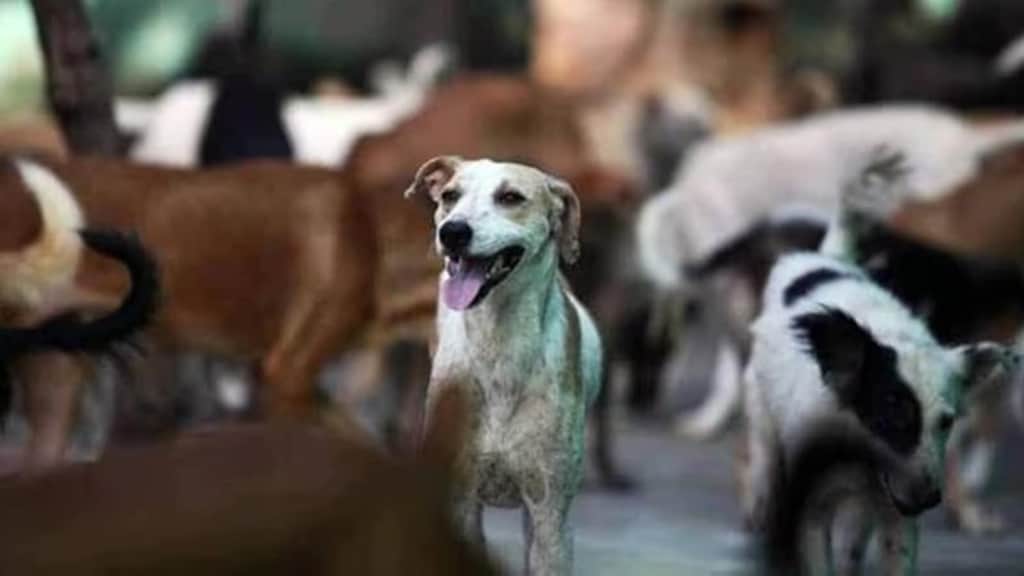
There is a dangerous illusion at work in the recent judicial impulse to “pick up” community dogs and confine them in shelters. It is the illusion that disease can be locked away behind walls, that public health improves when living beings are herded, stacked, and hidden from view. History, science, and basic epidemiology say exactly the opposite.
India is being nudged towards an experiment no country in the world has attempted at this scale: The mass confinement of millions of free-living dogs. This is not only impractical and illegal under existing animal welfare law, but it is a grave public health risk.
The first and most basic issue is feasibility. The shelters required for such an exercise do not exist, neither in number nor in capacity, design, staffing, or biosecurity standards. Even partial removal of community dogs would require thousands of permanent facilities with trained personnel, isolation wards, waste-management systems, continuous veterinary supervision, and sustained public funding.
Shelters are not temporary holding spaces. Once an animal is confined, the responsibility becomes lifelong. Food, water, sanitation, vaccination, treatment, quarantine, staff safety, and disease surveillance must be maintained indefinitely. At present, there is no national roadmap, funding mechanism, or operational framework capable of sustaining such an obligation.
Even if one assumes, purely hypothetically, that adequate shelters could be created overnight, the more serious question remains: What happens to infectious disease inside confinement?
Rabies, the disease most frequently cited to justify removal, is particularly misunderstood. It is not detectable in its early stages. There is no rapid field test that can reliably identify an infected but asymptomatic dog at intake. An animal may appear healthy while incubating the virus, only developing symptoms days or weeks later.
When such animals are confined in close proximity, shelters cease to be places of safety and instead become epidemiological amplifiers. Crowding, stress, injury, and forced interaction suppress immunity and increase anxious encounters. Rabies is transmitted through saliva, and confinement dramatically increases exposure risk. This is not theoretical. This is how outbreaks begin.
Shelters are not sealed systems. Workers, veterinarians, transport staff, cleaners, volunteers, and visitors move in and out daily. Animals are shifted, treated, and sometimes escape. Waste is handled and disposed of continuously. Each interaction creates a potential exposure pathway.
Because rabies symptoms are delayed, detection often occurs only after transmission has already happened. Confinement does not eliminate human risk; it multiplies the number of high-risk contact points.
To believe that rabies can be “locked away” reflects a fundamental misunderstanding of the disease. Rabies cannot be confined. It can only be prevented.
This concern extends beyond rabies. Zoonotic diseases consistently emerge and spread in conditions of overcrowding, stress, and inadequate biosecurity.
Modern public health operates under the One Health framework, endorsed globally, which recognises that human health, animal health, and environmental health are inseparable. Policies that compromise animal health inevitably place human populations at risk. Mass canine confinement violates every principle of One Health.
Countries that have successfully reduced rabies transmission did not do so by removing dogs en masse. They relied on three evidence-based interventions: Mass vaccination, reaching and sustaining at least 70 per cent coverage; sterilisation, to stabilise populations over time; and community management, allowing vaccinated dogs to maintain territories that prevent the entry of unvaccinated animals.
Vaccinated, sterilised community dogs act as a biological barrier to the spread of disease. Removing them creates a vacuum that is quickly filled by new, unvaccinated animals, increasing risks.
Confinement destroys this equilibrium.
From a public health standpoint, the choice is clear. Either India strengthens proven, science-based strategies, vaccination, sterilisation, and monitoring, or it embarks on a high-risk experiment that concentrates disease, multiplies exposure pathways, and undermines long-term control.
This is not a matter of sentiment or preference. It is a matter of epidemiology, logistics, and accountability. Policies driven by fear rather than science do not protect populations; they merely defer and magnify harm.
When a strategy has never been tested anywhere in the world, the burden of responsibility for unintended consequences is immense. Infectious diseases do not respect institutional boundaries or national borders. Public health decisions must therefore be guided by evidence, not optics.
Free-living dogs that are vaccinated, sterilised, and monitored can be observed, managed, and controlled in the open. Disease trends can be tracked. Interventions can be targeted. Confinement, by contrast, hides risk until it erupts.
India must decide whether it wishes to follow established science or attempt to outrun it. Public health is protected by knowledge, prevention, and responsible policy.
Confinement is not containment, and mistaking it for such may come at a cost far higher than anticipated.
The writer is PadmaShri, Former Head of the Community Health department, All India Institute of Medical Science
Editorial Context & Insight
Original analysis & verification
Methodology
This article includes original analysis and synthesis from our editorial team, cross-referenced with primary sources to ensure depth and accuracy.
Primary Source
The Indian Express