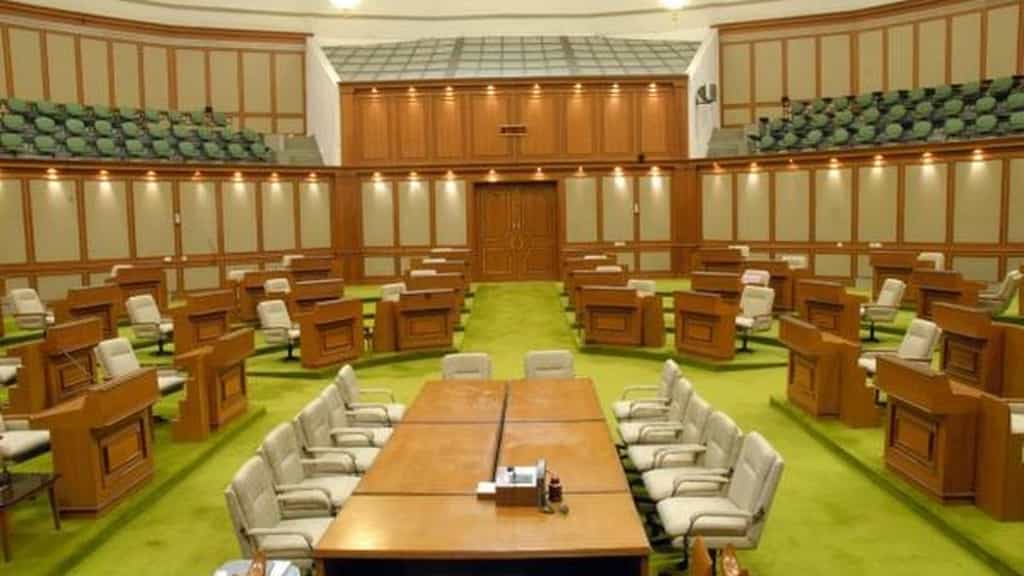
The Goa Government has introduced a Bill in the Assembly that seeks to decriminalise minor offences such as illegal construction, land misuse in waste management areas, encroachments, waste dumping and obstruction of public spaces.
The Bill proposes to replace imprisonment provisions for such offences with monetary penalties to promote trust-based governance and ease of living and doing business.
The government on Tuesday (January 13, 2026) tabled the Goa Jan Vishwas (Laws Amendment) Bill, 2026, in the Assembly, seeking to decriminalise minor offences across multiple State laws. It is likely to be taken up for a detailed discussion at a later stage.
“The Bill is aligned with similar decriminalisation exercises undertaken at the Centre, and is intended to improve administrative efficiency, reduce litigation and allow enforcement agencies to focus on serious offences,” according to sources.
It proposes amendments to over a dozen State enactments, including laws governing excise, waste management, fire services, land revenue, municipalities, panchayats, public health and civic administration, by removing criminal liability for minor violations and rationalising fines and penalties.
The Bill aims to reduce the compliance burden on people and businesses by ensuring that minor procedural lapses do not result in criminal prosecution, while still maintaining regulatory oversight through financial deterrents.
A key feature of the Bill is the systematic substitution of imprisonment and prosecution clauses with graded penalties, particularly in laws such as the Goa Fire Force Act, 1986, where offences previously punishable by jail terms are now proposed to be addressed through fines linked to pay or fixed monetary limits.
In the Goa Waste Management Act, 2016, the Bill prescribes steep penalties for illegal construction or misuse of land in waste management areas, including fines of several lakhs of rupees and daily penalties for continuing violations, while doing away with criminal proceedings.
In the Goa Municipalities Act, 1968, the Bill proposes enhancing penalties for violations such as illegal constructions, encroachments, dumping of waste, sewage discharge, unauthorised commercial activities and obstruction of public spaces, with fines in several cases increased up to ₹50,000 or ₹1 lakh, along with continuing penalties for repeat offences.
The Bill also introduces a provision for automatic revision of fines and penalties by 10% every three years, aimed at preventing erosion of deterrence owing to inflation and time lag in legislative updates.
It further seeks to repeal the Goa Jan Vishwas (Laws Amendment) Ordinance, 2025, while protecting actions already taken under it through a savings clause.
Editorial Context & Insight
Original analysis and synthesis with multi-source verification
Methodology
This article includes original analysis and synthesis from our editorial team, cross-referenced with multiple primary sources to ensure depth, accuracy, and balanced perspective. All claims are fact-checked and verified before publication.
Editorial Team
Senior Editor
Aisha Patel
Specializes in India coverage
Quality Assurance
Associate Editor
Fact-checking and editorial standards compliance