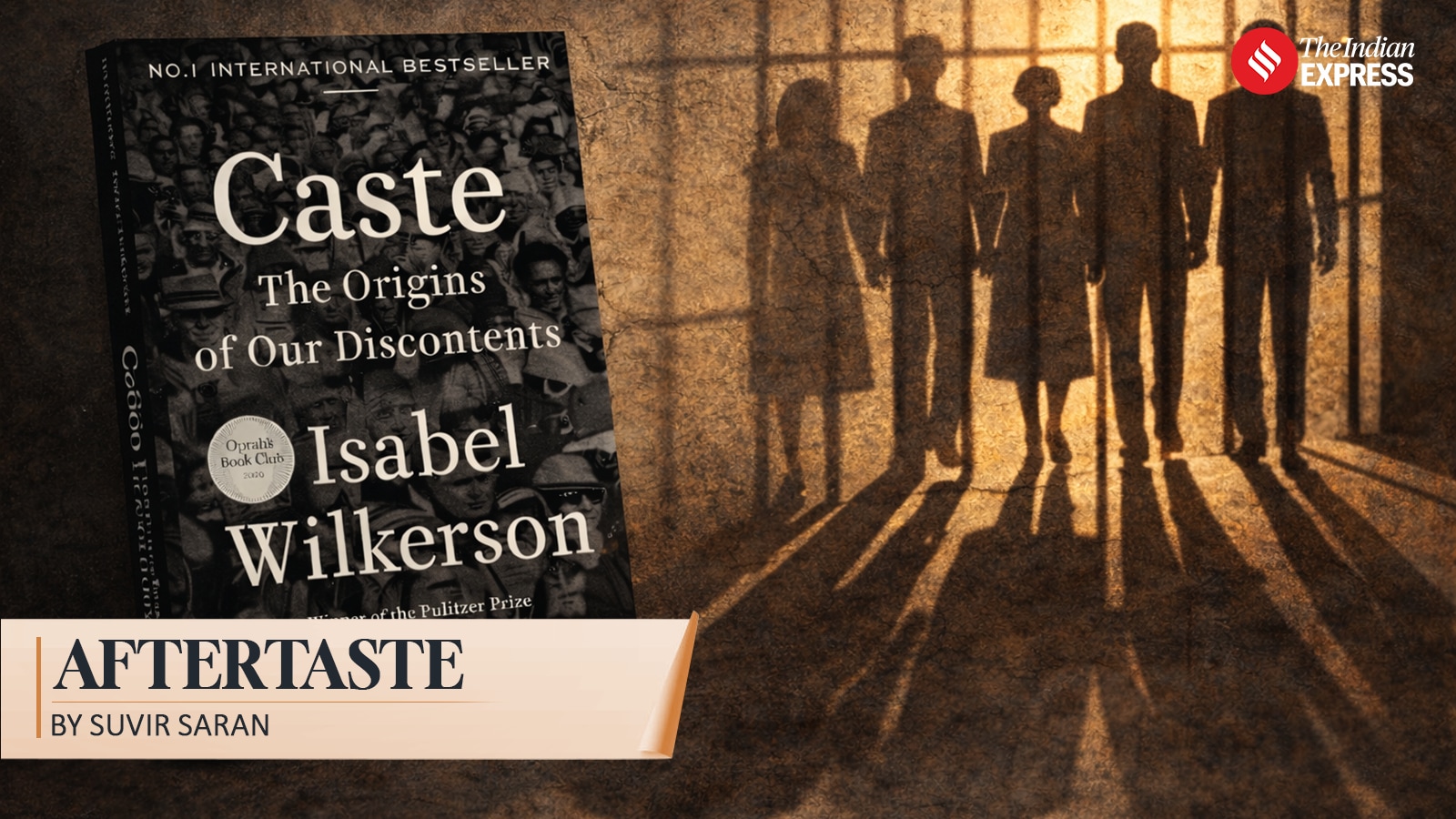
There are books you finish and forget. And then there are books that do not finish with you at all. They stay. They sit in the body like a held breath, like a bruise you didn’t know you were carrying until someone pressed it gently and said: here, this too is part of you.Caste, by Pulitzer Prize–winning journalist Isabel Wilkerson, is one such book.
It does not shout for attention or posture for applause. It waits. And in that waiting, it indicts.
This is not a book about outrage; it is a book about anatomy. Wilkerson opens society up carefully, layer by layer, and shows us the bones we walk on — the invisible scaffolding of hierarchy that determines who rises easily, who bends early, who is seen as default human and who must constantly prove their worth. It insists that caste is not merely an Indian affliction or a historical relic, but a global operating system, ancient yet adaptive, brutal yet banal, surviving not through spectacle but through routine.
What makes Caste so quietly devastating is its refusal to allow us the comfort of distance. This is not someone else’s story. It is ours — lived, inherited, rehearsed daily. The book makes clear that systems of dominance do not require villains to function; they require participation, silence, habit. Oppression survives best when it disguises itself as order, culture, even common sense.
As I read, I kept thinking of kitchens — not metaphorically, but literally. Who enters them without question. Who is asked to wash hands again. Who serves and who sits. Who eats first. Who is thanked. Who disappears. Power lives in these rituals. So does caste. It is not always announced; it is assumed. It is not always enforced by cruelty; it is upheld by comfort.
The brilliance of Caste lies in its comparative courage. (Source: amazon.in)
This is scholarship worn lightly, but carried deeply. The research is rigorous, the thinking precise, yet the prose never forgets the human cost of abstraction. It understands that humiliation is inherited like an heirloom, that entitlement often mistakes itself for innocence, and that privilege is most powerful when it convinces itself it has none. The book asks a dangerous, necessary question: what did you benefit from that you did not earn?
Discomfort is not a side effect of this book; it is its purpose. Caste makes clear that justice does not begin with sympathy or performative guilt. It begins with reckoning — sustained, structural, uncomfortable reckoning. Not a single apology or a fashionable outrage, but a lifelong discipline of seeing clearly and then acting differently. It insists that dismantling injustice is not an emotional event but an ethical practice.
And yet, for all its severity, this is not a hopeless book. Its hope is not sentimental; it is structural. It lies in naming. In pattern recognition. In the belief that once a system is made visible, it loses the luxury of invisibility. You cannot dismantle what you refuse to name. And once named, once truly seen, it cannot retreat quietly back into the shadows.
What lingers after finishing Caste is not anger so much as gravity. The seriousness of understanding. The weight of knowing that history does not ask us to feel guilty, but to be awake. Awake to the ways we comply. Awake to the ways we benefit. Awake to the ways we can choose differently.
In an age addicted to speed, outrage, and absolution, Caste chooses endurance. It does not flatter the reader or offer easy exits. It does not trade in villains and heroes. Instead, it asks us to grow up — to accept that the deepest injustices are not always the loudest ones, but the most disciplined, rehearsed daily, defended politely, denied endlessly.
This is not a book to be skimmed or sensationalised. It is a book to be sat with, argued with, returned to. Because once you have seen the structure, you cannot unknow it. And once awake, there is no honest way back to sleep.