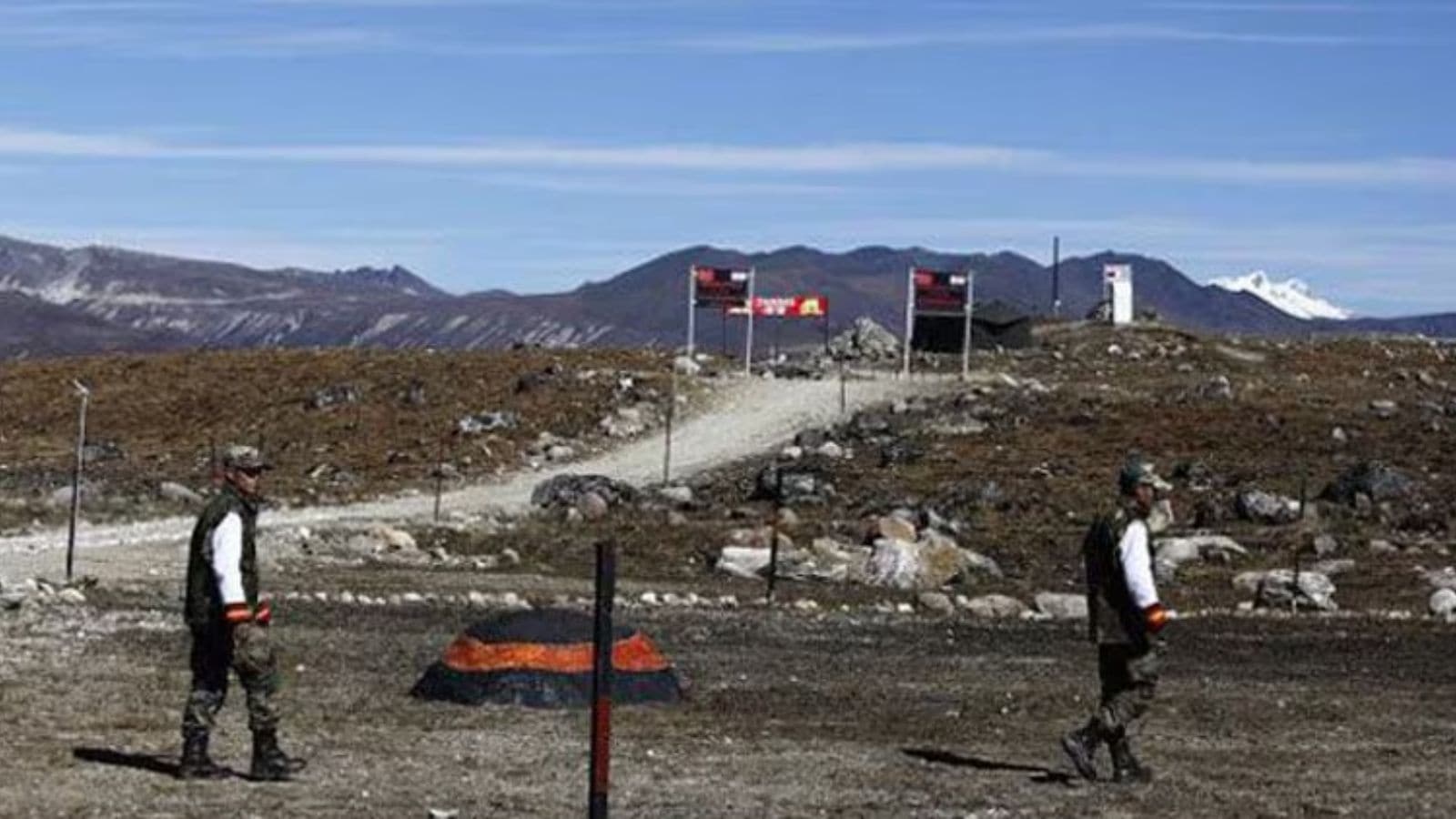
The report is full of erroneous understandings of China and geopolitical biases, exaggerating the so-called “Chinese military threat” to mislead the international community, Chinese Defence Ministry spokesman Zhang Xiaogang. (File photo)
Calling it “irresponsible” and “groundless”, China has denounced a recent Pentagon report submitted to the US Congress that flagged Beijing’s claim over Arunachal Pradesh as part of the country’s stated “core interests”. The report had also accused Beijing of leveraging reduced border tensions with New Delhi to undermine India-US ties while deepening its own defence ties with Pakistan.
On being asked what the US was trying to achieve by claims that China probably seeks to “capitalise” on decreased tensions along the border with India to “prevent the deepening of US-India ties”, Chinese Foreign Ministry spokesperson Lin Jian said at a media briefing on Thursday that Beijing views its relations with New Delhi from a strategic height and a long-term perspective.
“We stand ready to strengthen communication, enhance mutual trust, promote cooperation, and properly handle differences with India, and advance a sound and stable bilateral relationship,” he said.
“The Pentagon’s report distorts China’s defence policy, sows discord between China and other countries, and aims at finding a pretext for the US to maintain its military supremacy,” Jian said when asked about the US Department of War report submitted to the American Congress. China firmly opposes the report, the official added.
On the references to the Line of Actual Control in the report titled ‘Military and Security Developments Involving the People’s Republic of China 2025’, Jian said, “The boundary question is a matter between China and India, and the current border situation between the two countries is generally stable with smooth communication channels”. He said, “China opposes (the) relevant country’s groundless and irresponsible comments.”
Chinese Defence Ministry spokesman Zhang Xiaogang denounced the Pentagon report, saying that the US releases such reports year after year, “grossly interfering in China’s internal affairs”.
The report is full of erroneous understandings of China and geopolitical biases, exaggerating the so-called “Chinese military threat” to mislead the international community, Zhang said.
The report referred to a meeting between Chinese President Xi Jinping and Prime Minister Narendra Modi on the sidelines of the BRICS Summit in October 2024, just days after the border agreement was signed between two countries to disengage from standoff sites along the LAC.
The report has flagged China’s claim over Arunachal Pradesh as part of Beijing’s stated “core interests”, placing the Indian state alongside Taiwan in China’s long-term national strategy. It noted that China’s leadership has expanded the scope of its core interests to include Taiwan, sovereignty and maritime claims in the South China Sea, the Senkaku Islands, and Arunachal Pradesh — framing these objectives as central to achieving the “great rejuvenation of the Chinese nation” by 2049.
The report also flags China’s deepening military and strategic cooperation with Pakistan. Beijing continues to co-produce the JF-17 fighter aircraft with Pakistan and remains the only buyer of Chinese J-10 multirole combat aircraft. The Pentagon assessment notes that China is likely considering Pakistan as a potential location for future PLA military logistics facilities, as part of its broader overseas basing strategy beyond Djibouti.