

Key takeaways
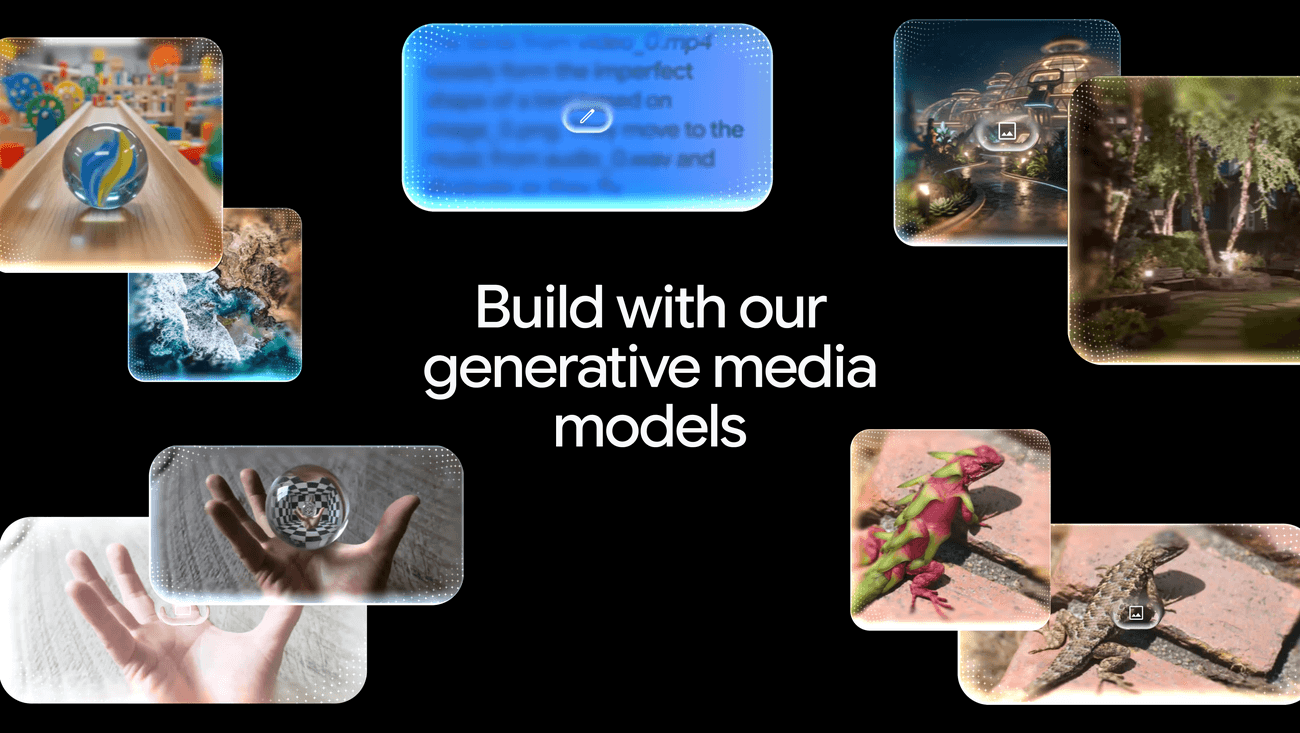
- Today, we’re making it faster and easier to experiment, refine and scale your ideas with two major releases: Building with generative media…
- Despite prioritizing speed, Nano Banana 2 Lite retains reliable prompt adherence, strong character consistency and legible in-image text…
- To see the full list of model capabilities and how to integrate check out the developer docs.
What happened
Despite prioritizing speed, Nano Banana 2 Lite retains reliable prompt adherence, strong character consistency and legible in-image text rendering.
The real magic happens when you chain these models together. Use Nano Banana 2 Lite as a high-speed image generation model, then pass that image as a reference to Gemini Omni Flash to animate it into a high-quality video. Plus, by using the Interactions API for these multi-turn experiences, you can maintain session history and context so users can stack up to three sequential edits.
Why it matters
To see the full list of model capabilities and how to integrate check out the developer docs.
Alongside its release on developer platforms, Nano Banana 2 Lite is also coming to Google consumer surfaces including AI Mode in Search, Gemini app, NotebookLM, Google Photos, Stitch, Google Flow, and Google Ads.
At Google I/O we introduced Gemini Omni Flash, the model where Gemini’s multimodal reasoning meets video generation and editing. Today, Gemini Omni Flash (gemini-omni-flash-preview) is rolling to developers via the Gemini API and Google AI Studio, natively supporting high-quality video generation and conversational editing from a combination of text, image and video inputs. 1 Fast.
Gemini Omni is available in public preview starting today in Google AI Studio and the Gemini API. To see the full list of model capabilities and regional specific limitations check out the developer docs.
What to watch
To help you get started we created a few demo apps you can remix that let you experience how you can pair both Nano Banana 2 Lite and Gemini Omni Flash into one workflow.
Built on Google’s secure infrastructure, Gemini Omni and Nano Banana 2 Lite use SynthID watermarking. You can verify AI content through the Gemini app, Gemini in Chrome or Search. Learn more about how we're expanding our verification tools to help you understand how content was created and edited across the web.