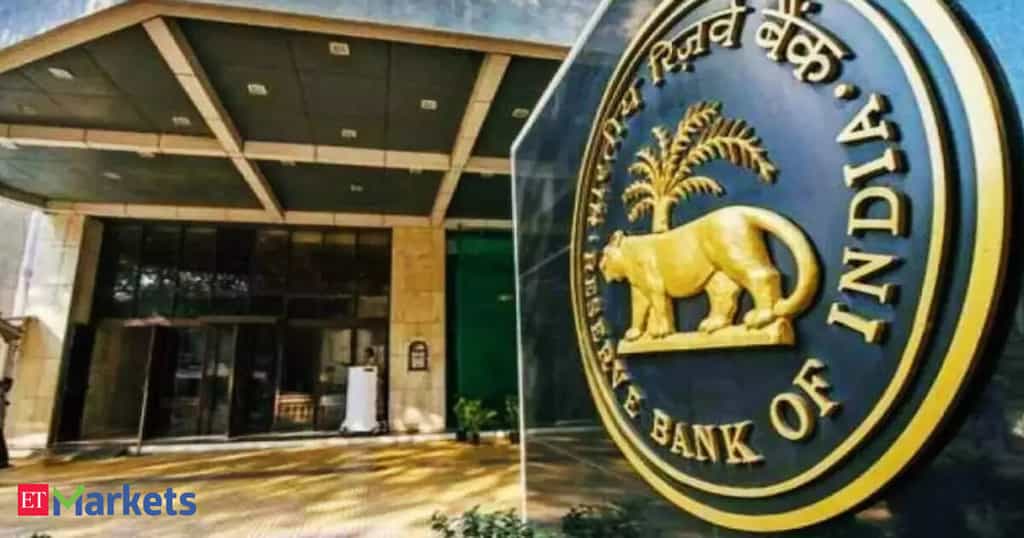
MUMBAI: The Reserve Bank of India (RBI) is expected to keep its repo rate unchanged in its February policy meeting as the central bank would likely wait for parameters that would determine inflation and growth prints in the new base-year series, economists said. This new series, which rolls out from next month, is expected to shift the growth-inflation dynamics as weights that constitute the consumption basket are expected to change to reflect the latest wallet shares of today's needs.
The monetary policy committee (MPC) is set to meet February 4-6, in the same week after the finance minister presents the Union budget.
With the December consumer inflation print of 1.33%, Q3 inflation averaged 0.8%. That was 20 bps higher than the RBI's Q3 forecast of 0.6%. Economists believe the RBI will see a similar upside to its Q4 forecast too, which is at 2.9%. The RBI has cumulatively cut policy rates 125 basis points since February 2025 to 5.25%.
"We do not foresee any further rate cuts for now, as inflation could be above 4% four quarters down," said Dhiraj Nim, economist and FX Strategist, ANZ Bank. "However, durable liquidity infusions are needed both to bring up reserve money growth and ease the prevailing upward pressure on borrowing costs."
Looking ahead, economists expect the RBI to inject additional liquidity through open market operations (OMO) to keep systemic liquidity in surplus. With retail inflation projected to rise above 4% after four quarters, policy rates are widely expected to remain on hold during upcoming MPC meetings, shifting market focus to the scale and timing of liquidity support.
System liquidity turned deficit in the second half of December and has been in a tight surplus of Rs 36,869 crore on average in January so far, as per RBI data. Soumya Kanti Ghosh, chief economic advisor at State Bank of India (SBI), expects about Rs 2 lakh crore of OMO in the remainder of FY26 and a similar trend in the next fiscal too. DBS Bank also concurs.
"Expectations are that another one or two tranches of OMOs and FX swaps are in the pipeline to compensate for the liquidity drain due to the FX intervention, besides seasonal leakage factors," said Radhika Rao, senior economist, DBS Bank, in a report. However, Bank of Baroda is stepping out of line. It expects the central bank to deliver one additional repo rate cut in February, arguing that softer inflation conditions provide room for further easing.
Editorial Context & Insight
Original analysis and synthesis with multi-source verification
Methodology
This article includes original analysis and synthesis from our editorial team, cross-referenced with multiple primary sources to ensure depth, accuracy, and balanced perspective. All claims are fact-checked and verified before publication.
Primary Source
Verified Source
Economic Times
Editorial Team
Senior Editor
Emma Watson
Specializes in Business coverage
Quality Assurance
Senior Reviewer
Fact-checking and editorial standards compliance