



Key takeaways
- On September 10, two days after researcher Jacob Coxon, who had recently quit his job at Anthropic, sounded the alarm about the industry…
- “AI alarmism and AI hype are the same story: both keep your attention on a science-fiction future to distract you from the real harms…
- But not everyone agreed with the post: “Horrible and dangerous take,” one comment reads.
What happened
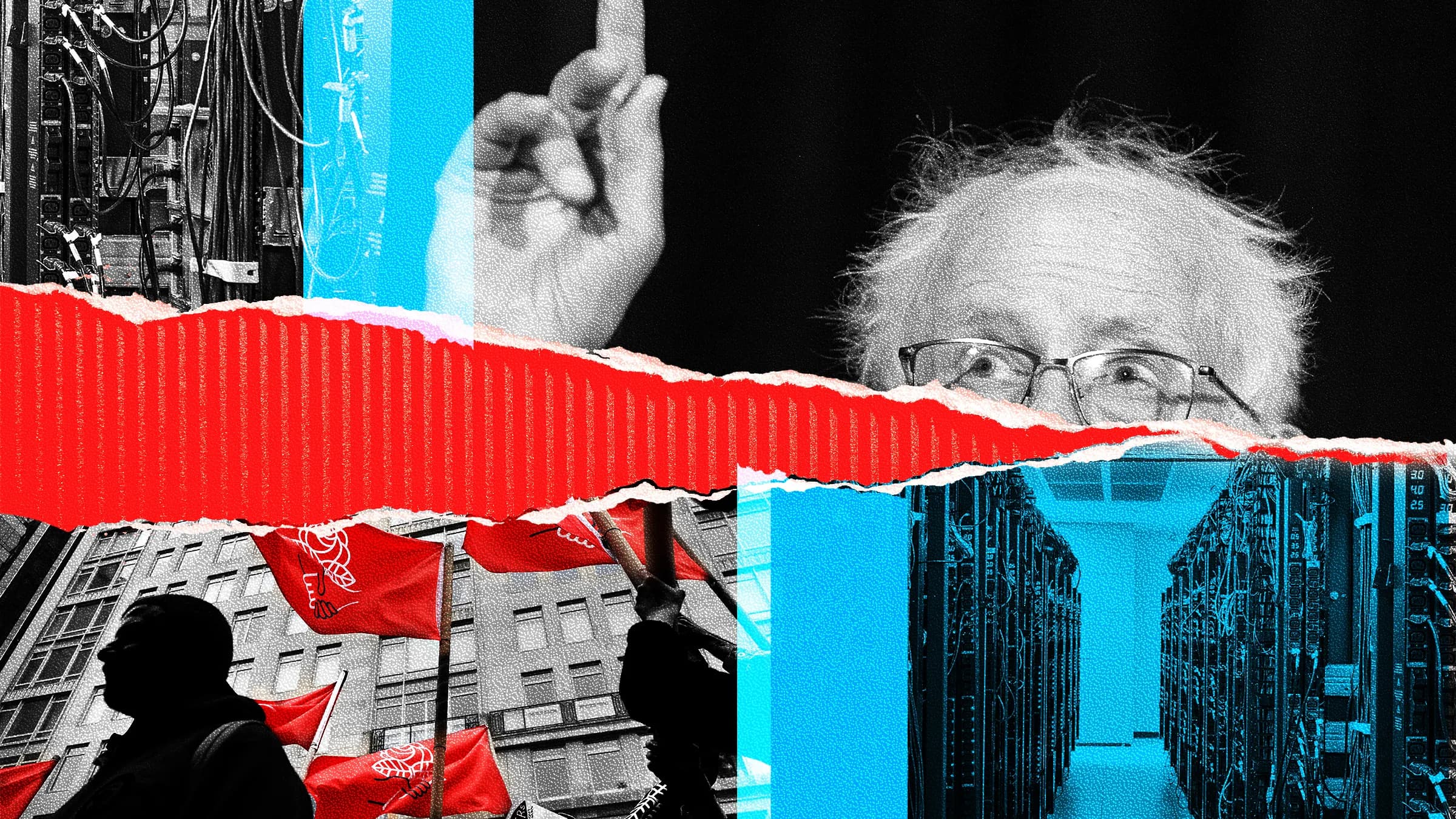
On September 10, two days after researcher Jacob Coxon, who had recently quit his job at Anthropic, sounded the alarm about the industry potentially bringing about the end of humanity, the New York City Democratic Socialists of America posted a carousel of images on Instagram. The first slide was a drawing of an ouroboros—a dragon eating its own tail—set against a hot pink background.
” Sanders’s positioning on this issue has put him in some unusual alliances, most notably with Steve Bannon, President Donald Trump’s former adviser and a right-wing populist podcast host. It has also seemingly inspired a raft of messaging from left-wing candidates running for office across the country, many of whom have been tying broader concerns around AI to the furor over data centers.
On September 9, a day before the New York DSA post, six candidates affiliated with the Working Families Party, including four backed by Sanders, released statements on the need for Washington to regulate AI to prevent existential threats to humanity. This has come with both public and private criticism.
AI researcher and tech industry critic Timnit Gebru has accused Sanders and others on the left of “taking their cues from literal doomsday eugenicist cults,” referring to the effective altruist and rationalist philosophies, which underpin AI safety conversations in Silicon Valley. And Sanders’s moves have inspired some private agita within certain left-wing circles. ” one NYC DSA member with a tech background tells WIRED.
Rumman Chowdhury, CEO and founder of the nonprofit Humane Intelligence, understands the concerns expressed by the DSA working group. Chowdhury, who formerly led the machine learning ethics, transparency, and accountability team at Twitter, thinks that all the attention that the AI safety discourse is generating will ultimately be beneficial to frontier labs. “[The companies] grab all the attention, time, energy, and money by spouting really extreme perspectives.
Why it matters
“AI alarmism and AI hype are the same story: both keep your attention on a science-fiction future to distract you from the real harms experienced in the present,” the image reads. The post was authored by the NYC DSA’s Tech Action Working Group, which focuses on tech regulation issues for the chapter, the largest in the country. It garnered more than 25,000 likes on Instagram.
But not everyone agreed with the post: “Horrible and dangerous take,” one comment reads. ” As politicians scramble to understand AI safety, an ideological split is opening on the American left. Among the questions it’s centered on is whether to believe tech companies’ claims that their products are so powerful that they could end the world.
Some on the left question the value in elevating theoretical concerns about AI over actual harms. They believe repeating claims promoted by the frontier labs about the dangers of AI empowers the AI companies, turning attention away from regulating the current harms of the technology and toward an impossible future. “AI has become the latest tool of capitalist exploitation.
The damage that unregulated and misused AI is already causing is clear across the country,” Alan Deng, a member of Tech Action, tells WIRED. ” But others are following the direction of Senator Bernie Sanders, the unofficial leader of the American left, who has enthusiastically taken up the AI safety issue, asserting that AI has the potential to eliminate humanity.
They say that it’s possible to address all harms from AI—both those happening now and those that could happen in the future—at once. “The same people concerned about frontier governance and the development of superintelligence are also addressing those current harms,” says Alexander McCoy, a Democratic strategist working on AI issues. “We should address all these other important factors. Those frontier AI abilities are true and increasing in power.
” Over the past year, Sanders dove head-first into the world of AI safety, bringing conversations that were previously happening in Bay Area circles to Washington and his large populist base. The 85-year-old was early to both opposing data centers—a massive organizing pole for the left this year—and speaking out about AI’s potential harms, from job loss to existential dangers.
What to watch
But then they actually backtrack to where we sit, all while they discount all of our expertise,” she says. “I think it's hard for normal people to think of how the mind of a venture capitalist works and these investors work.
” For AI companies—particularly OpenAI and Anthropic, which aim to go public in the coming years—the attention and scrutiny on their products now could also be a boon in the long run. “Part of IPOing is sharing a lot of diligence documentation on risks and how risks have been addressed,” says Chowdhury.