The Bombay High Court recently dismissed a plea over a property among family members and observed that though the maxim of “Vasudhaiva Kutumbakam” (world being one family) is often referred to by people, families remain locked in disputes “with no end” in sight, resulting in prolonged court battles.
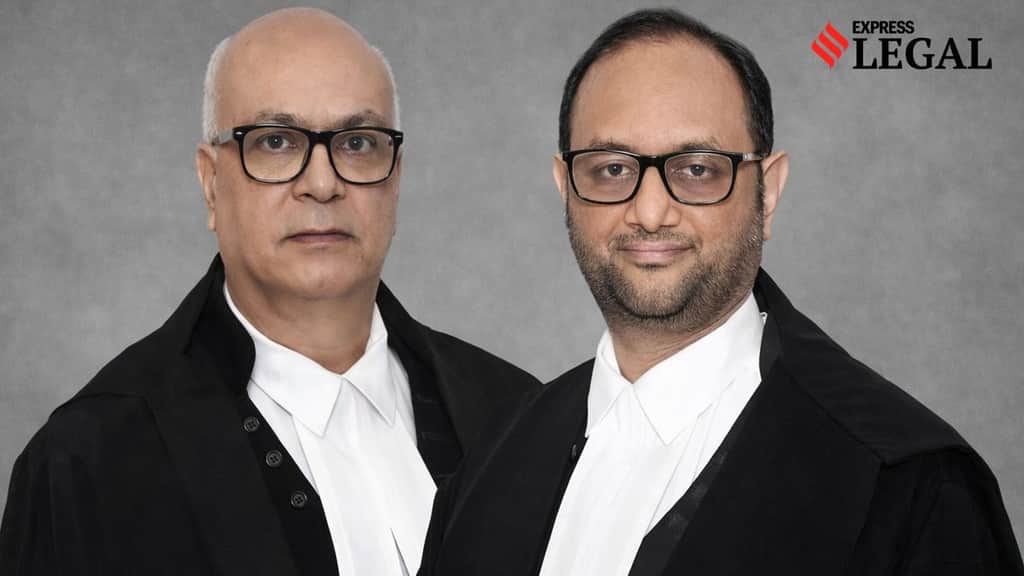
A bench of Justices M S Sonak and Advait M Sethna was hearing a civil suit pending for over 40-years and said disputes over succession and inheritance were increasingly fragmenting families, eroding trust among close relatives, and occupying an inordinate amount of judicial time.
“In contemporary times, we often hear the famous phrase ‘Vasudhaiva Kutumbakam’, meaning that the world is one family. However, cases such as the present one are classic examples of stark differences: disputes within families over property that show no end in sight and ultimately result in delayed litigation,” the court said on December 30.
The case concerns a family dispute over inheritance of a residential property in Bandra, Mumbai, following the deaths of both parents.
The appellant, Myra Philomena Collaco, is one of six children of Sonny Rita Coelho and Maria Francisca Coelho.
In August 1971, Sonny Coelho executed a will under which he gave his wife Maria a life interest in the property, while the ownership was to ultimately go to their sons Victor and Neville.
This will was probated by the Bombay High Court in April 1980 and was not challenged by any of the children .
In July 1982, Maria Coelho executed her own will. Through this will, she bequeathed all her movable and immovable property to only three of her children- Myra, George and Reginald while excluding Victor and Neville. Maria Coelho passed away in November 1985 .
After her mother’s death, Myra sought letters of administration based on her mother’s will.
The plea was opposed by Victor during his lifetime and later by his widow and children, who questioned the validity of the will and Myra’s role in its execution.
Due to this opposition, the matter became a contested testamentary suit before the high court.
On March 7, 2003, a single judge found that Maria Coelho had the mental capacity to execute the will and that it was formally proved. It refused to grant letters of administration, holding that certain suspicious circumstances surrounding the will were not satisfactorily explained.
In December 1985, Myra filed a suit against her four brothers- George, Reginald, Victor and Neville for administration of the estate of her deceased mother.
The dispute moved through appeals and a remand from the Supreme Court, brought it back before the Bombay High Court for fresh consideration.
During the hearing, rival factions within the family advanced competing legal claims to the property.
Advocate Karl Tamboly, appearing for Myra Philomena Collaco submitted that the dispute had reached a point where no amicable settlement was possible, urging the court to conclusively adjudicate their rights.
Advocate Nigel Quraishy, appearing for the other side, widow of Victor and others refuted all the submissions made on behalf of the appellant and said that the single judge has considered all factual and legal nuances on record resulting in a reasoned judgment.
Each side accused the other of acting with mala fide intent and of misusing legal processes to delay resolution and exert pressure.
The court dismissed the suit saying it won’t interfere in the single judge’s verdict as there were no “infirmities”.
The bench said that inheritance battles often transform siblings, parents, children, and extended relatives into adversaries, reducing intimate relationships to cold legal contests over shares, valuations, and technicalities.
The high court cautioned that while courts are duty-bound to decide legal rights and entitlements, they cannot mend broken relationships.
It emphasised that family disputes, particularly those involving inheritance, deserve a more sensitive and conciliatory approach rather than immediate resort to adversarial litigation.
Stressing the importance of alternative dispute resolution, the court encouraged parties embroiled in family property disputes to seriously explore mediation and settlement at an early stage.
It observed that many such conflicts could be resolved through dialogue, mutual understanding, and compromise, preserving relationships and reducing the burden on courts.
In many cases, the court observed, litigation continues for decades, sometimes even after the original disputants have passed away, leaving the next generation to carry forward the acrimony.
Concluding its observations, the bench remarked that the justice system should ideally be a forum of last resort in family matters, not the first stop.
“This is a tendency that ought to be curtailed in larger societal interest. We conclude with this solemn and optimistic hope,” it said.
Editorial Context & Insight
Original analysis & verification
Methodology
This article includes original analysis and synthesis from our editorial team, cross-referenced with primary sources to ensure depth and accuracy.
Primary Source
The Indian Express