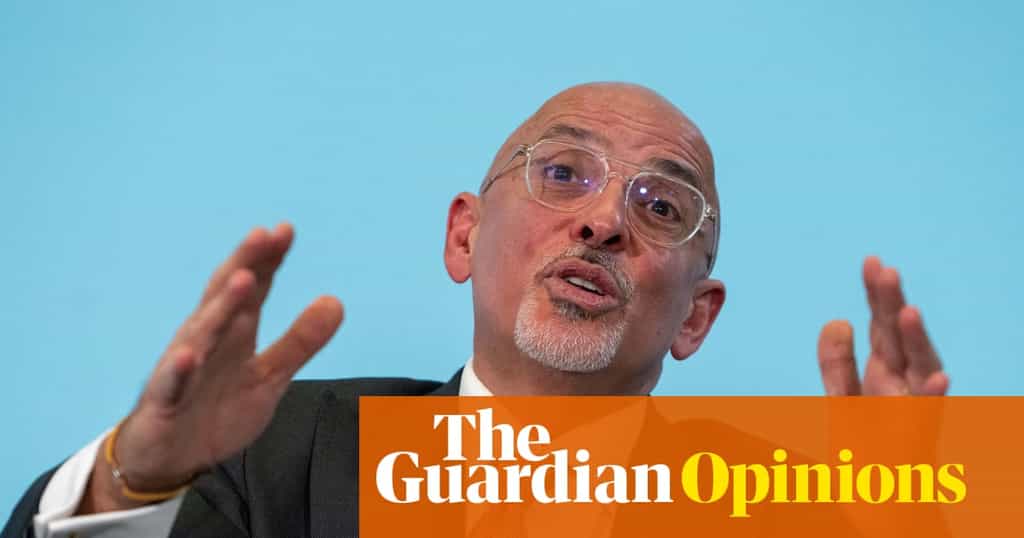
Defections always pose a messaging dilemma for political parties. Heap too much ordure on the turncoat, and you invite the question of why you were happy to share a tent with them in the first place; praise them too highly, and you exacerbate whatever damage the defection is doing to you.
In the Conservatives’ case, this problem is compounded for journalists by the hyperinflation in key posts. A “former chancellor of the exchequer” sounds like a big deal, and historically it would have been. But in the five years of the last parliament there were no fewer than five chancellors (Margaret Thatcher, across her entire 11-year premiership, had three).
So how do we assess this one? Nadhim Zahawi held several cabinet-level positions under the previous government, but none of them for very long. The most sustained stint was education secretary (September 2021 to July 2022), and the most memorable event of that year was the dramatic scrapping of a schools bill that, it turned out, to the apparent surprise of ministers, would have rolled back much of the Tories’ education reform agenda.
Perhaps that experience explains Zahawi’s emphasis, at Reform UK’s press conference today, on the need “to take back control from the rich powers of the unelected bureaucracy”. But it doesn’t obviously commend him as the man to do so.
At a basic level, all but the most unusual defection is bad for the party being left. Beyond the obvious optical problems it creates, even the departure of the most shameless opportunist says something about the direction in which they think opportunity lies.
Moreover, the effect of these things compounds over time: the more people leave, the greater the overall impression of people leaving and the more people who start to think about leaving. So we should be clear that, whatever caveats may apply, this and most other defections from the Tory party are bad for the Tory party.
How bad is a different, more difficult and much more interesting question. One of the problems with covering defections as a journalist is that there is often either great temptation or great pressure (sometimes both) to slot a defection neatly into a grand narrative: “What does this mean for the Tories/Labour?”
But at the personal level – and there are few things more personal than changing teams – politics is rarely a question purely, or even mainly, decided by big-picture ideological criteria. All manner of other factors – an individual’s ambitions but also their actual personal relationships on either side of whatever line they are crossing – make a big difference.
Only Zahawi truly knows the balance of these factors behind this decision (Tory sources claim it was his repeated failure to secure a peerage from Kemi Badenoch’s office, which Zahawi denies). But what we outside observers can note is that nothing in his defection speech highlighted any great ideological schism; you will not find Badenoch (or Robert Jenrick, for that matter) offering paeans to the administrative state. His choice of Reform UK is framed therefore as a question of who is best placed to deliver on this (as yet largely unwritten) agenda.
On this, Zahawi was not persuasive. That the Conservatives’ record on managing the state was dire, especially between 2019 and 2024, is difficult to dispute. But that does not mean that Farage, whose various parties have contrived to wreak a great deal of change without ever having to actually run anything, is going to do any better. Too many Reform enthusiasts talk as if proving the case against the Conservatives necessarily proves a case for their own party, when it is sadly but obviously true that both are quite capable of disappointing us at the same time.
This defection also highlights a difficulty for Reform. A party whose stated objective is to bury the Tories needs to appeal to voters who turfed the Tories out in 2024, and 89 of the 98 seats in which it finished second at the last election are held by Labour. It needs to be quite careful about the extent to which it allows itself to be populated by former Tories.
Because Zahawi’s argument today – that the Conservatives can’t be trusted to fix the state because they didn’t manage it last time – doesn’t stop applying to him just because he’s swapped his rosette. A change of heart by a politician can be extremely powerful if accompanied by a sincere mea culpa (as was Keith Joseph’s during the Tories’ last revolution). But there was no sign of any of that on stage today.
Editorial Context & Insight
Original analysis and synthesis with multi-source verification
Methodology
This article includes original analysis and synthesis from our editorial team, cross-referenced with multiple primary sources to ensure depth, accuracy, and balanced perspective. All claims are fact-checked and verified before publication.
Primary Source
Verified Source
Opinion | The Guardian
Editorial Team
Senior Editor
James Chen
Specializes in Opinion coverage
Quality Assurance
Associate Editor
Fact-checking and editorial standards compliance