

Key takeaways
- On July 25, Jeff Dean spoke to 6,000 would-be founders at Y Combinator’s Startup School at San Francisco’s Chase Center.
- A running joke in geekdom is a list of surreal “facts” about his technical prowess: Jeff Dean’s resume lists the things he hasn’t done…
- He then shared his own interest: an automated version of the scientific method.
What happened
On July 25, Jeff Dean spoke to 6,000 would-be founders at Y Combinator’s Startup School at San Francisco’s Chase Center. Dean is a legendary engineer at Google. He is cofounder of Google Brain, chief scientist of Google DeepMind and Google Research, and technical colead on the company’s flagship AI model Gemini. With his frequent collaborator Sanjay Ghemawat, he’s written significant parts of the company’s computing and search infrastructure.
The quartet worked up a road map wherein Discovery Loop would be its own first customer. The autonomous experiment loops they create initially will be directed towards improving the company’s advanced machine learning algorithms. That improved software will then become the core of an AI system that can tackle problems in subsequent domains. “I’m very excited about automating machine learning,” says Le.
” From there, Discovery Loop will set out to make superhuman advances in a variety of fields, including chip design, biology, drug discovery, and material design. “As we create the core intelligence and the discovery loop fundamentals, we'll be able to quickly generalize to other domains,” says Vinyals. “One of the things that we'll be obviously very focused on is how these models come up with new ideas to try.
” At first, the team envisions that those ideas will be codeveloped with humans, but their goal is deeply automating the process. If it works out, they contend, it’s possible that a few dedicated individuals may use Discovery Loop to out-invent the world’s largest research organizations. Presumably those small teams will be customers of Discovery Loop.
Why it matters
A running joke in geekdom is a list of surreal “facts” about his technical prowess: Jeff Dean’s resume lists the things he hasn’t done; it’s shorter that way. At Chase Center, the interviewer asked him what areas startup founders should think about tackling. Dean said that the most important thing would be to pick something you’re excited about and would be useful in the world.
He then shared his own interest: an automated version of the scientific method. “You propose an experiment, you implement what you need to run the experiment, you evaluate the experiment, and then you get results from that,” he said. Dean said that running thousands of those automated loops could unlock groundbreaking advances in multiple domains like science, biology, chip design, and even making improved AI models.
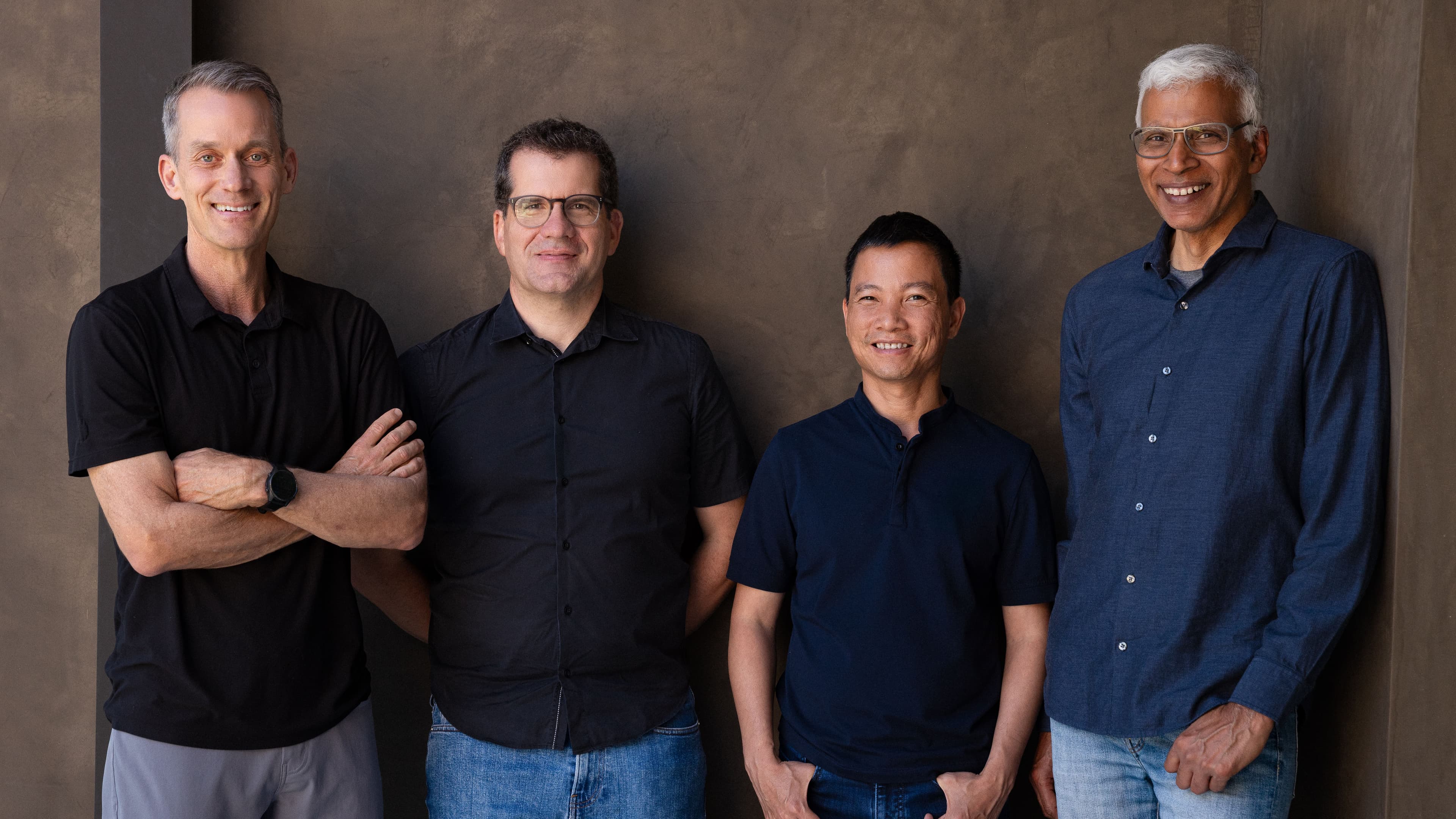
Unbeknownst to the crowd, Dean was talking about his own secret startup, which he had just organized. Today it’s official: After almost 27 years, Dean is leaving Google, along with Ghemawat and two other top-tier AI scientists, to found a company called Discovery Loop.
Even though Google will take a stake in the new company, it’s a devastating blow to the search giant as it attempts to keep pace in the frantic AI model competition. It’s bad enough that Dean and Ghemawat, who were among the company’s first hires, are leaving—that’s like Mick Jagger and Keith Richards ditching the Rolling Stones to start a new band.
Worse, the other cofounders are also supernovas in the AI firmament: Oriol Vinyals, VP of research at DeepMind and a technical lead for Gemini, and Quoc Le, a cofounder of Google Brain and the key scientist behind Google’s AutoML-Zero, a project that uses machine learning algorithms to autonomously build AI products.
In an interview I did with the cofounders just before launch, Dean tells me the idea came up only a few weeks ago. He was quickly joined by the other three, who are not only long-time colleagues but friends who vacation together. “We were working on different things, but we were all starting to see the possibility of AI being able to automate scientific and engineering loops,” he says.
What to watch
“With this team, I wouldn’t need to know what they were doing before I backed them,” says venture capitalist Vinod Khosla, who met with them in his Sand Hill Road office on a Saturday, so no one would get a hint of Google’s upcoming loss. ” Khosla also loved their idea: “Humans have been using AI to do research, not using AI to be a researcher,” he says.
” Other meetings took place at Dean’s house. Ultimately Khosla Ventures and an AI-oriented VC firm called Radical Ventures bought in, along with a handful of other firms. ) “Building something to solve all those problems is a powerful idea,” says Radical managing partner Jordan Jacobs, who will join the startup’s board. ” Negotiating the exit from Google was more painful.