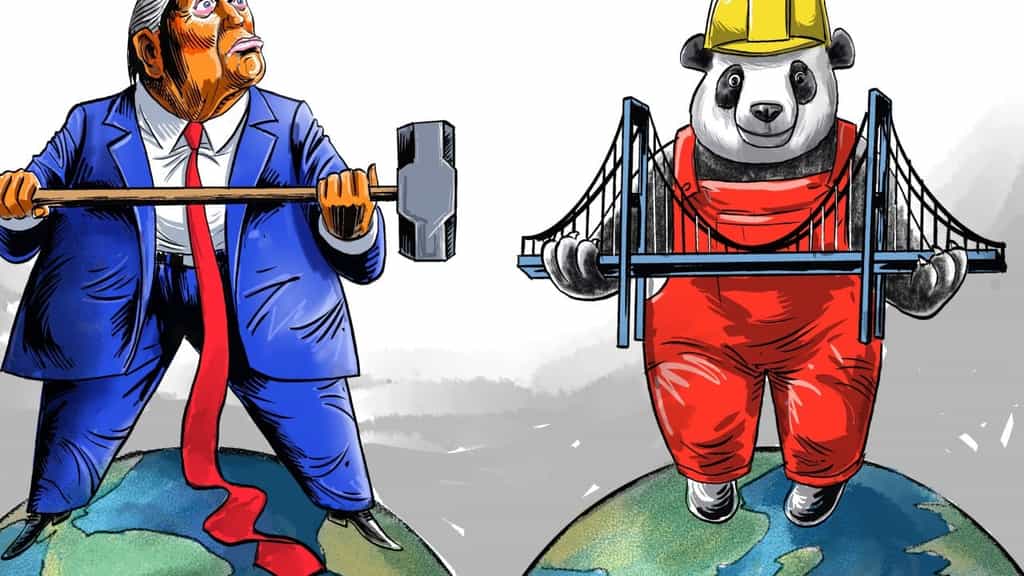
US President Donald Trump’s abduction of Venezuelan President Nicolas Maduro has been held up as an example of American military power. As Venezuela is not a producer of fentanyl – despite the United States accusing Maduro of drug trafficking – Trump has pivoted his attention to Venezuela’s oil reserves, the largest in the world.
Trump has commanded Venezuela to turn over 30 to 50 million barrels of sanctioned oil, which he said would be sold at market value and the proceeds from which he would control. That would only be the first tranche of indefinite shipments, with Trump saying his control of the money would “ensure it is used to benefit the people of Venezuela and the United States”.
Trump’s move is intended to kill five birds with one stone. First, it removed an anti-American leader from the US sphere of influence. Second, it secured Venezuela’s oil bonanza and control of its government. Third, it severed Venezuela’s economic dependency on China. Fourth, it cut essential oil supplies to Cuba in the hope of triggering Cuba’s economic implosion.
Last but not least, it set an example for the rest of South and Central America, paving the way for US dominance over the entire continent. This harks back to the 19th-century Monroe Doctrine, aimed at preventing hostile foreign influence throughout the western hemisphere.
Trump said during a recent interview with The New York Times that the only thing that could stop him was his “own morality”. In addition to his ambition to take control of Greenland and decision to withdraw the US from 66 international organisations via executive order, this is evidence of brazen predatory hegemony writ large.
How is Beijing responding to this overturn of the global order and trade norms, including the threat to China’s substantial investment in Venezuela? To understand the dynamics involved, some key realities need to be grasped upfront.
Editorial Context & Insight
Original analysis and synthesis with multi-source verification
Methodology
This article includes original analysis and synthesis from our editorial team, cross-referenced with multiple primary sources to ensure depth, accuracy, and balanced perspective. All claims are fact-checked and verified before publication.
Primary Source
Verified Source
News - South China Morning Post
Editorial Team
Senior Editor
Aisha Patel
Specializes in Opinion coverage
Quality Assurance
Senior Reviewer
Fact-checking and editorial standards compliance