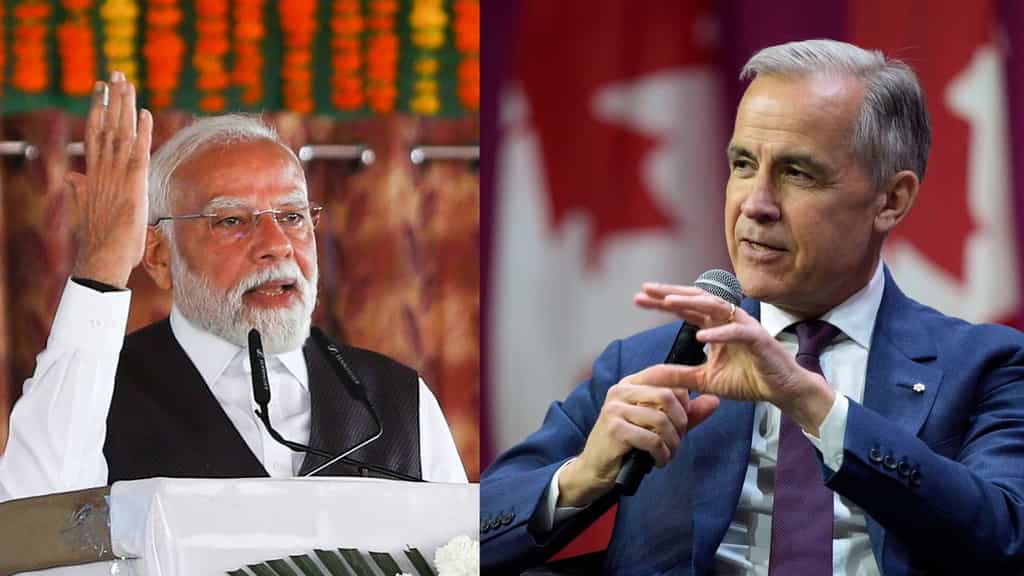
From the standpoint of modern Indian foreign policy, the Hindu texts do not appear as texts of domination but as profound warnings against the lure of empty hubris and pride (PTI/AP)
India’s current foreign policy is passing through an intensified global flux characterised by great-power competition, regional uncertainty, and revived dialogues about national identity and civilisational mission. Here, the ethical and political meditations buried in the revered Hindu epics — the Ramayana and the Mahabharata — can provide a practical (if often misunderstood) guide to power, hubris, and practicality in statecraft. One who actually reads these would find anything but a call to moral or civilisational chauvinism; instead, the texts warn against pride (ahamkāra) and stress limits, modesty, and ethical obligation as cornerstones of legitimate authority.
In the Ramayana, Ravana is undone not so much by weakness as by an overweening confidence in the idea that power makes him exempt from moral culpability. Ravana’s Lanka was rich, powerful, and strategically safe, yet it crumbled, proving that pride does not allow one to think clearly or take advice. The lesson is unmistakable. Emergent powers often conflate recognition with self-proclaimed rights and assertiveness with legitimacy. And when self-image supersedes strategic caution, diplomacy contracts, alliances weaken, and coercion overwhelms moral suasion. Without ethical guardrails, power can often bring destruction. In sharp contrast, the theory of kingship in the Ramayana, following Rama, is based on self-control rather than power. Rama’s power stems from his ability to respect limits on personal ambition, on arbitrary force, on the unnecessary weaponisation of power.
Comparatively speaking, the Mahabharata is a much darker, politically denser reflection on power. War appears less as destiny than as the result of arrogance and decay, of flawed diplomacy. The Kauravas would not even cede the Pandavas a minimum of space; this is the classic embodiment of a politics of ego, where compromise is synonymous with submission. Such ego is reflected in South Asia and elsewhere. Analogous rivalries that have held sway until now are not for lack of available solutions, but rather a matter of political pride that handicaps the imagination. Escalation does not come out of nowhere; it is the result of refusals to listen, accommodate, and recalibrate. Even the Pandavas struggle with ego, and their triumph comes at a great moral price, a caution against glorifying success achieved through force.
In this uncertain world order, Krishna stands out as a guide to modern diplomacy. He is aware of the realities of power but insists that force should be a last resort, used only after diplomacy has failed and moral clarity has been secured. Krishna’s abortive peace mission to Hastinapura is illuminating: The war order becomes legitimate not because war is desired, but because hubris forecloses any peaceful settlement. This differentiation is crucial for a progressive India that seeks to be viewed as a responsible power rather than merely a strong state. Legitimacy in world politics is as much about procedural constraints as about material capacity. Its focus on multilateralism, UN reform, and the representation of the global south is an effort to embed power within normative constructs rather than dictate outcomes unilaterally, which is a contemporary articulation of dharma-based statecraft. Yet one also sees the persistent play of a subterranean ego, the legacies of Dhritarashtra and Duryodhana, which at times give the impression that raw power is the sole currency of honour and status in world politics.
Another recurring motif in both epic poems is the role of counsel and institutions. Ravana throws his notions to the wind; Duryodhana spurns Vidura. In each case, political implosion comes after stifling dissent. Pride is not just evident in individual leaders but also in governance systems that promote loyalty over wisdom. For today’s India, there may be a lesson in the form of the need for an institutionalised culture of deliberation; in foreign policy, we need well-staffed foreign services, informed strategic communities, and a respect for dissent rather than a culture of surrendering to influence. A foreign policy based on the cult of personality or blind nationalism threatens to confuse clapping hands for consent.
Most importantly, the epics do not preach civilisational triumphalism. They stress moral collapse within societies far more than threats from outside. Summoning the epic’s wisdom responsibly is not to posit a Hindu exception, but to reach for a tradition of self-restraint, reflexivity, and ethical anxiety about power. India’s task today is to reconcile civilisational confidence with strategic humility that would aid in projecting leadership without slipping into moral arrogance.
A significant differentiation is crucial here between pride and status-seeking. Pride is internally driven and self-referential; status-seeking is relational and social. The epics depict pride as politically perilous, not just because it blurs the distinction between fact and fiction: Rulers begin to behave as though their self-image is equivalent to righteous authority. Ravana is not in search of reputation; he knows it is his due. In modern terms, status-seeking in the form of a louder voice in global institutions and recognition of itself as a responsible power is legitimate and inevitable for India. The corrosive nature of pride is that it insists on its status claims as though how things are received does not matter. International reputation, like epic kingship, cannot simply be affirmed; it must be grounded in actions that other members of the community can regard as plausible and fair.
Allied with this is the epic perception that honour cannot be self-announced; it must come from others. Rama does not demand respect; it attaches to him through virtue. When people insist on recognition, they reveal their insecurity about their own authority. Prestige in international politics is not something to hoard but a cumulative judgment. States that wish to declare themselves the moral leaders without commensurate discipline can make themselves look uninformed or revisionist.
From the standpoint of modern Indian foreign policy, the Hindu texts do not appear as texts of domination but as profound warnings against the lure of empty hubris and pride. They are a reminder that unchecked power corrodes legitimacy, diplomacy, and long-term stability. For an ascending India seeking to find its way in the present disorder, the real test of great-power status is not only the ability to coerce. It calls for self-reflection and wisdom in the service of truth. It is necessary to remember that our epics provide no mythic past for glory, but a moral compass to navigate an unsure future.
The writer teaches at Jadavpur University, Kolkata, and was the Eugenio Lopez Visiting Chair at the Department of International Studies and Political Science at Virginia Military Institute, US
Editorial Context & Insight
Original analysis and synthesis with multi-source verification
Methodology
This article includes original analysis and synthesis from our editorial team, cross-referenced with multiple primary sources to ensure depth, accuracy, and balanced perspective. All claims are fact-checked and verified before publication.
Primary Source
Verified Source
The Indian Express
Editorial Team
Senior Editor
Dr. Elena Rodriguez
Specializes in India coverage
Quality Assurance
Copy Chief
Fact-checking and editorial standards compliance