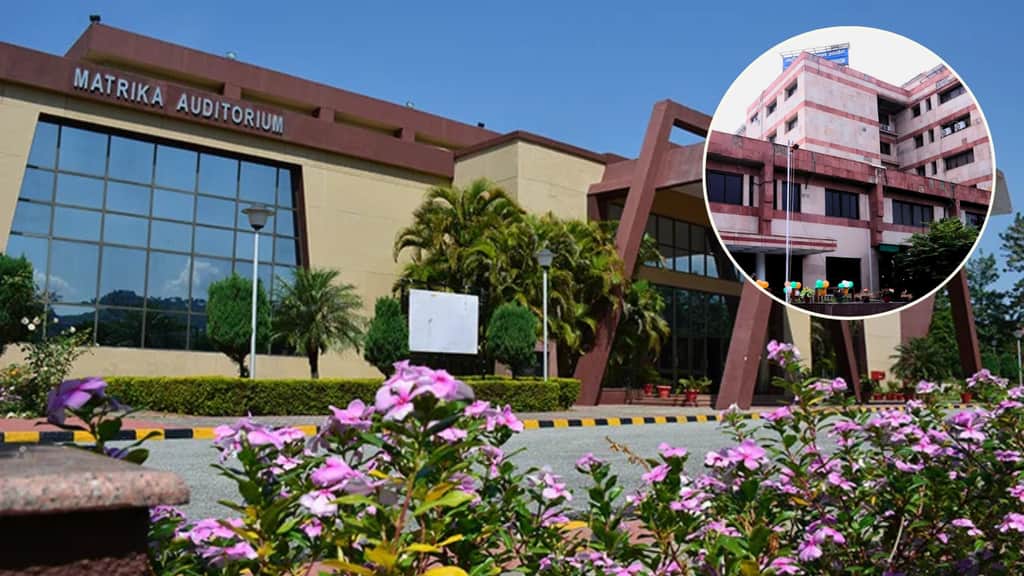
The National Medical Commission (NMC) Tuesday withdrew the Letter of Permission (LoP) granted to Shri Mata Vaishno Devi Institute of Medical Excellence (SMVDIME) for conducting the MBBS course for the academic session 2025–26. The withdrawal followed an assessment that identified serious deficiencies in infrastructure, faculty strength, and the availability of clinical materials.
The action effectively cancelled the earlier permission granted for an intake of 50 MBBS seats for the upcoming academic year, triggering regulatory consequences for the institution and protective measures for students already admitted through the NEET merit.
The NMC’s action is rooted in the continued applicability of the erstwhile Medical Council of India’s Minimum Standard Requirements (MSR) for undergraduate medical education, which remain enforceable for colleges permitted to operate.
For the establishment of a new undergraduate medical college with an annual intake of 50 MBBS seats, full compliance with the MSR for 50-seat admissions is mandatory, including adherence to Schedule-I infrastructure norms and Schedule-II staffing requirements. These standards must be met as on the cut-off dates specified by the NMC and maintained throughout the academic year.
Under the core MSR, a 50-seat medical college must have a fully functional teaching hospital with at least 220 beds, located on the same campus or within a 30-minute travel time. The hospital must demonstrate a minimum outpatient load of 400 patients per day and an average bed occupancy of 80 per cent.
Academic infrastructure requirements include a minimum of four gallery-type lecture theatres, each with a seating capacity exceeding the annual intake by at least 20 per cent. These lecture theatres must be equipped with audiovisual teaching aids, e-learning facilities, and digital connectivity. The regulations further mandate a separate central library for undergraduate students, with at least 1,500 books and 15 indexed journals for a 50-seat intake, along with access to prescribed e-resources.
The MSR also requires a dedicated skills laboratory of at least 600 square metres, with a mandatory six-week skills training programme before students begin ward postings. In addition, every medical college must have one Rural Health Training Centre catering to a population of 30,000 and one Urban Health Training Centre for a population of 50,000, both located within 30 kilometres of the parent institution, or within 50 kilometres in metropolitan areas. These centres must be functional before the first LoP is granted.
Residential and support infrastructure form another mandatory component. Hostel accommodation must be available for at least 75 per cent of students, interns, and resident doctors, with basic amenities, and institutions cannot impose compulsory hostel fees on students who do not opt to reside there.
The regulations also require full implementation of the Aadhaar-Enabled Biometric Attendance System (AEBAS) for faculty, residents, staff and students, with a minimum attendance threshold of 75 per cent and live CCTV streaming, integrated with the NMC’s central system.
Compliance with statutory requirements relating to biomedical waste management, fire safety, disability-friendly access, and uninterrupted power backup is mandatory. Institutions must hold valid registrations, approvals and records for hospital operations and make these available during inspections.
Schedule II of the MSR prescribes detailed department-wise staffing for a 50-seat medical college. Core pre-clinical and para-clinical departments such as Anatomy, Physiology, and Biochemistry require between six and eight faculty members each, including Professors, Associate Professors, Assistant Professors, Tutors and Senior Residents. Clinical departments, including General Medicine, General Surgery, Obstetrics and Gynaecology, Paediatrics, Orthopaedics and Anaesthesiology, require between four and six sanctioned posts each at the 50-seat level.
Certain specialities, such as ENT, Ophthalmology, Dermatology, Psychiatry, and Radiodiagnosis, do not require professors at the initial 50-seat stage but must have at least an Associate Professor, an Assistant Professor and Senior Residents or equivalent support staff. Community Medicine must additionally have a Statistician at Assistant Professor level.
In aggregate, a 50-seat medical college is required to maintain a sanctioned strength of 14 Professors, 20 Associate Professors, 25 Assistant Professors, 15 Tutors and 23 Senior Residents, as tabulated in Schedule-II.
These infrastructural and staffing requirements are reinforced by the conditions imposed by the NMC’s Medical Assessment and Rating Board (MARB) in its letter dated September 8, 2025. Under that communication, the institution was permitted to admit 50 MBBS students under Section 28(3) of the NMC Act, 2019, subject to continuous compliance with all NMC regulations.
The MARB letter explicitly places responsibility on the institution to fulfil and maintain all prescribed norms relating to physical infrastructure, human resources, teaching faculty and clinical material throughout the academic year.
It cautions that any false declaration, misrepresentation or use of fabricated documents to procure permission would result in immediate cancellation and revocation of the LoP, apart from any other action permissible under law.
The conditions also mandate the development of a comprehensive institutional website displaying details of courses offered, faculty strength and experience over the preceding five years, student admissions, affiliating university information, hospital services, speciality-wise facilities and equipment, and outpatient and inpatient census data, including births and deaths as per government or municipal records. The MARB reserves the right to conduct surprise physical or virtual inspections at any stage and to withdraw permission if compliance lapses are detected.
Separately, the NMC has rationalised the performance bank guarantee requirements applicable to medical colleges. In a notification dated September 20, 2024, the Commission revised the tenure and quantum of bank guarantees or electronic bank guarantees to be furnished by institutions from the academic year 2025–26.
For the establishment of a medical college with 50 MBBS seats, institutions are required to furnish a performance bank guarantee of Rs 15 crore for a period of six years.
This guarantee is liable to be encashed in the event of regulatory non-compliance, including withdrawal of permission.
According to the cancellation letter issued by the NMC to the principal of SMVDIME, as reported by The Indian Express, the assessment team found a 39 per cent deficiency in teaching faculty and a 65 per cent shortfall in tutors, demonstrators, and senior residents when measured against Schedule II norms.
Clinical indicators were also found to be significantly below mandated thresholds, with outpatient attendance recorded at less than 50 per cent of the required numbers and overall bed occupancy at 45 per cent, far short of the prescribed 80 per cent. Intensive Care Units showed an average occupancy of around 50 per cent.
The assessment further recorded infrastructural gaps, including the absence of student practical and research laboratories in certain departments, lecture theatres that did not meet minimum standards, and library resources that were substantially below norms, with only half the required number of books and just two journals available against the prescribed minimum of 15.
Essential hospital facilities such as an ART centre, an MDR-TB management facility, adequate operating theatres and separate male and female wards were also reported to be missing or inadequate.
Officials of the institute, however, told The Indian Express that there were no infrastructural deficiencies and attributed the findings to the timing of a surprise inspection conducted during winter vacations, when nearly half of the faculty was on leave.
The NMC’s notice also lays down specific measures to safeguard the interests of students admitted against the cancelled intake. All 50 MBBS students admitted for the 2025–26 session are to be relocated to other recognised government medical colleges within Jammu and Kashmir. To ensure continuity of academic progression, these students will be accommodated against supernumerary seats, that is, created over and above the sanctioned intake of the receiving institutions.
At the same time, the Commission has ordered the immediate encashment of the institute’s performance bank guarantee, invoking the financial penalty provisions linked to non-compliance with statutory norms.
Editorial Context & Insight
Original analysis & verification
Methodology
This article includes original analysis and synthesis from our editorial team, cross-referenced with primary sources to ensure depth and accuracy.
Primary Source
The Indian Express