In late 2023, storage company Western Digital announced plans to split itself into two companies. One, which would still be called Western Digital, would focus on spinning hard drives, which are no longer used much in consumer systems but remain important to NAS devices and data centers. The other, called SanDisk, would handle solid-state storage, including the drives that Western Digital sold to consumers under its Blue, Black, Green, and Red brands.
That split effectively undid what Western Digital did a decade ago when it bought SanDisk for $19 billion. And we’re just now starting to see the way the split will affect the company’s existing consumer drives.
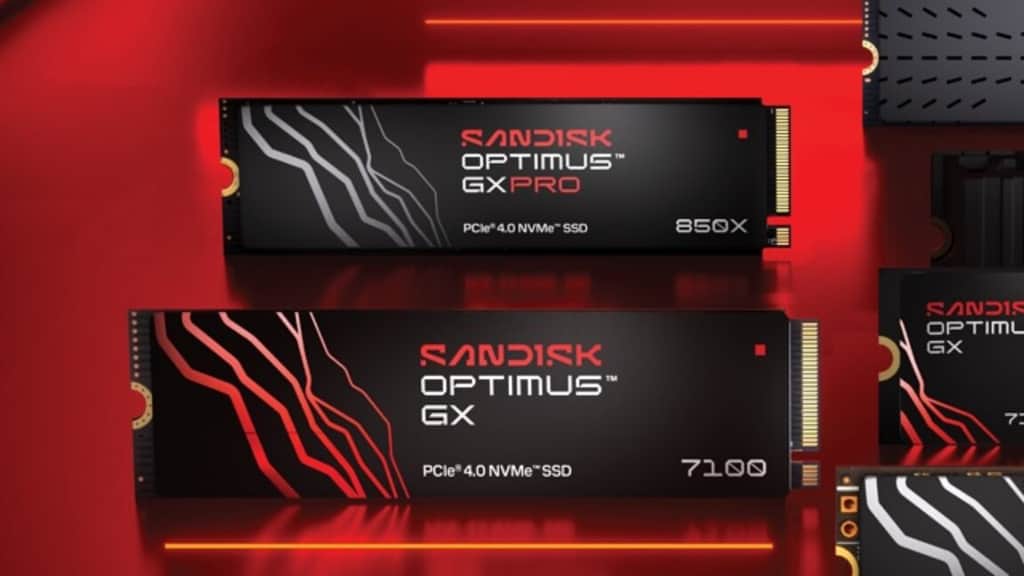
Today SanDisk announced that mainstream WD Blue and WD Black SSDs would be going away, to be replaced by SanDisk Optimus-branded disks with the same model numbers.
WD Blue drives will just be “SanDisk Optimus” drives now, starting with the Optimus 5100, a rebadged version of the WD Blue SN5100. Mid-tier WD Black drives will be branded as “SanDisk Optimus GX,” and the Optimus GX 7100 will replace the WD Black SN7100. And high-end WD Black drives will become “SanDisk Optimus GX Pro” SSDs, with the Optimus GX Pro 850X and 8100 replacing the WD Black SN850X and 8100 drives.
Given that these are all fast NVMe SSDs, I suspect the average user would have trouble detecting much of a difference between the low-end WD Blue/Optimus drives and the high-end WD Black/Optimus GX Pro SSDs. But the functional differences between the drives remain the same as before: the Blue/Optimus 5100 uses somewhat slower and less durable quad-level cell (QLC) flash memory, while the Black/Optimus GX 7100 uses triple-level cell (TLC) memory. The Black/Optimus GX Pro 8100 maximizes performance by stepping up to a PCIe 5.0 interface instead of PCIe 4.0 and including a dedicated DRAM cache (the 5100 and 7100 each claim a small chunk of your system RAM for this, called the Host Memory Buffer, or HMB). The 850X is a slightly older drive that keeps the dedicated DRAM but is also limited to PCIe 4.0 speeds.
Editorial Context & Insight
Original analysis & verification
Methodology
This article includes original analysis and synthesis from our editorial team, cross-referenced with primary sources to ensure depth and accuracy.
Primary Source
Ars Technica