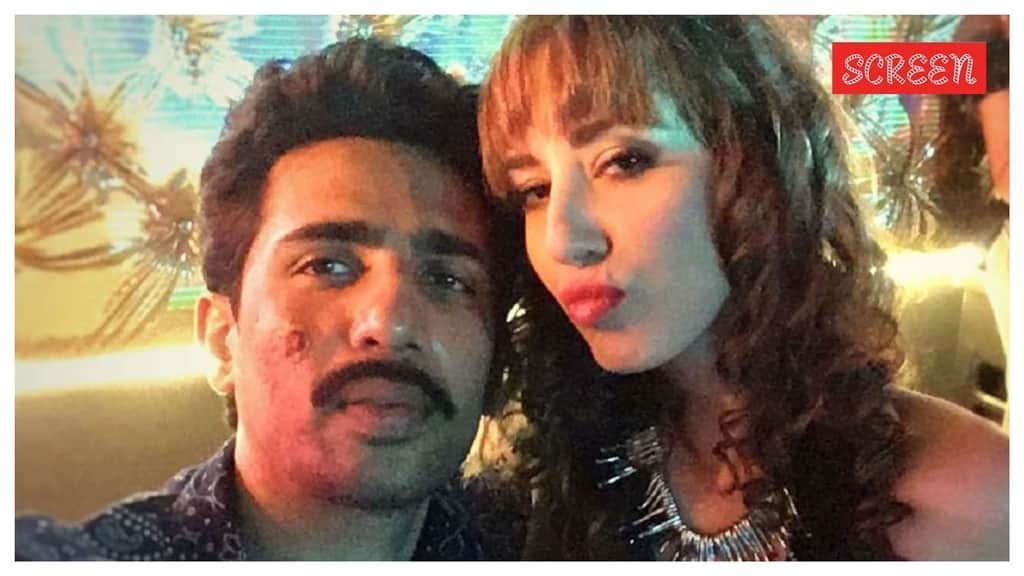
Gulshan Devaiah is returning to familiar turf, but still making it count like a fresh start. Having been raised in Bengaluru, he started his acting career as Chittiappa Gowda, a Kannada-speaking character in Anurag Kashyap’s 2010 thriller That Girl in Yellow Boots. Fifteen years later, he played his next Kannada-speaking part in one of the biggest Kannada films ever — Rishab Shetty’s period epic fantasy Kantara: Chapter 1 last year. Even on a personal front, it’s an unexpected homecoming for Gulshan. He parted ways with wife and fellow actor Kallirroi Tziafetta in 2020 after a marriage of eight years. But as fate would have it, the two got back together in 2024 and are currently dating.
On the latest edition of SCREEN Spotlight, Gulshan talks about how he landed Kantara: Chapter 1, why he had to turn down Geethu Mohandas’ Yash-starrer Toxic: A Fairytale for Grownups, why his actual reason for doing Sanjay Leela Bhansali’s Goliyon Ki Rasleela: Ram-Leela (2013) never materialized, and the trend of lead actor playing bad guys in films like Animal (2023) and Dhurandhar (2025).
Last year, you had a massive breakthrough with Kantara: Chapter 1. But prior to that, you starred in Raj Rachakonda’s 2023 romantic drama 8 A.M. Metro. It received great reviews, but barely got a limited release. You personally went all out in promoting it on social media, even informing your followers about new shows added. Why did you take it upon yourself to sell the film so hard?
Ya, I think it got just 25 screens, which is still more than the audience in each screen (laughs). I also personally requested reviewers to write about the film. I felt like doing it, so I did my best. Maybe some people do more. Since the theatrical business model is so cutthroat, and now there are alternatives which are much more accessible, independent cinema competes with all that. So, if you want a theatrical release, it’s very challenging.
So now, do you do a Kantara: Chapter 1 for every 8 A.M. Metro?
I don’t know. I don’t think like that. If there’s a genuine, compulsive interest, I’ll do it. Also, right from the beginning, I’ve always been clear that a project should help my career. I’ve got it wrong a couple of times, which nobody remembers thankfully. You can’t get it right every time. If I want diversity in my career, I have to go chase it.
Do you want to remind us when you got it wrong?
Not particularly (laughs). There are times when you feel on the first day of shoot itself, but I’ve followed through. I quit a film once because they didn’t pay me and behaved very badly with my manager. So, I checked the lapse date in my contract and realized they can’t sue me.
But is there a film where you thought it’s not going to shape up well, but it eventually did?
8 A.M. Metro perhaps. It was super indie style. Raj had written a great script, but I just felt it could’ve been a better film. But there’s an honesty and sincerity in his film that really connected with people. Saiyami (Kher) and I also gave it our all since we’d committed to it. The number of messages we both still get for that film is just phenomenal. It didn’t make any money. I hope Raj broke even because he put in his own money. There was no financier. Saiyami said it’s her most appreciated film, not even Ghoomer (2023) or Mirzya (2016). It’s amazing! Every day, I have at least one message about 8 A.M. Metro where people are really pouring their hearts out. I didn’t expect this.
Gulshan Devaiah and Saiyami Kher in 8 A.M. Metro.
Has the experience of doing a show like Perfect Family changed your views on fatherhood?
I’m a very reluctant father. I don’t want to be a father. That’s a choice. I’m not necessarily the best father even in Perfect Family, as compared to say, a Devilal (from Dahaad), who’s a better dad. At least he felt the responsibility to do what’s right. He’s always asking himself what the right thing to do is.
Since Perfect Family revolves around family therapy, how much has therapy helped you grow personally?
See, I’m not going to hype it up. It has its place, but that’s not the only thing that empowers me. I do a lot of introspection, that helps. But there have been a few instances during therapy where I had revelations which I couldn’t have had on my own. Because there was an objective person sitting across pointing these things out. It gives you a perspective you weren’t able to find even after years of introspection.
Gulshan Devaiah plays a flawed father in Perfect Family. Have you also taken family therapy?
No, I’ve only taken couple’s therapy. How useful has that been for you?
It’s been very useful. Like I’m dating my ex-wife now. The reason that was possible was because of a lot of introspection, growth, and maturity, but a good amount of it came from talking to a trained professional in couple’s therapy. We try do it as regularly as possible after we’ve gotten back together.
Do you approach this relationship more strategically now?
Sometimes. Some strategies are good to have. But not all the time. What works for me may not work for you. Your journey with your therapist is a personal one. I took an ADHD test. I do have anxiety, though I don’t take medication for that. It helps to have the knowledge because you understand the triggers.
Have you two reached a point where you can objectively assess what went wrong the first time?
Sure. It’s never one reason. Personally, I was going through a lot. I was working in a business that’s really uncertain. I was on shaky grounds. I was finding it difficult to accept the nature of the business. It’s a certain way, you have to accept it. It took me some time. So, I needed to have that single-minded focus and didn’t want to focus on other stuff. Also, I grew up pretty much by myself. Sometimes, I thought, “I don’t want this person in the house. I love her, but can I be alone for some time?”
Are you in a better place now? Can marriage be on the cards again?
Definitely. I really enjoyed being married although I wasn’t successful at it. But I love the concept of marriage. I’m not the one who’d say marriage is not for me.
Now that you’re a Kannada star after Kantara: Chapter 1, are you contemplating moving to Bengaluru like Anurag Kashyap has?
(Laughs) Anurag Kashyap keeps telling me he’s in Bengaluru, but I haven’t found him there. I keep seeing him in Mumbai only. My parents’ house is in Bengaluru. I’ve started getting more work there. If something interesting comes up, I’ll definitely do it. But it’s so tricky that after debuting in the Kannada film industry with Kantara, where do you put your next step?
(Laughs) They did offer me Toxic a long time ago. A lot of these offers used to come earlier also. It’s just that I started with Kantara. Geethu Mohandas and me had a long chat. She really wanted me in her film. But it just didn’t work out for a variety of reasons. Mostly, it was scheduling because their film was so big and had so many different parts. I already had things going on here that I was finding difficult to manage. If I took up another big franchise-level project, it wouldn’t work out.
Wasn’t your first Kannada-speaking part in your debut Hindi film, Kashyap’s That Girl In Yellow Boots (2010)?
Isn’t that cool? And it was purely accidental. It wasn’t planned. On the first day of shoot, a writer-director I knew from theatre just showed up. He’s worked with Anurag, and is a part of that whole Aram Nagar gang. So, Anurag decided to put him in scene. I asked Anurag since that guy is from Bengaluru, can I improvise my lines in Kannada with him? He said, “Go for it.”
Gulshan Devaiah as Chittiappa in That Girl in Yellow Boots.
Has Rishab Shetty told you why he reached out to you for Kantara: Chapter 1?
Ya, when we first met in 2019, they were all huge fans of Hunterrr (2015). He was on the rise then. He had a couple of hits like Kirik Party (2016) and Bell Bottom (2019). He was planning a lot of things. He was really passionate about telling stories.
Since your character gets killed an hour before the climax of Kantara: Chapter 1, did you have any unfulfilled wish to be the chief antagonist?
Nearly halfway into the filmmaking, the climax hadn’t been revealed to me. So, one of the hunches was maybe they’ll bring me back in some way, in some evil form like the Scorpion King (in The Mummy Returns, 2001). But I wasn’t sure. One day, I asked him and he told me the climax. So, I thought okay, I just die then.
Gulshan Devaiah in Kantara: Chapter 1.
Similarly, in a film like Goliyon Ki Rasleela: Ram-Leela, how did you make your character Bhavani’s presence felt in front of the chief antagonist Dhankor (played by Supriya Pathak)?
I was more of an antagonist in Ram-Leela than she was. There was a scene in the script that they didn’t shoot with me, which I was a little disappointed with. In the scene, there’s a Ram-Leela play happening, in which an actor playing Rama is killed. I tell Leela (Deepika Padukone) a white lie, “Ram ko maar dia.” Until that day, I thought I was doing that scene. But then an actor who wasn’t even a part of the rest of the film shows up and does that scene. I don’t know why Mr. Bhansali did that. I was really looking forward to that scene because it was revenge for Bhavani towards her sister who embarrassed him in front of Ram (Ranveer Singh). Dhankor transforms in the end, but my character doesn’t because he wants to be in control of everything even though he’s in the shadows. Actually, I did that film because of that scene because everything was building towards that.
You’re all set to reprise the role of Devilal in Dahaad season 2. Since you’re the go-to bad guy across Indian cinema now, how would you rate Viajy Varma’s performance in season 1?
I remember early on, I saw a cut in which he’s on a phone call. It was so good! I had my hair standing up. I really don’t know what it was. That’s the thing with great performances — you should never be able to point out the craft. It should just affect you. You should go like, “How did they do that?”
Speaking of bad guys, even lead actors like Ranbir Kapoor and Ranveer Singh are playing morally ambiguous roles in Animal and Dhurandhar respectively. Do you think the lines between the protagonist and the antagonist have disappeared?
I just have a problem with everybody having a beard. Why does everybody need to have a beard? Everybody is doing Pushpa only. What’s the problem with clean-shaven? It’s just a trend. So is ultra machoism. It can be incredibly fun, but I’ve gotten tired after a point. Why is every leading man an ultra macho? I think that’s why Rishab cast me in Kantara because I wouldn’t approach it like just staring and not blinking at all. I would have a different way of still hitting those marks that are needed from the story perspective. Also, since people really love Atmaram (in Guns & Gulaabs, 2023), I have to keep reminding them that he’s not a nice guy. He may be cool and fun, but one should not get carried away and forget they’re extremely flawed characters. He’s considering killing children. Come on, who does that? That never burdened me, but later I realized he’s not a nice guy at all.
Editorial Context & Insight
Original analysis & verification
Methodology
This article includes original analysis and synthesis from our editorial team, cross-referenced with primary sources to ensure depth and accuracy.
Primary Source
The Indian Express