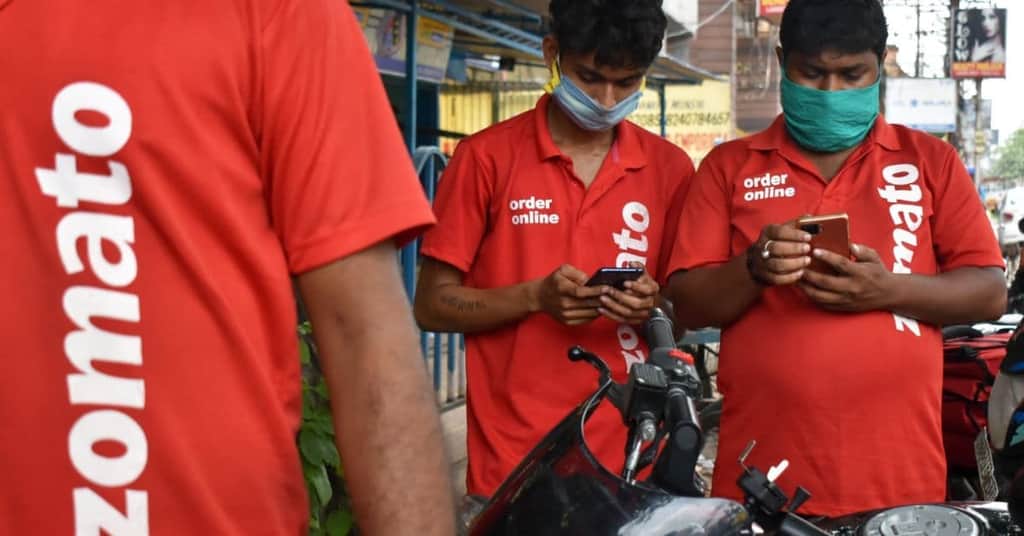
Goyal made a number of posts on social media over the next two days, responding to critics while calling the gig economy one of “India’s largest organised job creation engines”
Eternal founder Deepinder Goyal took to social media on Thursday (January 1) to announce that Zomato and Blinkit were both unaffected by the strike called by gig workers’ union on December 31 and the company delivered a record number of orders for both food delivery and quick commerce on New Year’s Eve.
The post ignited one of the most intense debates in recent times on gig economy, worker pay and conditions, job creation, traffic rules and dark store density.
The Eternal chief made a number of posts on social media over the next two days, responding to critics as well as his supporters on the issue while calling the gig economy one of “India’s largest organised job creation engines”.
At the heart of this debate was the strike called by the Telangana Gig and Platform Workers Union (TGPWU) on December 25 and 31 to protest against unsafe work conditions, low pay, and lack of social security. It was no coincidence that the TGPWU chose to strike on the two of the busiest days of the year for food delivery platforms like Zomato and Swiggy and quick commerce startups like Blinkit, Swiggy Instamart, and Zepto.
The union’s demands included fair pay through transparent wage structure, immediate withdrawal of unsafe “10-minute delivery”, end to arbitrary ID blocking and penalties without due process, and mandatory rest breaks.
But both Eternal and Swiggy claimed the strike didn’t have any major impact on their operations and they catered to a record number of customers on December 31.
Goyal then stepped in to explain Eternal’s views and the importance of the gig economy, which sparked another major debate, which still rages on. Sanjeev Bikhchandani, founder of Info Edge, one of the key shareholders of Eternal, also waded in to defend the quick commerce business model.
On December 31, Goyal posted on X that most delivery partners stood their ground and chose to work on the day“despite intimidation”, adding that some narratives were being pushed by “vested interests”.
“One thought for everyone: if a system were fundamentally unfair, it would not consistently attract and retain so many people who choose to work within it. Please don’t get swept up by narratives pushed by vested interests,” he said.
Goyal also explained how the dark store density around residential areas helps Blinkit deliver orders in 10-minutes without the need for the delivery workers to overspeed.
A day after this post, multiple people began plotting dark store density on maps to show just what Goyal was talking about. Here’s one example from X user Anup Bhat, which has now been published on its own website.
While acknowledging that there’s room for improvement, Goyal claimed the truth is “far from what it is being portrayed on social media by people who don’t understand how our system works and why”.
Goyal went on to repost on X the views of others who supported him on the issue, and even spoke about income inequality in the society, the challenges of job creation, how wages are determined and the bias individuals when they talk about traffic rule violations by gig workers.
On the topic of worker pay, Goyal said that the average earnings per hour for a delivery partner on Zomato rose 10.9% YoY to INR 102 in 2025, excluding the tips. He also made the case for lighter regulation of the gig economy so that it can become an actual job creation engine.
“Gig doesn’t need more regulation, it needs less regulation. It will bring more people into the fold, who will be able to earn some money, upskill themselves and later join India’s organised workforce. Not to mention, consistently send their kids to school – which will fundamentally change the fabric of our nation one generation later.”
“Demanding full-time employee benefits like PF, or guaranteed salaries for gig roles doesn’t align with what the model is built for. Delivery partners are not assigned shifts or geographies. They determine when to log in and log out, and their area of work in a specific city. Partners also have the freedom to add or remove a desired work area based on their preferences,”
Goyal’s defence of the gig economy divided opinions. Bikhchandani stood out for making multiple posts backing him and the gig economy.
Others highlighted some of the common problems with the model and questioned the need for 10-minute deliveries, but Goyal found support from the likes of Paytm founder Vijay Shekhar Sharma, MobiKwik cofounder Bipin Preet Singh, and former NITI Aayog CEO Amitabh Kant.
Editorial Context & Insight
Original analysis & verification
Methodology
This article includes original analysis and synthesis from our editorial team, cross-referenced with primary sources to ensure depth and accuracy.
Primary Source
Inc42 Media