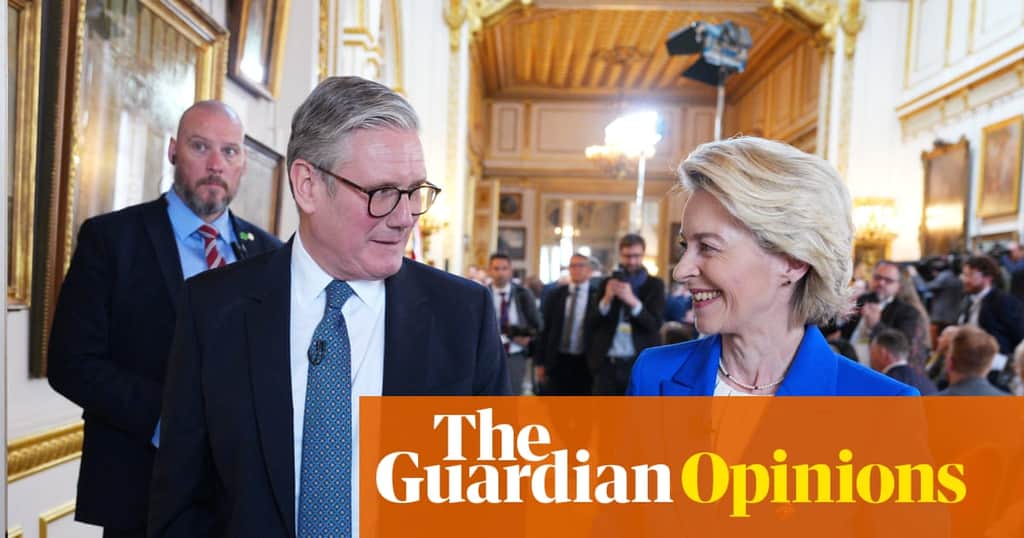
Good things may come to those who wait, but when it comes to repairing the Brexit settlement Britain was left with by Boris Johnson, the waiting has come at a heavy cost. Prices are higher, trade is weaker and our influence diminished. That is why Keir Starmer’s promise to bring forward legislation this year to improve the UK’s deal with the EU is the clearest signal yet that the era of warm words without delivery may finally be coming to an end.
Since the fanfare of last May’s UK-EU summit, progress has been glacial. The commitments trailed at the time were not abstract diplomatic wins but practical fixes people could feel. A deal on food standards and animal welfare, known as an SPS agreement, could ease pressure on supermarket prices. An energy trading agreement could lower bills by allowing the UK and EU to cooperate more efficiently in increasingly volatile markets. Yet months later, neither is in place.
Much of the delay is not Downing Street’s fault. Negotiations require both sides to move, and the EU is not known for its haste. It must balance the interests of 27 member states and proceed carefully. But caution is no excuse for inertia, especially when the economic damage of the status quo is so clear.
That is why reports that the government is preparing the legislative groundwork to deliver on SPS and energy cooperation are significant. Nearly three years after these proposals were first set out by the cross-party UK Trade and Business Commission, this bill is the first concrete sign that implementation is finally within reach. Still, food and energy agreements alone will not be enough to define success at this year’s UK-EU summit.
Britain’s return to Erasmus+ in 2027 is welcome, but insufficient. Young people are still waiting for a youth experience scheme that would restore opportunities to live, work and study across Europe. More urgent still is the question of UK access to Safe, the EU’s €150bn rearmament fund. At a moment when brave Ukrainian men and women stand between us and the tyrant on our doorstep, and Donald Trump openly questions US commitment to European security, it is absurd that the UK and EU have yet to reach agreement on cooperating more closely on defence investment.
Securing clear agreements and timelines on food, energy, youth mobility and defence cooperation would mark a successful end to what might be called phase one of Labour’s post-Brexit reset. But Starmer has hinted that he is thinking beyond that. In dismissing renewed calls for a customs union, he suggested that while helpful, it would not be transformative enough.
The evidence backs him up. A customs union alone would deliver very modest gains while riling opponents. If Starmer is going to face down the inevitable accusations of Brexit betrayal, he should do so in pursuit of changes that genuinely move the dial on growth and living standards.
That means phase two of the reset must focus on deeper, broader alignment across the economy. Mutual recognition of standards across all industrial sectors, mutual recognition of professional qualifications and UK accession to the pan-Euro-Mediterranean convention could boost GDP growth by about 2%, according to Best for Britain research by Frontier Economics. These proposals are hardly radical. We’ve been pushing for them since 2023, and all sit comfortably within Labour’s stated red lines of no return to the single market, the customs union or freedom of movement.
There is also a powerful regional case for this approach. Frontier’s analysis suggests that the biggest gains from closer UK-EU alignment on all goods and services would be felt outside London and the south-east, particularly in the Midlands, Yorkshire and the north-east. Whereas the Conservative government spoke in hollow terms about levelling up, this is an opportunity for the current government to deliver something real.
Even larger GDP boons would of course come from breaching the red lines to pursue single market access, though leaving the UK a “rule taker”, and more still from joining the EU once again as a “rule maker”.
Of course, any form of closer cooperation comes at a price. Like Switzerland, the UK would have to pay to participate and accept shared rules in agreed areas. This is a debate Starmer should welcome. When critics complain about cost, the PM can point to the reality of the past decade. Eurosceptics once railed against the UK’s annual EU membership contribution, yet Brexit has wiped about £90bn a year from the public finances, according to the House of Commons Library. Meanwhile, Trump’s embrace of tariffs has shown how isolation leaves Britain more exposed, not more independent.
Some will argue that Brussels will never agree to such an arrangement with a large neighbouring economy. We have heard that refrain before. They’re the same voices that told us none of the measures now being prepared for in legislation were possible either. The truth is that the UK and EU share economic, security and geopolitical interests. Closer cooperation is not just possible, it’s an urgent necessity.
Editorial Context & Insight
Original analysis & verification
Methodology
This article includes original analysis and synthesis from our editorial team, cross-referenced with primary sources to ensure depth and accuracy.
Primary Source
Opinion | The Guardian