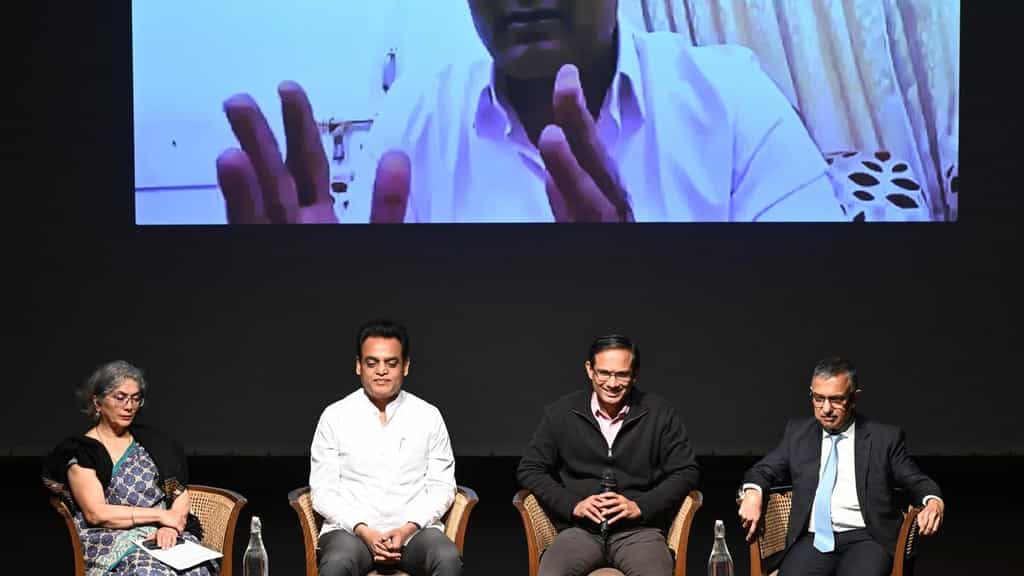
Mobility, pollution, housing, access to basic services, and the availability of public spaces — issues usually discussed as civic concerns — are now driving public health outcomes in Bengaluru, said speakers at the second edition of Bengaluru Debates, a quarterly dialogue series held on January 10.
Health in cities is increasingly being determined long before people enter hospitals or clinics, and is linked to how cities are planned, built, and governed, said the participants.
The quarterly dialogue series is aimed at fostering informed public debate by bringing together citizens, policymakers, practitioners, and civil society actors. It is hosted by the Bangalore International Centre (BIC) and Janaagraha.
Health Minister Dinesh Gundu Rao said the city’s rapid expansion had brought lifestyle stress, long commutes, pollution, and pressure on water systems, all of which were contributing to a rise in non-communicable diseases and mental health challenges. Strengthening urban public healthcare and preventive screening will be a priority, he said.
C.N. Ashwath Narayan, former Deputy Chief Minister and MLA, said Bengaluru has made advances in healthcare innovation but prevention remains weak. Many of the city’s health problems stem from lifestyle risks and environmental exposure, which can be addressed early through education, public planning, and primary care, he said.
Janaagraha CEO Srikanth Viswanathan said Bengaluru fares worse than other cities on obesity, diabetes, and hypertension. These patterns, he said, are linked to how neighbourhoods are designed and how services are delivered. The formation of the Greater Bengaluru Authority has offered an opportunity to make public health central to planning decisions, he added.
Shreelata Rao Seshadri, professor and director, Ramalingaswami Centre for Equity and Social Determinants of Health, Public Health Foundation of India, said migration, climate stress, and informal labour have placed pressure on both civic and health systems. Air pollution, congestion, and deteriorating basic services are now contributing to respiratory and cardiac risks, while affordable care is becoming increasingly out of reach for both the poor and middle class, she said. A focus on health equity is needed to protect the most vulnerable.
Economist and health systems researcher Nachiket Mor said cities become healthy not through hospitals alone but through multiple systems — housing, mobility, ecology, governance, public space, and social life — reinforcing each other over time. Decisions on land use, density, sunlight, industry, and water shape these trajectories, he said.
Speakers agreed that public health can no longer be treated as a standalone sector. Fragmented responsibilities across agencies are making coordinated and preventive approaches difficult. Better institutional alignment, they said, will be essential if Bengaluru has to build a healthier urban environment.
Editorial Context & Insight
Original analysis & verification
Methodology
This article includes original analysis and synthesis from our editorial team, cross-referenced with primary sources to ensure depth and accuracy.