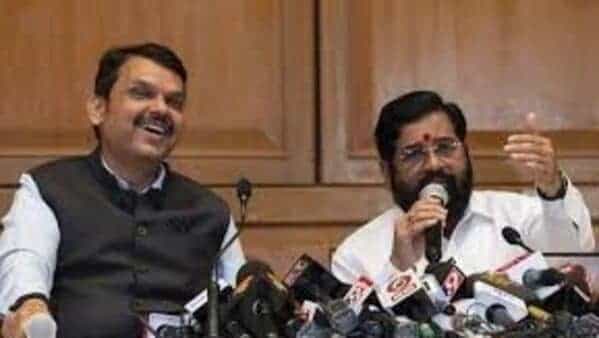
Pitching a tech-led governance for India's financial capital, the Mahayuti alliance on Sunday, 11 January, unveiled a wide-ranging manifesto for the upcoming civic body elections in Mumbai.
From promising a 50% concession on bus fares for women travellers to unveiling a plan for ‘flood-free Mumbai,’ the manifesto also focuses on use of artificial intelligence (AI) to curb corruption, speed up clearances and improve service delivery, according to PTI.
2. He also committed to setting up AI labs in all municipal schools to help students develop skills suited for the future. The manifesto underscored the use of artificial intelligence (AI) as a tool to reduce corruption, accelerate approvals and enhance the quality of public services.
“The city has seen 25 years of inefficiency in civic governance, and now I want to tell people to give us the opportunity to bring transparency in civic administration,” he said.
3. Reiterating that “Our goal is a corruption-free municipal corporation", Fadnavis spoke about a proposed “Municipality on your Mobile” programme and an AI-powered system aimed at expediting building permissions and promoting transparency in the real estate sector.
4. Transport and women’s safety were key highlights of the manifesto. Fadnavis said the alliance plans to increase the Brihanmumbai Electric Supply and Transport (BEST) fleet from about 5,000 to 10,000 buses, transition to electric vehicles, and offer a 50 per cent fare concession for women passengers.
5. He said new “midi” and “mini” transport services would be introduced to strengthen last-mile connectivity near Metro and railway stations.
6. “We will free Mumbai of Bangladeshis and Rohingyas. With the help of IIT, we will develop an AI tool to identify Bangladeshi migrants,” Fadnavis said.
7. He said ₹17,000 crore has been allocated for a climate action plan, which will include developing a circular economy framework.
8. On the Dharavi Redevelopment Project, Fadnavis said an enabling ecosystem would be created to upgrade micro businesses in the area, adding that even residents deemed ineligible would be accommodated.
9. The manifesto also refers to a “flood-free Mumbai” initiative, pledging that the city will be protected from flooding within five years by adopting Japanese technologies and working with institutions such as IIT and VJTI. Fadnavis said a research team from the Indian Institute of Technology (IIT) will examine Mumbai’s topography, while the plan involves building four new underground floodwater storage tanks, modernising existing drainage systems and fast-tracking the BRIMSTOWAD 2 project.
10. Housing and redevelopment pledges featured a “Pagadimukt Mumbai” initiative to address tenancy-related disputes, along with a commitment to grant Occupancy Certificates to 20,000 stalled buildings, a move the alliance said would benefit lakhs of residents.
11. The manifesto also suggested offering incentives to high-rise developments that follow sustainable “Living Forest” practices.
12. Deputy Chief Minister Eknath Shinde said a cultural department would be established within the BMC to promote local art and heritage, and announced plans to set up Marathi libraries and cultural centres, as well as a “Mumbai Fellowship” programme for Marathi youth.
13. Shinde said the school curriculum would incorporate the history of Mumbai and the Samyukta Maharashtra movement, and reiterated the proposal to establish the Hindu Hridaysamrat Balasaheb Thackeray Medical University.
14. He also detailed a redevelopment plan for ‘koliwadas’ and ‘gaothans’ aimed at preserving the identity and livelihoods of the Koli community and other original residents of the city.
Editorial Context & Insight
Original analysis & verification
Methodology
This article includes original analysis and synthesis from our editorial team, cross-referenced with primary sources to ensure depth and accuracy.
Primary Source
mint - news