A viral dosa joint in Mumbai is always teeming with customers. Long queues outside the establishment, filled with young people, make you stop and wonder what exactly is so special about the place. I clicked on their hashtag on social media and was bombarded with 30-second reels of creators tearing into fresh, off-the-skillet crispy dosas, slathered in dollops of white butter sliding off the surface, or dipping podi-smeared idlis into flavourful chutneys before popping them into their mouths.
Less than a minute in, I have already wishlisted the place and furiously texted friends in the group chat to clear their weekend. A visit to the dosa joint’s Delhi branch is a must, even if it means standing in an hour-long queue under the winter sun.
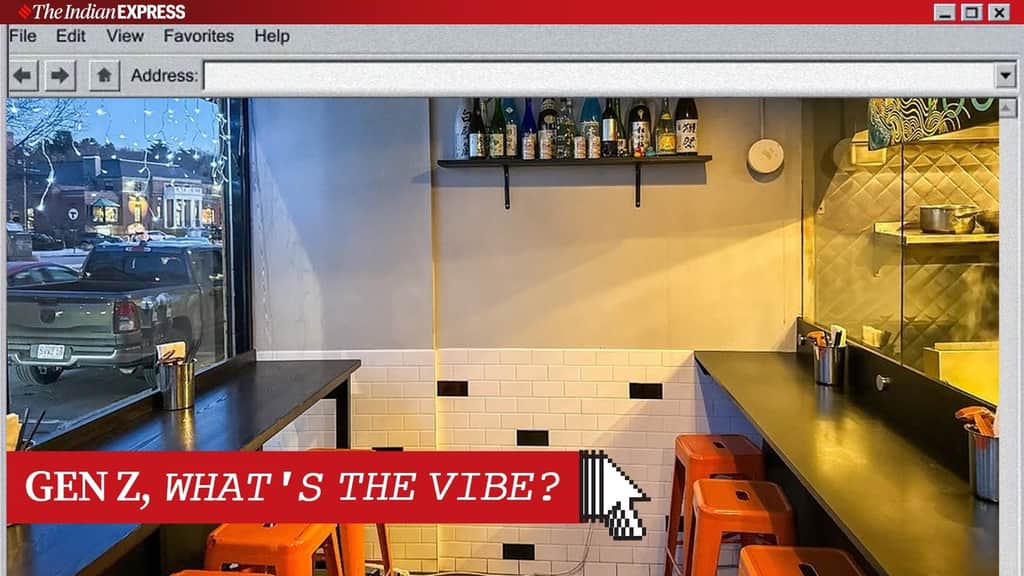
Hole-in-the-wall coffee shops serving artisanal coffee, tiny shacks specialising in authentic ramen, gluten-free bakes, and gelato establishments with limited seating have taken over our social media feeds. Gen Z is getting on month-long waitlists and lining up outside micro restaurants to get that perfect money shot of a signature dish, come rain or shine. These places barely invest in seating arrangements, letting only a few guests into their sacred space.
Is it just a fun ploy to save on infrastructure costs or to drive hype on social media?
Shakti Banerjee, senior vice president and head of qualitative research at Hansa Research, says that the success of this trend hinges upon the fact that Gen Z does not chase hype. This generation is busy curating a food culture they can identify with — filled with food they can experience, that delivers meaning to food and don’t just serve meals, Banerjee says.
During an extensive qualitative research conducted by her firm, Banerjee asked Gen Z what draws them to such tiny establishments. The answers were surprising. Some said, “If there’s a line, I feel like it’s already been approved by people, vis-à-vis when it’s too easy to get a table, it feels less exciting,” while a few others claimed that large restaurants and chains feel generic. They lack the specialised attention, service and care smaller establishments offer their customers.
“In a smaller outlet, you remember the person cooking your food; he comes and asks you whether you liked the food or not,” Banerjee recalled a young interviewee’s words.
Don’t our roadside thelas do the same? Isn’t that why we keep going back to them?
Yash Bhatia says micro-dining works because it brings people closer to the space, the food and the intent behind it. When a restaurant is small, every decision matters more and that level of intentionality is something this generation instinctively responds to, he said.
Choosing a small-format model was a conscious decision for Bhatia, founder of Mai Mai, Indiranagar, Bangalore.
“We wanted to build a space where quality, control and consistency came before volume. A smaller format forces clarity in the menu, the kitchen flow and the overall experience. It keeps founders and chefs close to the product, and that closeness shows up in how food is cooked, plated and served,” he told indianexpress.com.
For Gen Z, the appeal has shifted away from expansive spaces and surface-level drama. They are drawn to feeling, intimacy and meaning. Bhatia’s Mai Mai taps into this exact shift in generational dining behaviour that values honesty and connection. Gen Z prefers spaces that feel personal and lived-in rather than overwhelming or performative.
“Transparency matters to them. They want to see how food is made, understand the thinking behind it and feel part of the rhythm of the room. Even imperfections, when handled openly and sincerely, build trust rather than distance,” he said, adding that an open kitchen, a slower pace and deliberate service all contribute to that sense of belonging.
Micro-dining works because it brings people closer to the space, the food and the intent behind it. (Source: Instagram/@whatshotbangalore)
Nakazawa Kyouhei, project manager at Kuuraku India Pvt Ltd, says that dining options are abundant nowadays and believes that both restaurant categories and the taste of the food itself have become commoditised.
“As it has become difficult to differentiate restaurants based on taste alone, Gen Z places importance on the experiential value that goes beyond simply eating a meal,” he opined, giving examples of experiences related to the stories behind the food, such as the origins of ingredients, the cultural background of the dishes, and the chef’s intentions.
Experiences related to the atmosphere, the type of service, and how the food is presented and enjoyed also play a role.
“Micro dining offers intimate, high-density experiences for a small number of guests, and the trend highlights places where both restaurants and customers can more easily express and embody their own preferences and originality, something that larger, conventional restaurants cannot provide. I believe this is exactly what attracts Gen Z,” said Kyouhei.
Sidhant Kalra, director of Khan Chacha, agreed with Kyouhei, sharing the restaurant side of the trend’s widespread popularity on social media. According to him, micro-dining works for many new-age brands because it taps into a shift toward curated, intentional dining.
“It helps restaurants stand for something specific, resulting in tighter menus, stronger identities, and more consistent execution,” he said.
However, Kalra emphasised that longevity is the real test. “Once the buzz fades, only strong food and memorable experiences keep people coming back.”
For Gen Z, Instagram and FOMO (fear of missing out) may drive the first visit, but their behaviour is now more nuanced. Kalra highlighted that Gen Z is shifting its focus from material purchases to experiences, seeking exclusivity and curated moments rather than mass offerings.
“They disengage quickly if quality falls short, so long-term relevance depends on authenticity, consistency, and a genuine connection with the diner,” he said.
While some restaurants can sustain themselves solely through social media, this is limited to situations where the location, target audience, and originality are clearly defined, added Kyouhei.
Yash emphasised that while social media can spark discovery, it does not sustain loyalty. Gen Z is sharp, intelligent and quick to see through hype. Repeat visits are built on trust, consistency, and genuine experiences.
Micro-dining allows restaurants to stay focused on craft and emotional resonance rather than scale, creating spaces people want to return to.
“Ultimately, when everything from service to ambience is intentional and human-centric, the experience stays with guests long after they leave, and that is what brings them back,” he concluded.
With Gen Z redefining celebrations and luxury to value experiences, intimacy and exclusivity, micro restaurants that check all the boxes have a long future ahead.
Editorial Context & Insight
Original analysis & verification
Methodology
This article includes original analysis and synthesis from our editorial team, cross-referenced with primary sources to ensure depth and accuracy.
Primary Source
The Indian Express