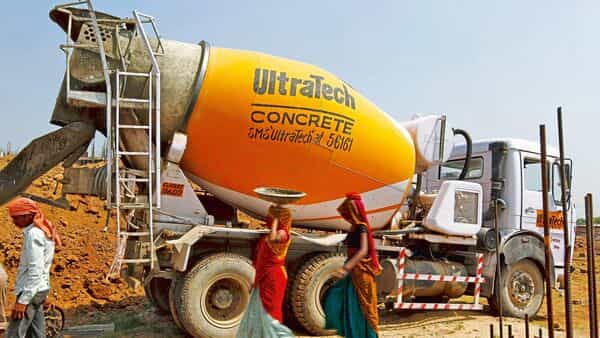
NEW DELHI: In a major relief to companies operating heavy industrial and construction equipment, the Supreme Court on Wednesday ruled that specialized off-road machinery used within factory premises, mines and industrial areas cannot automatically be treated as motor vehicles liable to road tax, even if such equipment is capable of limited movement.
A bench comprising justices Pankaj Mithal and Prasanna B. Varale delivered the ruling on a plea filed by UltraTech Cement Ltd, which had challenged a 2011 Gujarat High Court order allowing the levy of motor vehicle tax on construction equipment.
By setting aside the high court’s ruling, the apex court brought to an end a long-running dispute affecting sectors such as cement, mining, infrastructure, ports and dredging, where heavy machinery, including dumpers, excavators, cranes, loaders and road rollers, is predominantly deployed for off-road operations.
The court held that road tax can be levied only on vehicles that are suitable for use on public roads, as contemplated under Entry 57 of List II of the Seventh Schedule of the Constitution, which empowers states to tax vehicles meant for road use.
“In view of the pleadings and the material on record, we are of the opinion that the vehicles used by the applicants are vehicles of special types, namely construction equipment vehicles, meant for use and operation within industrial areas,” the court observed while orally pronouncing its judgment.
The bench also noted that such equipment is not chargeable to road tax even under the Gujarat Motor Vehicles Tax Act, which does not prescribe any levy for construction equipment vehicles.
However, the court added an important caveat: if such machinery is found to be using public roads, it would attract the provisions of the Motor Vehicles Act and the relevant state tax laws, including liability to road tax and penalties.
The detailed written judgment was not available until press time.
Several companies, led by Reliance Industries Ltd and other industrial contractors, challenged these demands before the Gujarat High Court, arguing that the machines were oversized, slow-moving, damaging to road surfaces and, in many cases, had to be dismantled and transported on trailers. Since road tax is compensatory in nature, they contended it should not apply to equipment that does not meaningfully use public roads.
In its 2011 judgment, the Gujarat High Court largely sided with the state, holding that the capability of road use, even if occasional or incidental, was sufficient to attract tax. It rejected the argument that predominant use within factories or project sites warranted an exemption.
To determine liability, the high court classified construction and industrial equipment into three categories: machines incapable of road use and therefore exempt; machines capable of road use and hence taxable; and borderline cases requiring technical inspection.
UltraTech Cement subsequently challenged this interpretation before the Supreme Court, a move that has now culminated in Wednesday’s verdict, ending nearly 25 years of uncertainty over the taxation of off-road construction equipment.
With the apex court’s ruling, the long-standing ambiguity has been settled, restoring a clear distinction between road-going vehicles and specialised off-road industrial machinery, a decision expected to provide relief across India’s industrial sectors operating within factory and industrial zones.
Editorial Context & Insight
Original analysis & verification
Methodology
This article includes original analysis and synthesis from our editorial team, cross-referenced with primary sources to ensure depth and accuracy.
Primary Source
mint - news