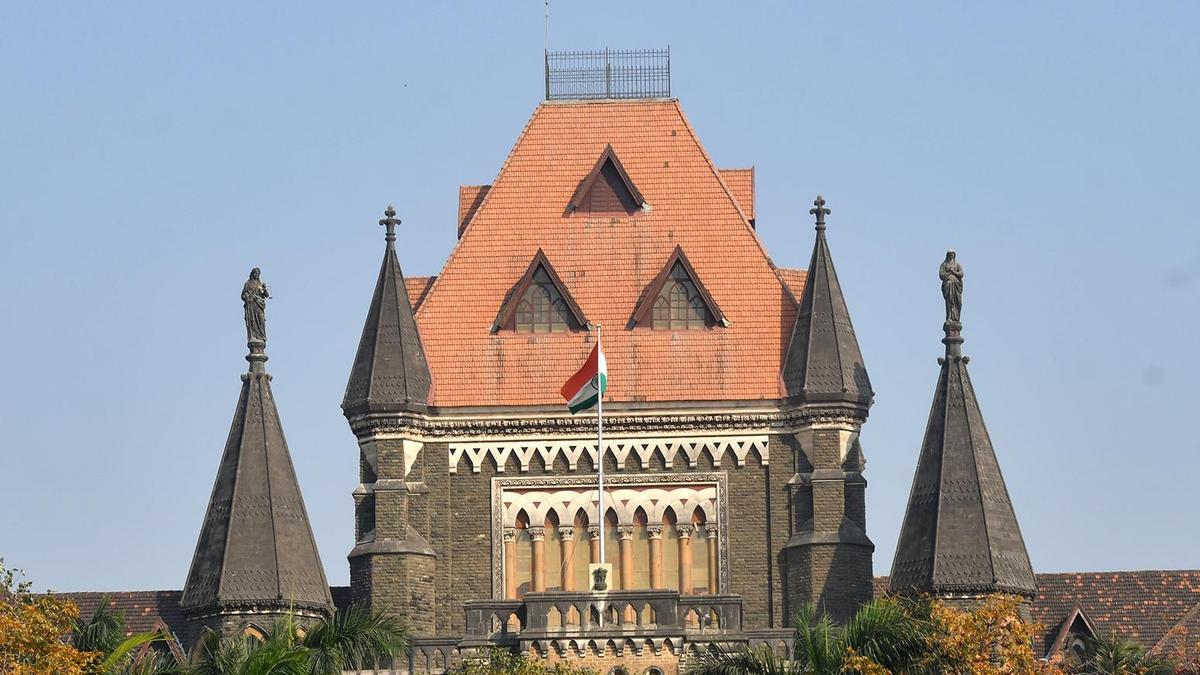
The Bombay High Court on Tuesday (December 23, 2025) came down heavily on the Brihanmumbai Municipal Corporation (BMC) and Maharashtra Pollution Control Board (MPCB) for failing to protect construction workers from hazardous air pollution, stressing that mere data collection is meaningless without tangible action on the ground.
A Division Bench of Chief Justice Shree Chandrashekhar and Justice Gautam Ankhad, hearing a suo motu public interest litigation on Mumbai’s worsening air quality, rebuked MPCB counsel Ashutosh Kumbhakoni for suggesting that enforcement claims needed verification.
Chief Justice said, “How do you safeguard the health of workers? Are there any guidelines for project proponents? The workers at construction sites are exposed to severe pollution. You do not care about the poor. That is what is happening. There is nothing for the workers. At least have masks for them. Don’t they have a claim to right to health?”
The Bench warned that Mumbai could face a crisis similar to Delhi if authorities continued to ignore compliance. “Once it goes out of hand, nothing remains within your control. We have seen that in Delhi for the last several years,” the Chief Justice observed.
The court criticised civic bodies for focussing on Air Quality Index (AQI) monitoring while ignoring on-site mitigation. It reminded officials of their constitutional duty, “Not just as an officer of the court but also as a citizen, you have the duty to protect the environment. It has attained the status of a fundamental right of citizens and a corresponding duty. Convene meetings and take instructions. You have to come up with suggestions, and you should be aware that every suggestion can be scrutinised by the court and other parties.”
The Bench also asked why MPCB’s monitoring stations do not raise alarms or issue public health advisories during severe pollution episodes.
BMC Commissioner Bhushan Gagrani, who was present in court, was asked by the court, “When was the last time you stepped out of your office and carried out surprise visits in the city?” Mr. Gagrani replied that he had conducted two surprise visits in mid-November and last reviewed compliance on October 28.
Senior Advocate S.U. Kamdar, who appeared for the BMC, added that the Commissioner issued directions after receiving certain reports and show-cause and stop-work notices were also issued to project proponents that were found in breach of guidelines.
Authorities claimed to have issued 433 show-cause notices and 148 stop-work orders, but the Bench highlighted glaring non-compliance. During informal visits to 20-25 sites, only one near Mumbai airport met basic norms by erecting 35-foot metal barricades.
The Bench said, “We do not want the ongoing work to stop; we want compliance and guidelines. That is the bare minimum. It is a result of simple negligence by builders and project proponents.”
The Bench questioned why no health advisories were issued for vulnerable groups like children and elderly, despite AQI crossing 300 in several pockets, and asked why the State Environment Department had not coordinated with MPCB and BMC to implement emergency measures.
Senior advocate Darius Khambata, appointed as amicus curiae, supported the Bench’s concerns. He told the court that there was more than a slip in compliance, citing a panel’s findings of violations at six major infrastructure projects and several road-concretisation sites in Bandra.
He also flagged that although BMC records more than 1,900 construction sites in Mumbai, less than 600 have installed AQI monitors, and some sensors remain unlinked. Mr. Khambata urged immediate enforcement of water fogging, covering debris, sensor-based monitoring, and protective gear, stating these are not mere guidelines but carry the force of law.
Mr. Kamdar argued that steps were being taken to ensure compliance and that the civic body was actively monitoring construction sites.
Senior advocate Ashutosh Kumbhakoni for MPCB, argued that the Board had taken steps to monitor air quality and enforce norms but said that claims of compliance needed verification before punitive action could be taken.
“We see with open eyes that such massive constructions and building sites are not adhering to guidelines. Take your Commissioner across the city and see how many are abiding. There are no metal sheets of 35 metres or green tarpaulin. A lot more has to be done by BMC and MPCB. By tomorrow, the very first thing we want to know is how you will protect construction site workers,” the court said.
The hearing is adjourned to December 24. The Bench added that it is ready to sit even during vacation if required.