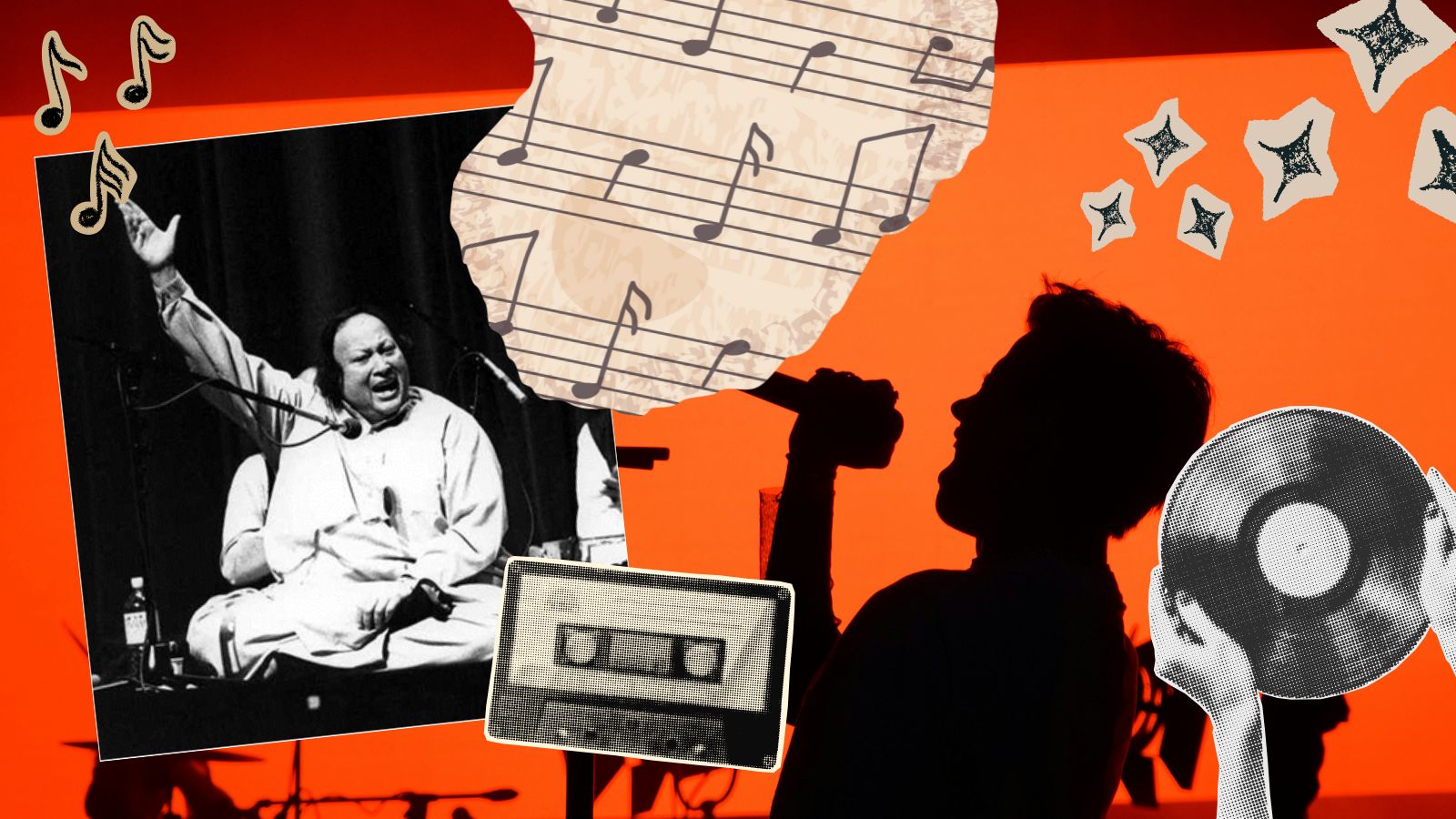
Like most people born before 2000, the joy I found in music had nothing to do with playlists or algorithms. It began with a cassette player. Growing up in a home of Hindi music lovers, we woke up to Kishore Kumar, R D Burman, Mukesh, and Lata Mangeshkar singing songs such as ‘Ek Pyaar Ka Nagma’, ‘Lag Ja Gale’, and ‘Gulabi Aankhein’. Before the internet turned everything into a trend, these songs were simple favourites of my parents, and their love of such music became mine. Music filled our home even before we spoke our first words of the day.
At that time, I listened and learned without care for inspiration, originality, or references. Then came the era of the DVD, and we could put faces to familiar music. I watched music videos on DVDs, filling my screen and speakers with Bollywood classics. It was thrilling to see performers lip-sync, playing to the camera, exaggerating their expressions, and once in a while, shaking a leg. As I grew up and the world began to filter in, I realised many of the songs were inspired by or borrowed from Western music.
The rise of social media and audio streaming transformed everything all over. Suddenly, I, along with millions around the world, was no longer limited to what film industries chose to promote. I could explore artists and voices that were drowned out by the noise of commercial film music. That’s when I discovered Noor Jehan, Nusrat Fateh Ali Khan, Nazia Hassan and others. Their voices carried the weight of history, longing, joy, pain, and transcendence. Listening to them felt like chancing upon a hidden, precious archive of truth.
Today, Pakistan Idol, which returned after nearly a decade, has brought these gems back to me.
I have been following their social media handles with interest. I have seen reality shows before, complete with dramatic edits, but this feels different. What makes Pakistan Idol special is not just the competition or production quality but how its music feels real, with roots and depth. The show has uncovered original compositions, ghazals, folk songs, and lyrical masterpieces that Bollywood production houses have long adapted or reinvented. On Pakistan Idol, it feels like the songs have come home.
The contestants aren’t just belting out catchy tunes. They are singing ghazals and classical pieces that demand something deeper from both the performer and the listener. These songs carry poetry. The young artists on this stage approach them with respect, connecting with both the judges and audiences across borders.
Speaking of the judges, it features a powerhouse lineup. Rahat Fateh Ali Khan, nephew of the legendary Nusrat Fateh Ali Khan, brings with him a formidable musical legacy and is best known to a new generation for breathing fresh life into ‘Chhaap Tilak’ and ‘Aafreen Aafreen’ on Coke Studio Pakistan. Fawad Khan’s presence shines a light on his little-known past as the lead singer of Lahore’s rock band Entity Paradigm, long before television stardom and Bollywood made him a cross-border heartthrob. Completing the panel are Bilal Maqsood of the iconic pop-rock band Strings and the enchanting Zeb Bangash.
Auditions showcased a stunning range of music, from heartfelt ghazals to soulful folk and modern takes on timeless classics. Performances like Karachi’s Minam singing ‘Ranjish Hi Sahi’ moved judges and viewers to tears, drawing praise on social media across the world.
Social media has become a lively space for this revival. Clips from the show are going viral on X, Instagram, and YouTube, racking up millions of views. Take, for instance, contestant Romaisa Tariq’s rendition of ‘Long Gawacha,’ a tender, self-styled version that has struck a chord with audiences and crossed 17 million views on Instagram alone.
Fans are sharing emotional reactions and praising the contestants in what many view as a true celebration of Pakistan’s musical spirit. Comments pour in, with viewers from India also engaging with the clips, showing appreciation and recognising that music knows no boundaries.
Listeners from India make up a noticeable segment of the online audience for Pakistan Idol clips and reactions. While exact viewership numbers by country are not publicly available, reaction videos and social media trends suggest a significant interest in the show from Indians and the Indian diaspora, attracted by shared language, cultural history, and musical roots. Though the show’s mandate that the contestants perform only Pakistani songs does dampen that spirit.
“Hello I’m from India, I must say when it comes to music Pakistan is always mind blowing, watching this video it gives the OG Indian Idol vibe which is completely missing nowadays in Indian reality shows. Kudos to the judges panel and amazing contestants. I truly wish and pray that this show becomes super successful,” a user wrote.
“I feel good knowing that many of us Indians love music as it should be. Music is a true unifier. We must challenge hate politics from every corner of the world and work together to make this planet a beautiful place to live. Hugs to all,” another user commented.
For me, Pakistan Idol has become more than just a show. It has helped me return to the pure joy of listening as I did with my parents. It reminds me that music should be felt, not just heard.
In this digital age, where algorithms often dictate our listening choices, Pakistan Idol restores human connection and emotional engagement. It allows listeners like me to remember why music matters, how a ghazal can stir the soul, or a folk melody can link you to centuries of cultural expression.
It represents a place where musical artistry is respected — where tradition is honoured, and where young voices celebrate the giants of melody without watering down their essence. Hearing contestants channel Noor Jehan’s quiet strength or Nusrat Fateh Ali Khan’s raw passion makes me realise music’s deep roots. They represent legacies. Watching these melodies resonate with younger generations, both in Pakistan and beyond, heals something intangible inside me, and I suspect, others too.
Pakistan Idol has helped me rediscover why I fell in love with music in the first place. Music has the power to move, unite, and transcend borders — if we let it.