A quote from Rudolf Austein in the atrium of DER SPIEGEL headquarters in Hamburg: "Tell it like it is."
Foto:
But we make mistakes. We are not perfect. But we are eager to improve. That is why we welcome criticism. A critique of the website and the magazine is an important element of our daily conferences, during which we are told what we have done well and what we could have done better.
Now, we are taking a new step. We have understood that our readers value transparency and that it is an important element of trust. We want to demonstrate to them that we are open to criticism. We want them to know what an expert thinks about our work.
What do you, as a reader, gain from this initiative? Perhaps Poerksen will discuss a concern that has been bothering you as well. Maybe he will inspire you to think about DER SPIEGEL in a new way. It could be that you have ideas for what our critic should address in a future essay. In SPIEGEL Debatte, you have the possibility to discuss this article.
Criticism of DER SPIEGEL is first and foremost criticism of the editor-in-chief. I will take to heart all that I read from Poerksen and from you and then discuss with the newsroom how we can improve.
Dirk Kurbjuweit, editor-in-chief
I. The Unlikely Experiment

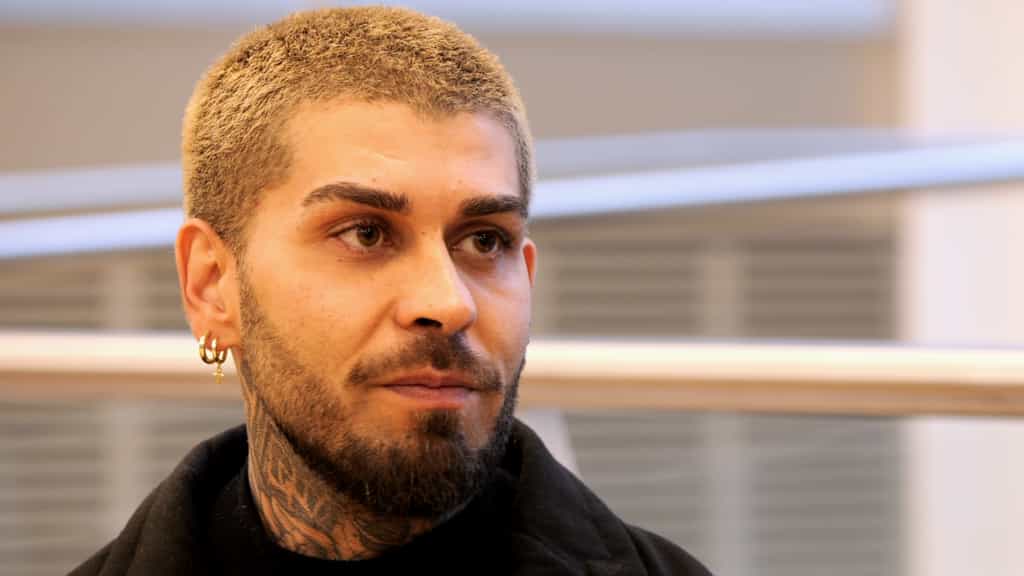
Bernhard Poerksen, born in 1969, is a professor media studies and the author of numerous books, including two titles that recently appeared in English: "Digital Fever: Taming the Big Business of Disinformation" (Palgrave Macmillan, 2022) and "Truth Is the Invention of a Liar" with cyberneticist Heinz von Foerster (Carl-Auer, 2024). His new book on the art of opening up to the world will soon be published in English. Poerksen has received numerous awards for his teaching and research, including most recently the 2024 Erich Fromm Prize.

The article you are reading originally appeared in German in issue 52/2025 (December 18th, 2025) of DER SPIEGEL.
Now, dear readers, as this journalistic experiment draws to a close, I wish to change perspectives. That means: I no longer intend to elucidate my own observations, but I will allow myself to be inspired by what you have seen. As such, I have spent several weeks perusing all of the emails and letters to the editor that reached me from you, the readers, in addition to studying the many hundreds of comments in DER SPIEGEL’s debate forum that focused on this project of press critique. This final column belongs to you. And in that spirit: Fire at will! Praise and criticism from your perspective!
The Question of Independence
DER SPIEGEL received plenty of praise from the start for the idea of public criticism of its coverage. "Magnificent," "courageous," "bravo," "much respect," a "groundbreaking idea”: Such were the messages contained in message after message. But there was also a fair amount of criticism and doubt. Why did DER SPIEGEL, one reader asked, "get the professor? Does the magazine want to be reassured, comforted, praised, does it want to learn tricks it hasn't thought of itself?" Still others suspected I was "probably more of a fig leaf" for the magazine, and would "definitely get quite a bit of money" for this work, writing that the main beneficiary of the entire exercise would be my wallet. Other readers felt I was engaging in "too much adulation," paired with "bite-sized micro-criticism" that ultimately only served to sugarcoat the magazine’s image. "The question of credibility is likely the most difficult aspect of this job," said Dirk Revenstorf, a psychology professor in Tübingen. Because the relationship to DER SPIEGEL, both my client and the object of criticism, was strangely entangled and twisted: On the one hand, the editors were potentially "perpetrators"; on the other hand, though, they were to be examined like a "patient" with whom one must – in order to achieve anything at all – build a "clinical rapport," a relationship sustained by trust and appreciation.
Allow me to offer a few comments on all of this. First, there was an omission right at the start. DER SPIEGEL Editor-in-Chief Dirk Kurbjuweit and I agreed at the beginning that my fees would be donated to the organization Reporters Without Borders, a group that works in admirable ways for press freedom and on behalf of imprisoned journalists. I received no money, something that definitely should have been mentioned at some point. Second, I could have been a bit more severe sometimes, something the newsroom also mentioned, by the way.
Severity, though, is not a value in itself and media criticism has become a rather ideologically fraught field. With this project, I wanted to push back a little, driven by the attempt to exemplify a different, more careful form of engagement – concrete, precise and detailed so as to promote improvement, but still systemically informed and several steps away from the refined, populist-leaning contempt for journalism cultivated by the Dobelli-Welzer-Precht-Sloterdijk faction.
Dialogic Ideals and Schematized Debate Worlds
The Suspicion of Cowardice
I found that impressive. As detailed, investigative analyses of the unpopularity of media criticism in journalism have shown, it would have been completely normal for a tactical tug-of-war to erupt behind the scenes. What should be said publicly? What should we really print? But that didn’t happen in this instance. There was no tug-of-war, no appeasement, no relativization. And the truth is: Such nonsense ideas about global warming would certainly never reach the pages of DER SPIEGEL today. The magazine now employs some of the best climate journalists in the country.
But the question remains: Was my public lashing of a single individual fair?
Because the fact is, I also overlooked the role of former DER SPIEGEL Editor-in-Chief Stefan Aust (who headed the magazine from 1994 to 2008). Various readers, DER SPIEGEL journalists and former employees drew my attention to this omission, with some of them immediately sending me accounts of their own experiences. Here are two examples: Under Aust, a story remained unprinted in which Gerd Rosenkranz and Harald Schumann described the perfidy with which energy companies were setting out to thwart subsidy laws for renewable energies. At the same time, though, other articles were given prominence, including a shockingly poor cover story ("The Windmill Madness," 2004) in which wind energy was dismissed as being a waste of time. In fact, Stefan Aust was still boasting about precisely this DER SPIEGEL cover in 2021 and continuing to publicly doubt that CO2 was a major cause of global warming. Why, then, did I not mention Stefan Aust, or at least touch on his bizarre statements on the topic? Is his self-radicalization a collective industry taboo because a more precise reappraisal could cast a dark shadow on the old hero stories and all the talk about the great times when journalists were still real men, courageously chasing down the next scoop in a private jet? Or did I cowardly fear journalistic revenge?
The embarrassing thing is: I don't exactly know myself. But in the spirit of learning, here are my takeaways: First, as I can now say from my own experience, there are forms of timidity and hesitancy that remain puzzling to oneself. Second, there is a need for stronger role models for something that could be called investigative media journalism – because classic media journalism suffers from an imitation of celebrity and glamour reporting, complete with softball interviews and emotional lifestyle pieces. To disrupt this sanguinity with fearless and ruthless investigative pieces into the purveyors of disinformation – that would really be something, especially for DER SPIEGEL, which possesses a team large enough to take on the mission. Furthermore, there is also a market for such revelations, particularly in these times of blanket suspicion. This market should not be left to the conspiracy minded.
Narratives of the Apocalypse
In political journalism, as reader comments made clear to me, there is a strange equation, a curious thought-formula that celebrates the invocation of catastrophe and decline as evidence of acute professionalism. This formula holds that the more negative a story is, the more independent and credible it becomes. And the better for society. Why is this a problem? Three reasons. First, through the tone of disdain and the general tendency toward rhetorical escalation, there arises – in a strange though unintended alliance with populists of different stripes – a discourse climate of lurking resentment in which the tiniest of mistakes (then-chancellor candidate Armin Laschet's laughter after the massive flooding in 2021; Olaf Scholz’s insult of "court jester” directed at a Black politician; the preachy tone in a video by former Economy Minister Robert Habeck; et cetera) appear as dramatically unforgivable blunders. Second, such an equation is based on a logical error because it confuses critique (in the philosophy of Immanuel Kant, actually another word for illuminating the a priori conditions that make knowledge possible) with opposition. And third, the whole idea rests on a false assumption, an erroneous theory of social transformation. The idea that we are showing you, dear society, what is going catastrophically wrong in the political operation. Followed by the assumption that everything will improve because the depressing truth will first get society and politics to reflect and then to take action.
Many readers are put off by the lack of empathy anchored in the routines and rituals of the journalistic profession and the tendency toward negativism, sometimes as pertains to DER SPIEGEL, sometimes as pertains to the media industry as a whole. It's always "the end of the world," one horrified reader wrote. "Are we not allowed to be happy? The government is always to blame." Another complained about the tendency toward constant apocalypse. Still others criticized the tendency toward immediate condemnation, thereby fueling support for populist parties, or expressed a longing for positive journalism and success stories (successful environmental projects, functioning digital citizen service, cleverly chosen measures for pandemic control and so on). Why are politicians always "so intensely criticized,” some asked in the forum, why is "the negative so continuously emphasized to the detriment of any achievements that may have been realized” by individual politicians or parties.
These are good, weighty questions. And just for the record: Such questions do not convey a desire to ignore real negative developments in the service of general mood elevation; not a single reader suggested such a thing. But it is still necessary – despite all the efforts DER SPIEGEL has undertaken over the course of several years in the direction of positivity and encouragement – to take the psychological and political collateral damage of journalistic negativism even more seriously; if for no other reason than because no one wants to live in the darkness of dystopia in the long run, and people see themselves as being robbed of their dignity when they are no longer able to recognize themselves as individuals with agency but only as mute spectators inevitably doomed to failure in a world of permanent mega-catastrophes. This also means that serious journalism should – even in these pressure-filled times of ongoing media revolution, information explosion and trust erosion – once again strive for a new openness and approachability. But how?
II. The Listening Newsroom
My answer: The journalism of the future must understand itself as one voice in a great, ongoing conversation – and it must relearn how to listen. This means cultivating an openness to being challenged and changed, resisting the reflex to immediately categorize and deploy what we've just heard before we've truly understood it. But what does real listening actually mean? I argue in my latest book on the art of opening up to the world that there are two fundamentally different ways to listen. First, there is an "I-ear” of egocentric attention governed by a single question: Does what this person is saying match my own view? Here, our own positions and perspectives become the filter for everything we hear. We're not really listening to the other person – we're listening to ourselves. Second, there is a "You-ear” of non-egocentric attention guided by a different question: In what world might this person's views make sense? This is where we genuinely encounter the other – in all their foreignness, their beauty, their horror. To be clear: This doesn't mean we must listen to everyone or that we should always end up agreeing. That would be naive, a kind of false reconciliation. We still need to judge, and sometimes to condemn sharply. But we should do so at a deliberate distance from the knee-jerk know-it-all-ism and instant labeling that dominates our current discourse. Real listening – not merely tactical listening – is, as social scientist and musician Christina Thürmer-Rohr puts it, another word for "openness," for "inner hospitality," for genuine engagement with what we don't yet know. This has nothing to do with opportunistically chasing popularity or parroting back what the majority wants to hear.
But what exactly would a "listening newsroom" look like? I don’t honestly know myself. And I find the pontificating and know-it-all posturing in the media industry mostly ridiculous anyway. Still, I like the phrase. It works as a provocation, an invitation to explore uncharted territory. It's what Hannah Arendt called "thinking without a banister" – thinking that takes in as much of the world's complexity and capacity for surprise as possible. One thing is certain: The listening newsroom doesn't exist yet. It's a utopian space where judgment is deliberately slowed down, far removed from the instant commentary and performative outrage that too often make even serious journalism feel predetermined, polished and strangely monolithic.
But one thing I do know, dear readers: You now hold journalism's future in your hands, whether you realize it or not. The advertising market that once funded newsrooms has been devoured by Big Tech, and the AI revolution is demolishing what business models remain with stunning speed and force. This moment in history demands something different from you – not passive consumption, but active partnership. You are the newsroom's companions now, its collaborators, provocateurs and critics. You will help determine whether independent journalism, beyond a handful of corporate giants, even exists in a few decades. If this is going to work, you'll need to stay loyal to a journalism that doesn't tell you what you want to hear – a journalism you value precisely because it sometimes infuriates you. The job is to be both prickly and resistant.
And because you now wield this influence, dear readers, journalists need to listen to you differently, more deeply, to truly understand what matters to you. That alone makes it worth developing this still-hazy idea of a listening newsroom – one that fundamentally reimagines how we communicate with each other. And then actually building it, knowing that genuine listening changes the world. Let's see what DER SPIEGEL does with it. And now, to borrow from Douglas Adams: So long, and thanks for all the fish.
Curated by Sofia Andersson