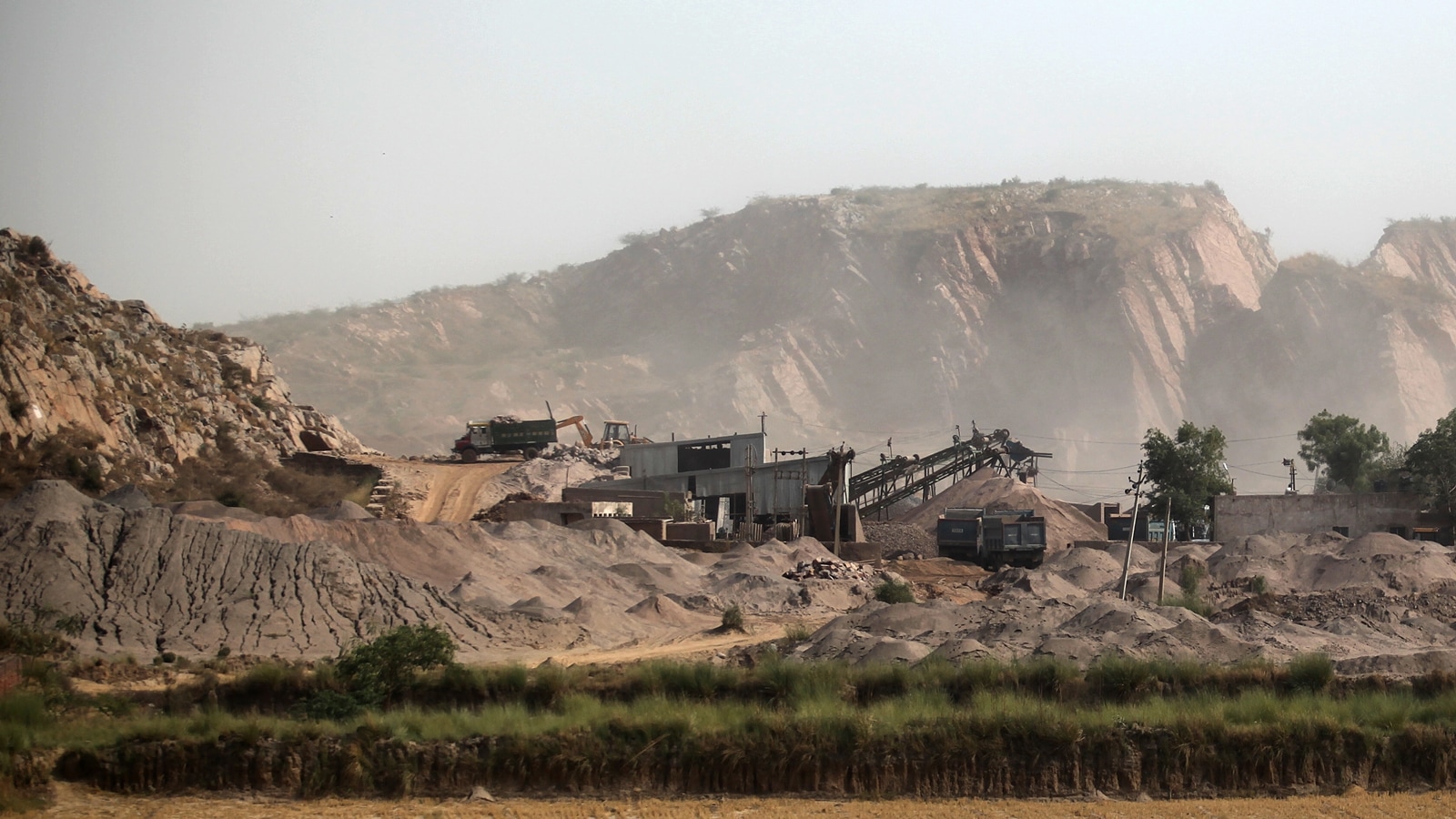
The Supreme Court of India’s recent judgment on the definition of the Aravalli Hills marks a rupture in the nation’s environmental jurisprudence. By endorsing a definition that sidelines science and weakens the precautionary principle, the ruling redraws one of India’s most critical ecological systems using an arbitrary numerical shortcut devoid of scientific validity.
The Aravallis have historically been understood as far more than a collection of hills. They constitute a continuous living landscape regulating climate and facilitating groundwater recharge and supporting a wide range of biodiversity in one of India’s most arid regions. While the judgment acknowledges this ecological significance, the Court has ultimately privileged administrative convenience over ecological coherence. Its near-total reliance on government submissions raises troubling questions.
Acting under the Court’s own directions, the Central Empowered Committee (CEC) had earlier cautioned against the Ministry of Environment’s proposed “100-metre local relief” rule, endorsing the Forest Survey of India’s (FSI) slope-based approach. This was not a philosophical objection but one grounded in data; the amicus curiae warned that the 100-metre threshold would open lower hills to mining, destroying the range’s integrity. Yet, these warnings were brushed aside.
More alarming is the revelation that the CEC clarified it neither examined nor approved the ministry’s report.
At the heart of this failure lies bad statistics implemented as policy. The committee relied on district-wise average elevation to justify the 100-metre threshold — a fundamentally flawed approach in a landscape as heterogeneous as the Aravallis, where heights range from 20 to 600 metres. In such extremes, averages are meaningless; a few tall peaks can inflate a district’s average, leaving the majority of lower hills unprotected.
This outcome was not accidental. The committee tasked with defining the Aravallis lacked independent ecologists or social scientists who could negotiate in the best interest of the Aravallis. Consequently, objections raised by the FSI and CEC were treated merely as operational difficulties to be smoothed over in the pursuit of uniformity.
The relevant question was never whether an average touches 100 metres, but how many individual hills fall below that threshold and what ecological roles they play. With reportedly over 1,18,575 hills at stake, the Court failed to demand a detailed response, accepting vague percentages instead. By anchoring the debate to averages, the process risks the destruction of thousands of ecologically vital formations.
Equally troubling is the acceptance that this is merely an “operational” definition for mining. Definitions are rarely neutral. Once landscapes fall outside legal recognition, they slip from the precautionary framework. To assume Environmental Impact Assessments (EIA) will safeguard these areas presumes a rigour that the Ministry’s record does not support. Weakening protection to legalise mining through a compromised EIA process is not regulation — it is abdication.
The Aravallis do not rise and fall neatly at 100 metres. They are a system where low hills, foothills, and aquifers function together. Protecting only prominent peaks while rendering the rest invisible is not conservation; it is ecological amputation. Foothills and low-relief formations around prominent peaks also play a critical role in groundwater recharge, wildlife habitat, soil stability and provide several ecosystem services important for local livelihood.
The Supreme Court has long stood as the ultimate guardian of India’s environmental legacy, a role that this judgment now risks diluting. Correcting this course is essential not merely to prevent the irreversible fragmentation of the Aravallis, but to reaffirm the judiciary’s role in reminding the government that it is a trustee of the country’s natural assets, as guaranteed under the Constitution. Legal errors can be revisited and corrected; ecological destruction cannot.
The writer is a conservationist and leads the Climate & Ecosystems team at the Vidhi Centre for Legal Policy, New Delhi. Views are personal