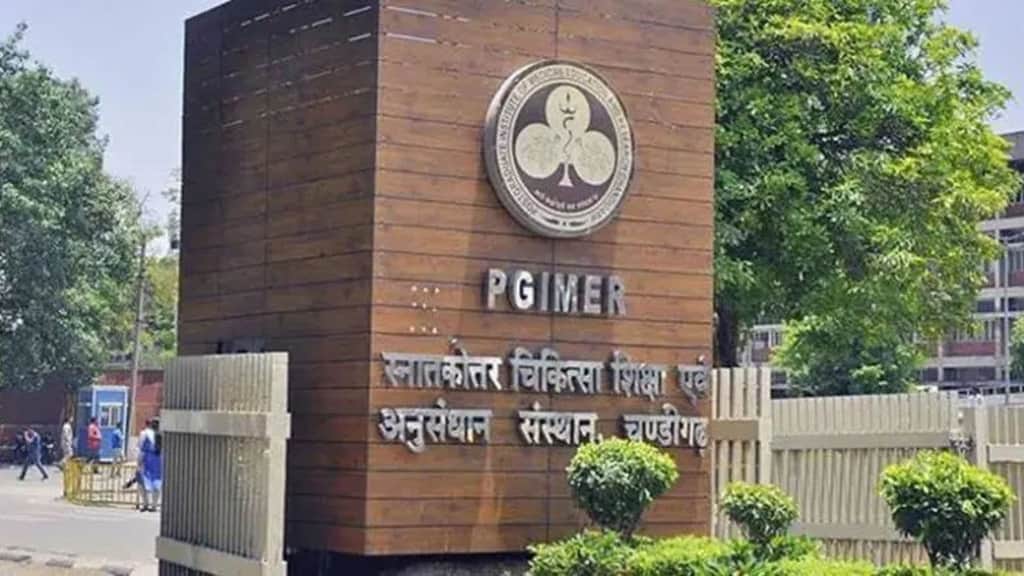
In 2025 alone, PGIMER conducted 248 kidney transplants. (File Photo)
Despite functioning with a limited bed capacity of just 50, the Postgraduate Institute of Medical Education and Research (PGI), Chandigarh, has emerged as one of the country’s leading centres for renal transplantation, having performed over 5,400 kidney transplants so far.
This achievement places PGI second only to the Institute of Kidney Diseases and Research Centre (IKDRC), Ahmedabad, which has nearly 400 beds dedicated to transplantation services.
In 2025 alone, PGIMER conducted 248 kidney transplants, a milestone that reduced the waiting period for live donor transplants from nearly 12 months to just three months. Hospital officials said the reduction has eased patient distress and improved survival outcomes by ensuring timely intervention.
PGIMER has also established itself as a national leader in Simultaneous Pancreas-Kidney (SPK) transplantation, a complex procedure primarily meant for patients with Type 1 diabetes mellitus and end-stage renal disease. So far, 67 successful SPK transplants have been carried out at the institute, offering a life-saving option for patients suffering from dual organ failure.
PGI director Prof Vivek Lal said the institute’s renal transplant programme has evolved into a model for the country. “Through better coordination, streamlined processes and team-based care, we have been able to optimise outcomes even with limited infrastructure,” he said.
Officials from the Department of Nephrology said the institute now runs two dedicated transplant units, with both the Renal Transplant Surgery Department and the Urology Department performing transplants. Separate teams and staff have been assigned to ensure faster investigations and reduce procedural delays. A dedicated group monitors post-transplant patients so that tests and follow-ups are completed without interruption.
PGIMER caters largely to patients from Bihar, Jharkhand and Uttar Pradesh, with over half of the transplant recipients taking treatment under government-funded schemes. The cost of a kidney transplant at PGIMER is approximately Rs 2 lakh. However, delays in fund disbursement, which can sometimes take up to two months, can impact time lines. Doctors noted that infections or other medical complications while on the waiting list often delay surgery, while medically fit patients may receive transplants sooner.
The Nephrology OPD at PGIMER sees around 400 patients daily, with nearly 30 per cent of them being new registrations. PGIMER performed its first kidney transplant on June 21, 1973, and today functions as a Regional Organ and Tissue Transplant Organisation (ROTTO) under the National Organ and Tissue Transplant Organisation (NOTTO), coordinating organ donation awareness across neighbouring states.
Editorial Context & Insight
Original analysis & verification
Methodology
This article includes original analysis and synthesis from our editorial team, cross-referenced with primary sources to ensure depth and accuracy.
Primary Source
The Indian Express