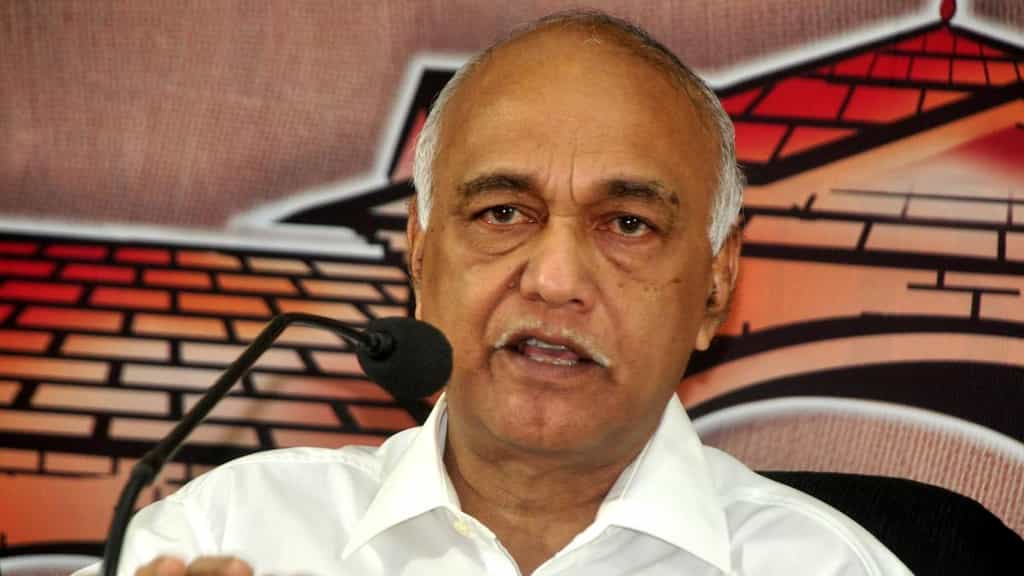
Against the backdrop of sweeping labour law changes and the expansion of contractual and informal employment, Elamaram Kareem, who was recently elected general secretary of the Centre of Indian Trade Unions (CITU), discusses the road ahead for the trade union movement.
In an interview with The Hindu, Mr. Kareem speaks about “resisting” the four labour codes, organising unprotected workers, opposing privatisation and forging broader trade union unity.
1. How do you envision the role of CITU evolving under your leadership in the coming years?
The prime task is to strengthen CITU. While the organisation has units in all States, there is still considerable ground to cover. We are aware of our shortcomings and will take steps to further strengthen the organisation.
2. CITU has been opposing the four labour codes and policies perceived as ‘anti-worker’. What strategies will you pursue to strengthen workers' rights and collective bargaining?
The labour codes pose a serious challenge. They were bulldozed through Parliament without democratic propriety and severely weaken workers' rights. Trade unions sought amendments and the removal of certain provisions, but the government has refused even to hold discussions. Ten trade unions, excluding the BMS (Bharatiya Mazdoor Sangh), have therefore jointly called a nationwide strike on February 12. CITU will remain at the forefront of the struggle to protect workers’ rights.
3. Trade unions across India are facing declining membership and the challenge of informal employment. How does CITU plan to organise workers in the informal and gig economy?
The vast majority of workers in India are in the unorganised sector and remain outside the ambit of labour laws. Crores of workers in sectors such as gig, transport and construction work without basic protections. Organising these workers is essential to wage a meaningful struggle for their rights and this remains a key focus of CITU.
4. Given CITU’s stance on job security and privatisation, how do you balance industrial growth with the protection of labour interests?
CITU strongly opposes the privatisation of public sector undertakings, whose survival and strengthening are crucial. At the same time, we are not opposed to private industry. Our consistent position is that workers' rights must be protected, whether in the public or private sector, strictly in accordance with the law.
5. What is your approach to addressing contractualisation and job insecurity?
The Union government is aggressively promoting contractualisation. In the Railways alone, there are over 5 lakh contract workers. In many industrial units, contract labour now outnumbers permanent employees, even in core jobs. This is a deliberate attempt to deny workers their rights. It is unacceptable. Workers must unite to resist this trend through collective struggle.
6. Do you see scope for closer coordination with other trade unions?
Yes, efforts are under way to build the broadest possible unity. No single organisation can reverse the Union government's policies on its own. Collective action is essential. The BMS withdrew from joint struggles after the BJP came to power in 2014, which we see as a betrayal of workers. Nevertheless, we remain open to united action if they are willing to join such struggles.
Editorial Context & Insight
Original analysis & verification
Methodology
This article includes original analysis and synthesis from our editorial team, cross-referenced with primary sources to ensure depth and accuracy.