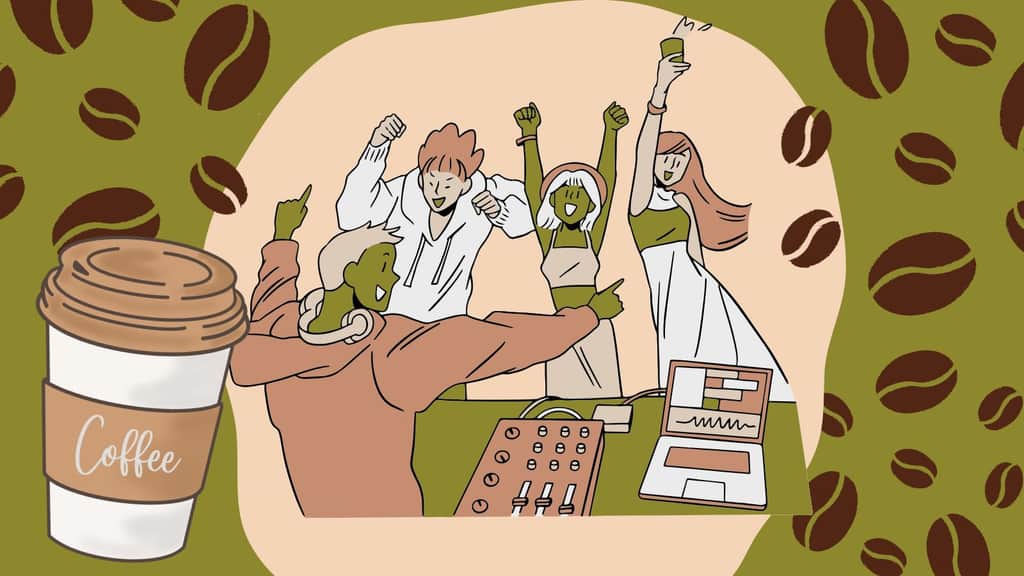
At 7 am, the café’s shutters are half open, the lights pulse warm gold, and the speakers hum with a bass line that feels suspiciously illegal for this hour. Instead of tequila shots, hands wave cold brews in the air. Instead of stumbling in post midnight, people roll in with tote bags and under-eye patches. This is the new frontier of youth culture: the coffee rave, a space where dopamine, daylight, and deep house music collide.
A coffee rave is exactly what it sounds like. It’s an early morning dance gathering hosted inside a café or similar space, swapping alcohol for coffee and nightlife for daylife. Think rave culture, but make it wellness coded. The party even ends in time for your 10 am lecture.
For 20-year-old Kashish Bhatia, a student at FAD International Academy, this shift feels bigger than just caffeine. She sees it as a generational pivot. “Millennials had a very intense party culture, with alcohol, drinking, and going all out,” she says. “But Gen Z drinks less. It’s more social, sometimes not at all. Even in places like the UK, where drinking is cultural, numbers are declining.” What’s replacing it, she notes, is a broader lifestyle shift: matcha mornings, Pilates classes, minimalist aesthetics, wellness routines, and even a renewed interest in spirituality. Not necessarily devotion in the traditional sense, but community-oriented experiences that feel grounding rather than destructive. To her, coffee raves sit neatly inside this ecosystem, and maybe even signal something deeper: “It feels like a recession indicator.” The premise is built on less excess and more intention.
🔴 “Sober-curious” living, where people want the social energy without the alcohol-induced hangover.
🔴 Café culture, which has been redefined by the pandemic’s acceleration of remote work and online learning. Those in hybrid arrangements increasingly treat cafés as unofficial living rooms.
🔴 There’s also a growing craving for community, particularly as social media and increasingly digital lives have paradoxically deepened feelings of isolation.
For some, like Aman Sharma, an 18-year-old student at Jai Hind College, the appeal is simple. He hasn’t attended one yet, but the idea resonates. “Good music, good people, and a chill energy without all the mess… It feels like a space where you can actually connect and enjoy the moment,” he says. That word, “connect”, comes up often when people describe these events. Unlike traditional nightlife, where the night blurs into noise and intoxication, coffee raves promise presence and intent. Besides, coffee raves are a way for youngsters to feel energised, while still being “healthy”.
Skipping alcohol isn’t about moral superiority, but simply a lifestyle choice. For a generation that often looks to social media for identity-building cues, coffee has evolved beyond a drink — it’s a personality, a routine, a love language. A latte order says more about someone than their zodiac sign. In fact, a coffee rave, with its brown tones, rave lights, and morning sunlight, is Instagram gold.
What actually happens at a coffee rave? Picture this: A DJ booth next to the espresso machine. Baristas pulling shots to the rhythm of house beats. People dancing with iced lattes sloshing dangerously close to white sneakers. A crowd that looks like a Pinterest board; parachute pants, oversized sweaters, wired headphones resting around necks, graphic tote bags announcing personality traits like creative, overthinker, or chronically caffeinated.
On some days, it’s companied with a stretching session or a mindfulness moment. Sometimes, it’s just pure chaos until the playlist ends. The energy sits somewhere between a workout class, a rave, and your favourite café on a Sunday, but louder.
Staff at several independent cafés say early morning events have noticeably altered footfall patterns. One café manager describes mornings that were previously slow or predictable now becoming some of the busiest hours of the week. On days when coffee raves are hosted, sales spike well before conventional rush hours, with cold brews, iced lattes, and non-dairy options often selling out early.
A barista at one of the cafés notes that the crowd behaves differently from late-night partygoers: orders are steady, repeat purchases are common, and people tend to stay longer. Unlike alcohol-led events, there’s no need to manage intoxication or post-event damage. The atmosphere, she says, is loud but controlled.
Several cafés also report a long-tail effect. Attendees often return days later during regular hours, bringing friends or using the café as a meeting spot. What begins as a one-off event frequently translates into sustained visibility and a younger, more loyal customer base.
From a business standpoint, coffee raves re-position cafés as cultural venues rather than transactional spaces. In an increasingly competitive hospitality economy, these events convert otherwise underperforming morning hours into high engagement periods, suggesting that for cafés, the appeal of coffee raves isn’t just aesthetic, but also economic.
But not everyone is sold. Jia Daswani, 19, for instance, doesn’t see coffee raves as the future of partying at all. “I think it’s a waste of time. Raves should be done with alcohol,” the Mumbai-based student says. The idea of celebrating mornings doesn’t resonate either. “I am not a morning person,” she shrugs. For her, coffee raves don’t necessarily reduce social anxiety or redefine community — they just feel loud and chaotic. She would rather explore coffee slowly, at a café or a fair, like the one hosted at Jio. Still, she admits that music has its own power. Even if someone hates coffee, she would bring them along, because music, she believes, can calm the mind and shift perspective, regardless of the drink in hand.
For all the memes and hype, coffee raves represent a cultural fork in the road. On one side is community over consumption. People aren’t coming to get drunk but to belong. On the other is scepticism about whether replacing alcohol with caffeine really counts as growth.
There’s also the uncomfortable question of symbolism. What do coffee raves reveal about hustle culture? Are they an attempt to reclaim the morning, or simply another iteration of performance culture? Do they represent a genuine response to burnout, or merely a more efficient way of optimising it?
Not everyone is sipping the cold brew Kool-Aid with enthusiasm, and honestly, they have a point. If a ritual demands three espresso shots before sunrise, can we really file it under wellness? And when a community-driven movement starts to resemble a carefully packaged brand aesthetic, it’s fair to ask whether we are cultivating culture or monetising it.
There’s also the possibility that we’re simply swapping one stimulant for another and calling it self-care. Yet these contradictions don’t cancel out the meaning people find here.
Coffee raves are still evolving. Maybe they will become mainstream. Maybe universities will host them. Maybe brands will sponsor them. Would that ruin the vibe? Maybe they will stay semi-underground — a thing you hear about on Instagram reels, and show up half asleep but curious.
What’s certain is that the rave no longer belongs exclusively to the night. And the morning, for the first time in a long while, feels electric.
Aashika is an intern at indianexpress.com
Editorial Context & Insight
Original analysis & verification
Methodology
This article includes original analysis and synthesis from our editorial team, cross-referenced with primary sources to ensure depth and accuracy.
Primary Source
The Indian Express