Germany's Agriculture Minister Alois Rainer has said he supports a proposition that would make it easier to cull the country's growing wolf population.
The German parliament is set to debate a proposal on amending the country's hunting laws for the first time on Wednesday.
"We now have over 200 wolf packs in Germany," Rainer told public broadcaster ARD on Wednesday morning.
"In terms of area, we have more wolves than they have in Russia," he added as he called for intervention.
Rainer said the amendment was needed to protect farm animals. "It's about protecting grazing livestock," he said, adding that the killing of livestock is a significant physical and emotional burden for their owners.
The agriculture minister also dismissed criticism from conservationists. "We absolutely do not want to eradicate the wolf," Rainer said.
Conservation group NABU argues that facilitating the culling of wolves would not help protect livestock or their owners.
"Instead, it could destabilize functioning pack structures and thus increase the risk of further attacks," NABU's Marie Neuwald told German news agency dpa.
"It is not the number of wolves in a pack that determines the number of attacks, but the herd protection measures in place," she added.
Wolves are a protected species in Germany, and their numbers have been increasing in recent years in some parts of the country.
The new legislation would, if approved, allow for federal states to regulate the number of wolves where wolf numbers are high as part of a "regional population management" scheme.
In those areas with high wolf populations, hunting would be allowed from July 1st to October 31st.
To view this video please enable JavaScript, and consider upgrading to a web browser that supports HTML5 video
Two men have been detained after they allegedly tore down the flag of the Islamic Republic of Iran at the country's embassy in Berlin, police said Wednesday.
The men climbed over a fence outside the embassy compound in southwest Berlin during a protest on Tuesday night, police said.
During the rally, demonstrators, many of them waving the historical, pre-1979 revolution Iranian flag, distracted security guards defending the compound, allowing the two men to allegedly climb over the fence, according to police.
They allegedly tried and failed to hoist two of the historical flags after tearing down the current Iranian flag.
Embassy security guards used pepper spray to force them to leave. Police detained the two men, aged 28 and 33, outside the compound.
An investigation has been opened into six people suspected of property damage, trespassing and desecrating national symbols, police said.
The rally outside the Iranian embassy is one of many that have been held across Europe in recent days to denounce the brutal crackdown on Iranian protesters by the country's security forces.
At the Iranian embassy in London this week, protesters similarly tried to replace the Islamic regime's flag with the pre‑revolutionary one.
A particularly cold winter and higher gas prices are set to cause a noticeable spike in heating costs for German consumers, forecasts warn.
Price comparison portal Verivox and energy service provider Techem told German news agency dpa that consumers should prepare to feel the pinch with pricier heating bills for the past year.
According to Verivox, a typical German household with gas heating, which would normally consume around 20,000 kilowatt-hours, will have to pay nearly 13% more in 2025 than the previous year.
The spike is due to higher consumption because of a relatively cold February 2025 and an unusually early cold snap in November, which brought frost and snow. Gas prices have also increased slightly.
Households that use oil heating will also see a price jump, although that will be around just 4% on average.
"Heating with oil was cheaper than heating with gas for the fourth year in a row," Verivox energy expert Thorsten Storck said. "Ultimately, consumers with oil heating had to spend almost 16 percent less for a warm home last year than gas customers."
According to Techem, heating costs are set to jump by an average of 8.6% in 2025 compared to the previous year.
Techem forecasts the steepest increase to be felt in households that use district heating, which are expected to see a 13.2 % price hike.
Prices are forecast to climb even though energy prices have fallen in some areas. That is because of higher consumption due to the cold temperatures.
In recent weeks, much of Germany saw icy winter weather with sometimes severe frost. According to the German Weather Service, the Christmas holiday season was, on average, the coldest in 15 years.
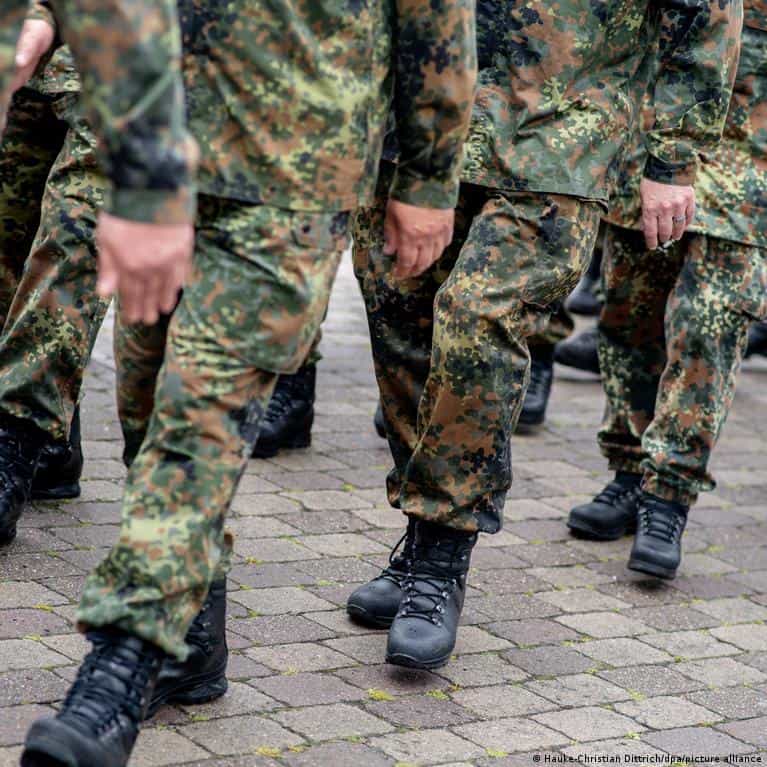
The president of the German Armed Forces Reservists Association, Patrick Sensburg, has said European troops, including from Germany, should be deployed to Greenland.
US President Donald Trump has repeatedly said in recent weeks that Washington will take control of Greenland "one way or the other", citing US national security concerns.
Trump has claimed, without evidence, that Greenland is "covered with Chinese and Russian ships all over the place."
"We need Greenland from the standpoint of national security, and Denmark isn't going to be able to do it," Trump said this week.
"We have to assume that US President Donald Trump is serious about Greenland. Europe must therefore show a much stronger presence in Greenland," said in remarks to German newspaper Bild on Tuesday.
"We must deploy two European brigades there under Danish command in a short period of time," Sensburg added.
The reservists' union head said the deployment of reservist brigades would also present opportunities. Sensburg said Germany's Armed Forces could "also train and educate soldiers in Greenland. This will strengthen European unity."
Guten morgen from Bonn, where the snow and ice from the weekend have given way to cloudy skies and rain.
In this blog, we will bring you the latest news from and about Germany, including calls from the head of the country's Armed Forces reservist association for European and German troops to be deployed to Greenland to ward off threats of annexation from the US and President Donald Trump.
Meanwhile, the colder-than-normal winter season and higher-than-usual gas prices are set to cause heating bills to jump for Germany's households.
And Agriculture Minister Alois Rainer has defended a proposal to make culling Germany's growing wolf population easier, ahead of a debate in the country's parliament, the Bundestag, on Wednesday.
Follow along as we bring you the latest on those stories and more from Germany.
Editorial Context & Insight
Original analysis and synthesis with multi-source verification
Methodology
This article includes original analysis and synthesis from our editorial team, cross-referenced with multiple primary sources to ensure depth, accuracy, and balanced perspective. All claims are fact-checked and verified before publication.
Primary Source
Verified Source
Deutsche Welle
Editorial Team
Senior Editor
Shiv Shakti Mishra
Specializes in World coverage
Quality Assurance
Senior Reviewer
Fact-checking and editorial standards compliance