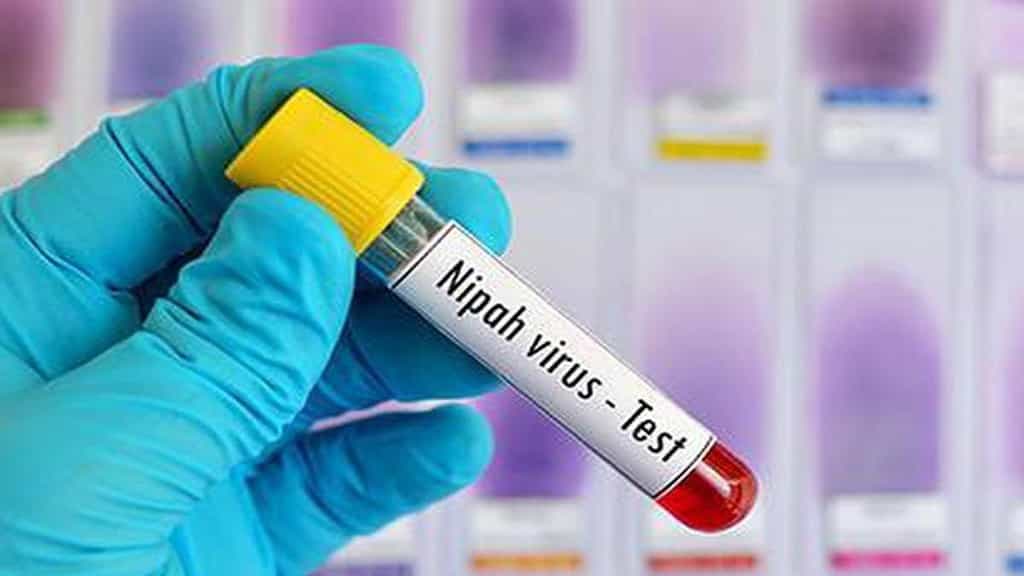
Two suspected cases of Nipah virus were detected at the Virus Research and Diagnostic Laboratory at AIIMS Kalyani in West Bengal on Monday (January 12, 2026). The two healthcare workers infected by the virus are undergoing treatment, and are reported to be in “very critical” condition.
Given the serious nature of the Nipah virus infection, a zoonotic disease with high mortality and potential for rapid spread, the situation is being handled with utmost priority, a senior official of the West Bengal health department has said.
State government officials said the two patients had travelled to Purba Bardhaman on personal work. Contact-tracing is therefore being done across North 24 Parganas, Purba Bardhaman, and Nadia districts. The State government has also launched three helpline numbers — 03323330180, 9874708858, 9836046212 — for public queries.
A national joint outbreak response team has been deployed to support the State government in containment and public health response measures, the sources said.
Nipah is a virus named after Kampung Sungai Nipah, a village in Malaysia, where it was first discovered in 1998-99. According to the World Health Organization (WHO), the Nipah virus infection is a zoonosis, that is, a disease transmitted from animals to humans. The virus belongs to a genus termed Henipavirus (subfamily Paramyxovirinae). The natural host of the virus is fruit bats belonging to the family Pteropodidae. Pigs can also act as intermediate hosts.
The Nipah virus exhibits symptoms similar to those of influenza, including fever, muscle pain, sore throat, and respiratory problems. In severe cases, patients can develop respiratory distress, convulsions, and disorientation due to inflammation of the brain. Late onset of encephalitis can also occur. Sometimes a person can have an asymptomatic infection and be a carrier of Nipah and not show any symptoms.
The Nipah virus is classified as a biosecurity level (BSL) 4 agent, and the tests should be carried out in special labs to prevent its spread. Doctors diagnose by testing the blood to check for antibodies, or by histopathology- a microscopic study of tissues, or through the Polymerase Chain Reaction (PCR) technique to look for viral DNA and also through virus isolation. Confirmatory tests include Serum Neutralization Test, ELISA, and RT-PCR.
Currently, there are no vaccines for both humans and animals. Intensive supportive care is given to humans infected by Nipah virus. But patients are quarantined and given extensive treatment under isolation.
In 2018, when Kerala first encountered NiV (which was also the first ever NiV outbreak in South India) the case fatality rate was 91%, similar to the global mortality figures for NiV. Of the 23 identified cases of NiV (including 18 lab-confirmed cases) during May 2-29 of 2018, only two survived the infection.
But with the State experiencing repeated outbreaks, it invested heavily in monoclonal antibody treatment and antiviral drugs. In 2023, the mortality rate was brought down to 33%, when four out of the six identified cases of NiV survived the infection
In the recent outbreak in 2025, too, the State Health Department had moved quickly to administer monoclonal antibodies and antivirals, including Remdesivir to the patient.
Editorial Context & Insight
Original analysis and synthesis with multi-source verification
Methodology
This article includes original analysis and synthesis from our editorial team, cross-referenced with multiple primary sources to ensure depth, accuracy, and balanced perspective. All claims are fact-checked and verified before publication.
Editorial Team
Senior Editor
Shiv Shakti Mishra
Specializes in India coverage
Quality Assurance
Associate Editor
Fact-checking and editorial standards compliance