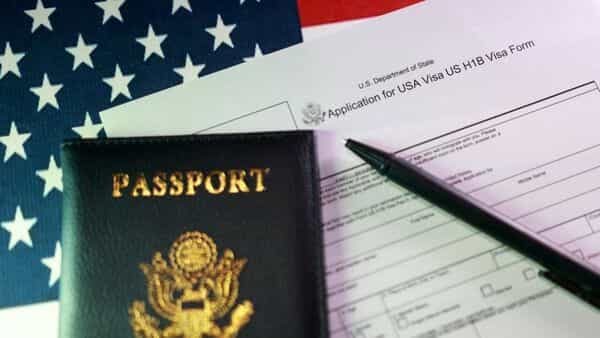
Ever since its launch, the hefty $100,000 fees for an H-1B visa have triggered confusion for many. But a Reddit user had a typical query: “My H1-B was approved in 2024. I came to the US in January 2025, but was unfortunately laid off in August 2025. I travelled back to India and now have another job offer, starting from January 2026. Will the $100,000 fees apply in this case?”
We asked an immigration attorney, ChatGPT and Gemini for suggestions. Before delving into them, let's first understand where the H-1B visa fee applies (exemptions): 1. An H-1B visa is valid for three years and can be extended for an additional three years, totalling six years.
2. H-1B fee requirement began September 21, 2025.
3. It applies to new H-1B petitions filed on or after September 21 for beneficiaries outside the US who don’t have a valid H-1B stay.
4. It is a one-time fee per petition, paid by your employer.
1. The $100,000 H-1B fee does not apply to every job switch.
4. Petitions filed before September 21, 2025
5. The beneficiary receives approval of an H-1B petition filed as a change of status or amendment or extension of stay, even if filed on or after September 21, 2025.
When a person's been laid off, their status and work authorisation end, triggering a mandatory 60-day grace period (or until your I-797/I-94 expiration, whichever is shorter) to find a new sponsor, change status, or leave the US.
A senior immigration attorney at Manifest Law, Ana Gabriela Urizar, told Mint the $100,000 fee would likely be applied because the individual is outside the United States and the new H-1B petition is not requesting a change of status or extension from within the US.
Urizar noted that the USCIS has made clear that the Proclamation applies to petitions filed on or after September 21, 2025, that request consular notification, port-of-entry notification, or pre-flight inspection, which is exactly the posture of most cases where the worker is abroad.
"Unless the individual has a previously issued and currently valid H-1B visa, the petition would generally fall within the scope of the Proclamation and trigger the $100,000 fee," Urizar said.
But what if the person has been laid off, is now outside the US and has a valid visa stamp? "If the person is outside of the USA, has a new job and a valid visa stamp, you can’t file an extension or amendment with a change of status. You don’t have status because you are not in the USA, so you can’t change status because you have no status," Urizar said.
Now, to answer the Redditor's question, ChatGPT deducted: "Yes, your new employer will most likely be subject to the $100,000 fee when filing your H-1B petition from India and requesting consular processing."
The AI, however, suggested that an individual must always confirm with an experienced US immigration attorney before making decisions.
On the Redditor's query, the AI tool said their situations required the H-1B visa fee to be paid because: 1. You left the US after your layoff, and you are in India now.
3. Your new employer must file a new H-1B petition (likely with consular processing) for you to re-enter.
4. Because this petition will be filed after September 21, 2025 and you’re outside the US, the USCIS considers it a new petition subject to the $100K fee.
"If you leave, your 'Change of Status' may be considered abandoned, and you would be forced to re-enter via a consulate, which would trigger the $100,000 fee," the AI tool revealed.
Also, if a person has been laid off and hold a valid H-1B, the 60-day grace period is your most critical tool for avoiding the $100,000 fee.
1. You were still in the US in valid H-1B status and your employer filed an extension, amendment, or change of employer without you leaving the US.
2. Your employer can successfully claim a national interest exception, but this is rare and involves a separate waiver process.
1. Some guidance suggests that current visa holders outside the US might avoid the fee if the petition doesn’t need a new visa stamp, but most lawyers and recent community reports interpret it to mean consular processing from abroad will trigger the fee.
2. If you still had a valid H-1B visa stamp and could use it without a new petition, then the fee wouldn’t apply — but since you’re switching employers, a new petition is required anyway.
Editorial Context & Insight
Original analysis and synthesis with multi-source verification
Methodology
This article includes original analysis and synthesis from our editorial team, cross-referenced with multiple primary sources to ensure depth, accuracy, and balanced perspective. All claims are fact-checked and verified before publication.
Primary Source
Verified Source
mint - news
Editorial Team
Senior Editor
Maria Santos
Specializes in Business coverage
Quality Assurance
Copy Chief
Fact-checking and editorial standards compliance