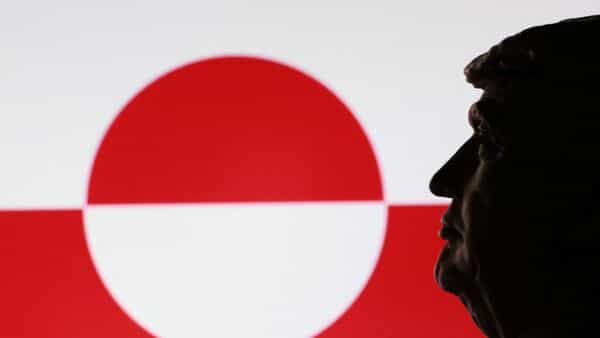
Greenland is now under the radar of US President Donald Trump, following his actions in Venezuela. Trump warned on Friday that the US will "do something" on Greenland, or else Russia and China will take over the Arctic island.
Given Greenland's strategic importance, Trump has set eyes on the country. His administration says all options are on the table, including buying the territory or taking it by force.
But, Denmark has taken the onus to defend Greenland, calling the latter its territory.
Greenlanders, meanwhile, scream, “We do not wish to be Americans. We do not wish to be Danes. We wish to be Greenlanders.”
Denmark has gained a wave of European solidarity as President Donald Trump's threats to seize Greenland. It aims to defend a territory that has been moving steadily away from it and towards independence since 1979, Reuters reported.
Last week, a report, which fact-checked Denmark's "shoot first, ask questions later" remark over the US's possible invasion Greenland, claimed that Danish law would require its military to fight back, even without orders, in the event of an attack on Danish territory or its forces.
The directive requiring Danish troops to fight back dates back to 1952.
It reads: "In the event of an attack on Danish territory or on a Danish military unit outside Danish territory, the attacked forces must immediately take up the fight without waiting for or seeking orders, even if the declaration of war or state of war is not known to the commanders in question."
"....any attack on Denmark from outside or on its constitutional authorities is to be considered an order for mobilisation," the order states.
The United States enjoys extensive access to Greenland. A defence agreement between Denmark and the United States in 1951 grants the Americans extensive military access to the island.
During the Cold War, the United States operated up to 50 bases and radar stations in Greenland, according to the United Nations.
Now, the question arises: Is Greenland Denmark's territory?
Greenland officially became an autonomous territory of the Kingdom of Denmark in 1979 — with internal powers (education, police, justice, taxation) but under Danish sovereignty for defence, foreign policy and currency, the United Nations.
Greenland moved towards greater autonomy following referendums and anticipating independence, particularly after the 2009 agreement, the Greenland Self-Government Act of 2009, which explicitly recognised Greenlanders' right to independence if they choose.
The historic agreement between the Greenlandic authorities and the Danish government recognised Greenlanders as a distinct people under international law, giving them the right to secede from the Kingdom of Denmark if a majority of the people so decide.
But, according to the UN, if this decision is taken, they will have to significantly increase their revenues in order to compensate for the loss of Danish subsidies, which amount to more than €575 million per year (4.3 billion Danish kroner).
All Greenlandic parties say they want independence, but differ on how, and when, to achieve it, Reuters reported.
This became known as "the Greenland Card", according to a 2017 report by the University of Copenhagen's Centre for Military Studies.
Denmark cannot let Greenland go without losing its geopolitical relevance in the Arctic territory, strategically located between Europe and North America and a critical site for the US ballistic missile defence system.
For the US, the control over Greenland is about the "Donroe doctrine", untapped mineral resources and "national security" concerns over Russian and Chinese ships around the territory.
Mikkel Vedby Rasmussen, a political science professor at the University of Copenhagen, told Reuters that Denmark "risks exhausting its foreign policy capital to secure Greenland, only to watch it walk away afterwards."
Denmark also risks the relationship with the United States at a time "when Russia is an accelerating threat and being on the US's bad side is no good for anyone in the West".
Denmark may ultimately have nothing to show for its efforts if Greenlanders choose independence - or strike their own deal with Washington.
"I don't understand why we have to cling to this community with Greenland when they so badly want out of it," Lone Frank, a Danish science writer and broadcaster, told Reuters. "To be completely honest, Greenland doesn't inspire any sense of belonging in me," he said.
According to Reuters, European allies rallied behind Denmark not just out of solidarity, but because giving up Greenland would set a dangerous precedent that could embolden other powers to pursue territorial claims against smaller nations, upending the post-1945 world order.
Editorial Context & Insight
Original analysis & verification
Methodology
This article includes original analysis and synthesis from our editorial team, cross-referenced with primary sources to ensure depth and accuracy.
Primary Source
mint - news