The United States is the largest oil producer in the world and a top exporter of the so-called black gold. Yet, the Donald Trump administration clearly seems to want Venezuelan crude. In addition to the pursuit of continued energy market dominance and keeping oil prices in check, the very nature of Venezuelan oil—highly viscous, sticky and “sour”—appears to be a key reason behind American interest in it.
The bulk of Venezuelan crude is classified as a heavy sour crude—heavy because it is thicker and denser than the lighter crude oil grades, and sour because of its high sulphur content. By contrast, the majority of US oil production—particularly the shale formations—is light and sweet (low viscosity and sulphur content).
However, much of the American refining infrastructure—particularly the US Gulf Coast refineries—were specifically engineered to process heavy crudes from Latin America and Canada. Therefore, the US still has to import heavy sour crudes to feed these refineries, even as it exports massive volumes of its own light sweet oil. Crude oil is not exactly a fungible commodity in practice because of the differences in quality of various types or grades of oil. And which type of crude is likely to be easily available in adequate volumes is a key factor in refinery configurations.
Against this backdrop, securing heavy sour crude oil supplies from Venezuela—which has the world’s largest oil reserves—at low prices is of interest to the Trump administration.
The mismatch between the US domestic oil production and its refineries’ primary crude diet of heavy crude grades is explained by the period when many of these units were built, which was in the last century. The shale oil revolution, on the other hand, came about only in the first decade of the 21st century.
When these refineries were set up, heavy sour crudes were the most easily available to the US—from the country’s own domestic conventional oil fields, and later from nearby countries like Venezuela, Mexico, and Canada. For a better part of the last century, major American oil companies invested billions of dollars in Venezuela’s oil industry, helping feed the US refineries with heavy sour crude.
Setting up refineries, particularly the highly complex ones geared to process heavy crudes, is a highly capital-intensive exercise, and reconfiguring them significantly is usually not a financially viable undertaking. Hence, maintaining the primary crude diet for which a refinery was originally designed becomes important for the unit to function at high efficiency and utilisation levels. So, a potential jump in heavy sour crude supply from Venezuela to the nearby US Gulf Coast refineries remains a highly enticing proposition for Washington.
Heavy sour crudes are usually notably cheaper than light sweet crudes, which means that the feedstock cost for the expensive-to-set-up complex refineries is much lower than that of a relatively less complex refinery that cannot handle heavy crude grades. But the financial and efficiency arithmetic goes awry if costly complex refineries have to consume expensive light and sweet crude.
That is why the US continues to import significant volumes of the cheaper heavy crudes, while exporting its domestic light crude oil at a premium in the international market. While it makes economic sense to import cheaper oil and export its own expensive oil, it also means that the US is on the constant lookout for stable supplies of heavy crude from other countries for its own refineries. But some of the countries, like Venezuela, Iran, and Russia, which have significant heavy crude reserves, continue to have an adversarial relationship with Washington.
Venezuela was a major source of crude oil for the US till the early 2000s, and American oil majors heavily dominated the sector there. Then the Latin American country’s oil production and exports started dwindling in a period marked by an increase in state control of Venezuela’s oil industry under Hugo Chavez. Nationalisation of assets saw US oil majors like ExxonMobil and ConocoPhillips exit Venezuela in 2007, and the country’s national oil company increasingly grappled with corruption and mismanagement.
The period also saw deterioration in Venezuela’s oil infrastructure, which was plagued by extreme underinvestment. The relationship between Washington and an increasingly socialist Caracas also deteriorated further over the years.
By 2018, imports of Venezuelan crude into the US had crashed to around a fourth of the late-1990s peak of 2 million barrels per day (bpd), when the US accounted for more than half of Venezuelan oil exports. Then with the full US sanctions against Venezuela taking effect in 2019, Caracas’s oil supply stopped completely, before some volumes started flowing again in early 2023 after Washington granted a specific license to US oil major Chevron to resume oil production from Venezuela and import it into the US. But the volumes that came into the US as of 2025-end were less than 150,000 bpd.
With US sanctions on Venezuela greatly constraining the flow of Venezuelan crude in the international oil market, China became its leading destination. Over the past couple of decades, China also poured billions of dollars into Venezuela, including in the oil sector, filling the vacuum left by American oil majors. Russia, too, has been investing heavily in the Venezuelan petroleum industry.
With Maduro’s ouster and Trump looking to dictate his terms to Caracas, the future of Venezuelan oil supplies to China is now unclear, and experts believe that much of this oil could flow to the American refineries going forward, helping them reduce intake of relatively costlier heavy oil from other countries. Also, the outlook for the significant Chinese and Russian investments in Venezuela is now uncertain. In that context, Trump’s declaration of taking over Venezuela’s oil sector can also be seen as an attempt by Washington to cut Chinese and Russian influence in the Americas.
Heavy investment for heavy oil: will it come?
Although Venezuela has the largest oil reserves globally, estimated at over 300 billion barrels or a fifth of the proven oil reserves all over the world, it produces just around 1 million barrels per day (bpd) of crude, or less than 1 per cent of the 100 million bpd-plus global output. Venezuela’s oil production is only a third of its output at the turn of the century. Notwithstanding Trump’s highly optimistic outlook for Venezuela’s oil industry, scaling up production again will be no mean task and it remains to be seen just how much more Venezuelan crude will flow to US refineries in the coming years.
“Based on our assessment and expected project timelines, it could take around 15 years to get back to 3 million bpd, so production can return to late 1990s levels by 2040 if the new investment cycle starts as early as 2026. We estimate that up to 300,000-350,000 bpd can be restored within less than three years, but more significant investment with longer lead times is needed to grow beyond 1.4 million bpd,” said Norway-based energy research and intelligence firm Rystad Energy. And for this to happen, over $180 billion would have to be invested over the next 15 years, according to its estimates.
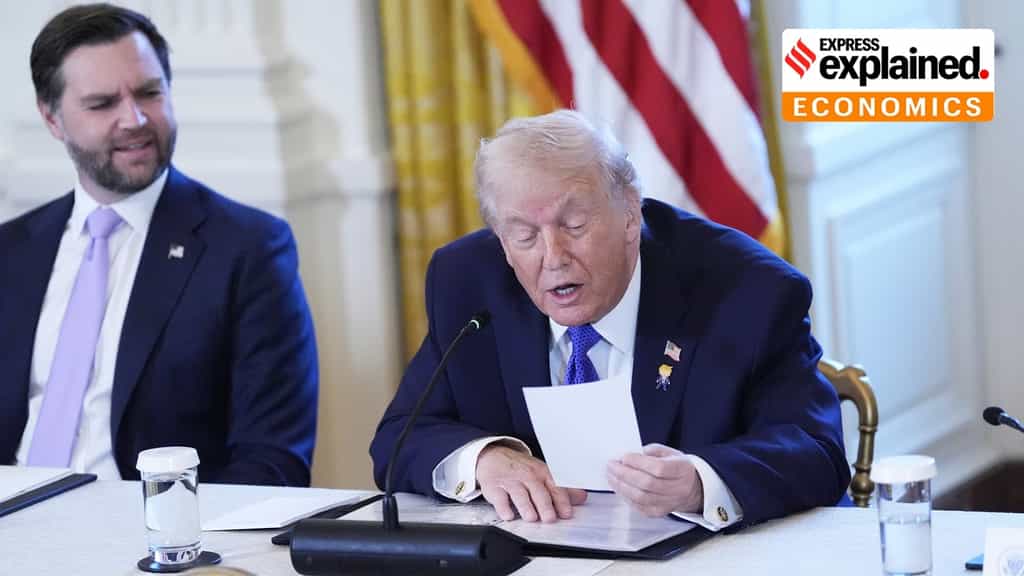
And it appears that the American oil majors are not really making a beeline to re-enter Venezuela. Top executives at American oil giants told Trump on Friday that Venezuela will need to go through major oil sector reforms in order to attract any investment. Corporations like ExxonMobil and ConocoPhillips avoided giving any investment commitments despite Trump saying that the US oil industry, with US security guarantees, would invest over $100 billion to revive Venezuela’s oil sector.
“We’ve had our assets seized there twice. And so, you can imagine to re‑enter a third time would require some pretty significant changes from what we’ve historically seen here and what is currently the state. If we look at the legal and commercial constructs—frameworks—in place today in Venezuela, today it’s uninvestable. And so significant changes have to be made to those commercial frameworks, the legal system, there has to be durable investment protections, and there has to be a change to the hydrocarbon laws in the country,” ExxonMobil Chairman and CEO Darren Woods said at Trump’s meeting with top US oil executives on Friday.
Editorial Context & Insight
Original analysis and synthesis with multi-source verification
Methodology
This article includes original analysis and synthesis from our editorial team, cross-referenced with multiple primary sources to ensure depth, accuracy, and balanced perspective. All claims are fact-checked and verified before publication.
Primary Source
Verified Source
The Indian Express
Editorial Team
Senior Editor
Shiv Shakti Mishra
Specializes in India coverage
Quality Assurance
Associate Editor
Fact-checking and editorial standards compliance