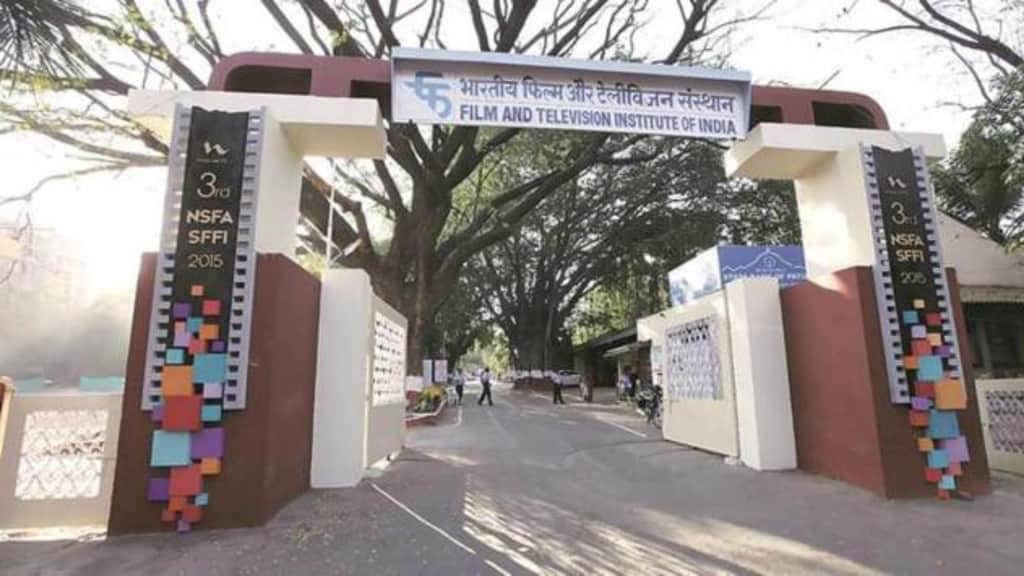
When you enter the campus of the Film and Television Institute of India (FTII), Pune, you would come across a large mango tree where the two halves of the campus converge, and so do paths and perspectives. Famously called the Wisdom Tree, it is a fitting symbol for a space meant to nurture critical and independent cinematic minds and culture.
On December 26 of the year just passed, the FTII Students Association organised an open discussion under this tree. It was centred on a deliberately provocative question: Do we need film schools like FTII? The answer is undeniably yes; the deeper concern is why such questions about institutions of public importance like ours are being asked. It also reflects the growing anxieties that film education is compelled to bear.
This apprehension stems from a deeper shift in India’s visual culture. Certain images now circulate with remarkable ease, while others struggle to secure even minimal conditions of exhibition. Films designed for mass entertainment and political conformity move smoothly across screens and digital platforms, whereas works that are complex or politically reflective are pushed to the margins — not only in commercial theatres but increasingly within alternative spaces like film festivals. For instance, the independent film Humans in the Loop, about an Adivasi woman, survived through a relay of independently organised screenings across cities. The critically acclaimed Agra struggled to get multiplex show times. More recently, several films were denied censor clearance for screening at the IFFK. At the same time, we have seen box-office celebrations around Dhurandhar. This illustrates the imbalance — films that constructed artistic identity on the global stage, ironically, encountered systematic resistance to screening within the country itself, overshadowed by politically motivated narrative-building films.
In a culture where box-office numbers determine the quality of films, a stark logic of visibility emerges. Like electoral outcomes, box-office verdicts now adhere to an ever-present binary — blockbuster or erasure. Within this condition, cinematic backsliding becomes inevitable — not as an absence of images, but as a retreat from nuance and complexity. The industry’s “health” now signals a narrowing of what a diverse society is allowed to see and think through cinema. Cinematic backsliding not only gradually contracts the independent, parallel space but also dulls the alternative imaginations of budding filmmakers. Some of our peers have already internalised these limits, making their film exercises primarily for affirmation and to attract producers.
Cinema today faces a severe production crisis. Despite rapid economic growth, domestic producers are steadily disappearing from mainstream filmmaking. For independent cinema, the problem runs even deeper. As a result, it is forced to rely on Western co-production mechanisms, grants, script development labs, and festival circuits, often conforming to European expectations. Many parallel filmmakers continue to follow established European models of poetic cinema, centred on capturing a character’s interiority through subversive performance or conditions. Thus, truly indigenous cinema — capable of challenging Eurocentric visual grammars rooted in the Indian landscape, as practised by masters like G Arvanidan — struggles to emerge. Independent cinema lacks self-confidence because the support ecosystem is crippled.
However, there is a glimmer of hope. Multiple states have begun offering production subsidies. This has encouraged films in local dialects and rooted experiences. However, this too reproduces the same logic — mainstream cinema attracts funding over independent films. For instance, in Uttar Pradesh, where I am from, a dedicated department, Film Bandhu, exists to support film production. I wish to make a film in a local dialect, Awadhi, but I am unsure whether I will qualify for any subsidy, as government data from UP shows that in the past nine years, no independent projects have received funding. This gap highlights the persistent structural neglect of independent voices, even as regional storytelling gains rhetorical support. Another example of funding apprehension is the Ministry of Information and Broadcasting’s Rs 5 crore annual grant for recent alumni of the film institute at the IFFI, Goa, with no clear guidelines. Thus, students fear the money may support faculty and administrative projects rather than independent alumni filmmaking. These growing structural discrepancies pose a serious threat to art.
While the lack of institutional assistance breeds anxieties, authoritative oversight also erodes autonomy. Our institute is in a historic period of transition. It has existed till now as an independent institute under the I&B Ministry. From the most recent batch onwards, it will be overseen by the UGC before it is merged with AICTE and NCTE. Under this ministry, the institution has experienced no proper audit, questionable administrative appointments, and the appointment of a dean for life — perhaps the only one in the country. The political outreach from Delhi makes FTII seem like a bureaucratic possession. As political authorities increasingly seek to regulate the world of imagination, artistic endeavours gasp for breath.
If India wants a lasting footprint in global filmmaking, we need institutional assistance without interference that would nurture experimentation and enable independent cinema to thrive, contributing to the creative economy — as our very own Payal Kapadia did with her feature debut. The Indian film economy, to protect itself, needs to protect the culture of fostering independent thought, a cherished legacy at FTII.
So yes, we need FTII. In fact, we need many more like it.
Editorial Context & Insight
Original analysis & verification
Methodology
This article includes original analysis and synthesis from our editorial team, cross-referenced with primary sources to ensure depth and accuracy.
Primary Source
The Indian Express