As investors prepare for 2026 after a volatile year marked by record highs and sharp corrections, building a well-balanced portfolio has become more important than ever.
With equities expected to deliver steady but not outsized returns, and global uncertainties continuing to shape markets, asset allocation will play a decisive role in long-term wealth creation.
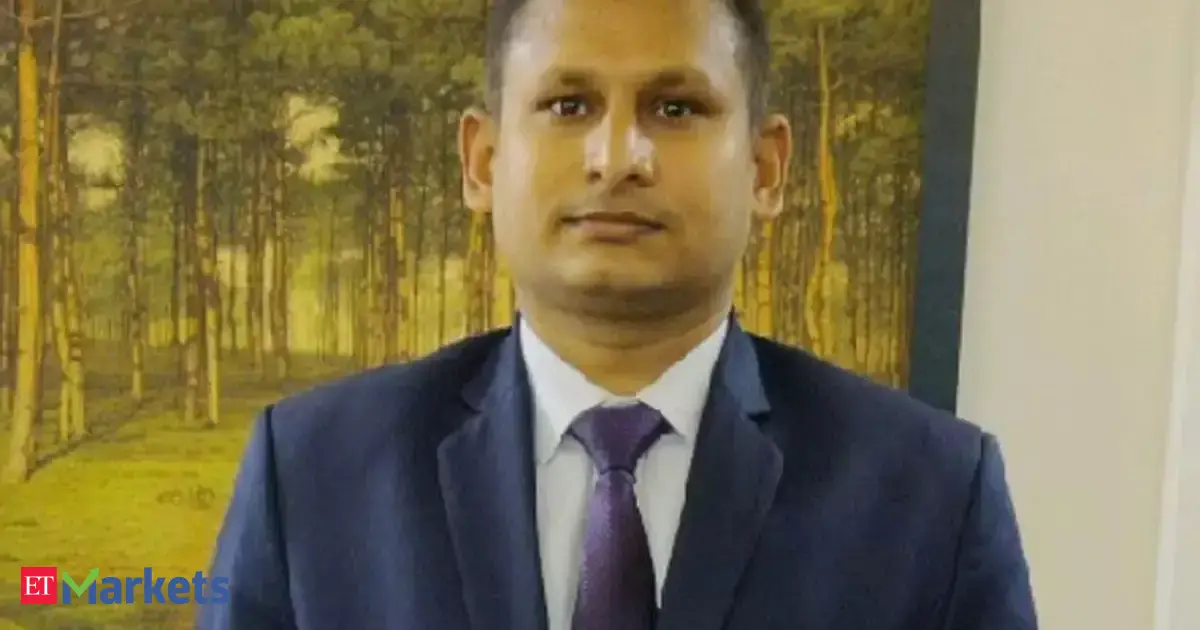
In this edition of ETMarkets Smart Talk, Sunny Agrawal, Head of Fundamental Research at SBI Securities, shares his framework for deploying ₹10 lakh across equities, gold, silver, and bonds, explaining how a diversified mix can balance growth, stability, and risk mitigation in the year ahead. Edited Excerpts - A) Many thanks for giving us the opportunity to share SBI Securities’ view with ET subscribers. We believe 2026 is relatively better compared to 2025, on the back of the following: (a) likely acceleration in the earnings growth to 2-digit for FY27 and FY28, in the backdrop of low single growth in FY26 coupled with strong macros.
(b) comfortable valuation for Nifty50 – Trading at 1-year forward P/E multiple of 19-20x vs 22x-23x during the last peak in Sept’24.
(c) significant compression in valuation premium over MSCI EM index from 80% in Sep’24 to 47% in Dec’25, which is below the 10-year average of 57%.
(d) The majority of the negative developments are discounted, like delay in the conclusion of India-US trade deal, USDINR touching life lows, geopolitical tension, persistent selling by FPIs, supply of paper by promoters, PE through IPO, OFS, Bulk/Blocks etc.
(e) likely boost to the domestic consumption led by troika of (1) 125 bps reduction in repo rate, (2) income tax relief and (3) GST rationalisation coupled with good monsoon and healthy water reservoir levels and (f) likely reversal of FII flows from DMs to EMs.
A) Performance of precious metals during 2026 will be subject to incremental diversification of the reserves by the central banks towards precious metals (gold/silver) as a hedge against the US dollar as a global trade currency. Silver’s consumption is also likely to increase on the back of requirement across all the new age industries.
Looking at the huge debt of $36 trillion on US balance sheet, it seems dollar is no longer the only trusted safe haven and increasing trend of de-dollarisation can lead to further increase in demand for precious metals. Any significant supply squeeze in the supply of gold/silver can lead to further upside in gold and silver prices.
A) Depreciation in USDNR is driven by persistent selling by FPIs, narrative of likely increase in trade deficit due to delay in US-India trade deal and strong demand for dollars by importers & companies with foreign currency debt.
It is very difficult to hazard a guess as to whether USDINR can breach 100 mark in the short term. However, looking at the healthy forex reserves of ~$ 700 bn which can cover 11 months of imports and benign crude oil prices, probability of run on the rupee is very low.
USDINR have already depreciated by ~6.5% since May25 and historical data suggests that, on an average USDINR depreciates in the block of 8-12%, which implies that there is probability of further depreciation of USDINR to the tune of 2-6%.
In the short term, movement in USDINR will be subject to multiple factors: likely conclusion of India-US trade, pace of fund outflow from FPIs, likely intermittent intervention of RBI etc.
A) We believe 2026 will present strong opportunities across a diversified set of sectors, driven by structural demand, policy support, and cyclical recovery. Sectors likely to outperform include: We expect these sectors to be in focus, driven by both macro tailwinds and company-specific fundamentals.
A) While 2025 has seen strong performance across several sectors, investors should exercise caution in pockets where valuations have run ahead of fundamentals. In particular, sectors or themes where companies are trading at elevated or stretched valuations may face heightened risk going forward.
In such cases, even a minor earnings disappointment or change in market sentiment could trigger sharp de-rating, impacting portfolio returns. As a prudent approach, investors may consider paring exposure in these overvalued segments and reallocating to areas offering better value and earnings visibility.
The focus should remain on quality businesses with sustainable growth drivers, rather than chasing momentum alone.
A) The surge in mainboard IPOs in 2025, crossing the 100-mark milestone and nearing the ₹2 lakh crore fundraising mark, reflects strong investor appetite and corporate confidence. Looking ahead to 2026, we expect this momentum in the primary market to sustain, supported by a robust pipeline of SEBI-approved DRHPs.
As long as there is adequate liquidity in the system and favourable market sentiment, the IPO market is likely to remain buoyant. Additionally, investors have become more discerning, favouring companies with strong fundamentals, governance, and growth visibility — a trend that is expected to continue.
Selectivity will be key, but overall, 2026 looks promising for primary market activity.
A) 2025 have been very volatile year where we have seen steep correction in many well-known names even with any minor adverse news flow. This price as well as time correction was the first one for many investors who joined the capital market journey, post COVID. The biggest takeaways are: (c) for new to the market retail investors, control over greed and fear is must to stay in the market for longer period of time. We have seen many investors holding on to the leveraged position (as MTF have been the go to product) for last 10-12 months and have avoided timely exit from the trading position with SL; (d) looking at the past supernormal returns on top-down story during 2020-24 period, most of the investors have deviated from asset allocation, portfolio diversification and value investing theory.
Many investors/traders are now holding on to the stocks which were in strong momentum during the previous bull run despite trading at expensive valuations, with hope of swift recovery post correction and that too concentrated in one or two sectors.
A) Several key triggers could drive equity markets in 2026, setting the stage for sustained momentum and investor confidence. Among the most impactful would be: a) A favourable trade deal with the US, which could boost exports, ease geopolitical tensions, and strengthen India’s global trade position.
b) Acceleration in corporate earnings growth, especially across sectors like banking, infrastructure, and manufacturing, will likely justify current valuations and support further market upside.
c) Policy continuity with a reform-oriented government, maintaining a sharp focus on capital expenditure-led growth while adhering to fiscal prudence, will be crucial in attracting long-term institutional investments.
d) A meaningful pick-up in private capex would signal improving business confidence, higher capacity utilisation, and long-term economic sustainability.
e) Together, these factors would create a strong macro and micro environment to support equity market performance in 2026.
A) For an investor in the 30–40 age bracket looking to deploy ₹10 lakh in 2026, a well-balanced and growth-oriented allocation would be essential. At this life stage, the individual typically has a relatively higher risk appetite and a longer investment horizon, which allows for greater exposure to equities.
This mix maintains a strong growth orientation while also embedding an element of risk mitigation and asset diversification. Of course, periodic rebalancing and review aligned with financial goals and market dynamics is critical.
(Disclaimer: Recommendations, suggestions, views, and opinions given by experts are their own. These do not represent the views of the Economic Times)